 MinuteRead
30 min
Book summary
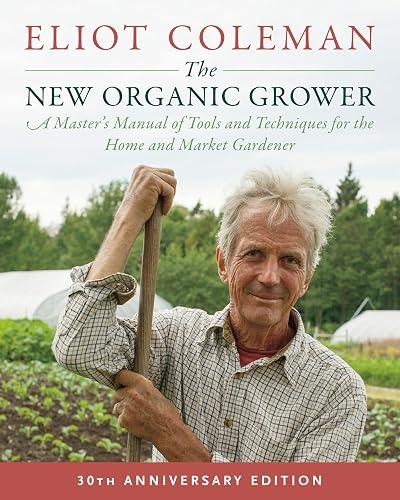
by Eliot Coleman
Premium summary · Opens in the app · 30 min read
For most of the twentieth century, agriculture moved in one direction: bigger. Bigger fields, bigger equipment, bigger debt, bigger chemical inputs, bigger yields measured in isolation from the systems that produced them. The assumption was that efficiency came from scale, that the only way to feed people was to industrialize the process, and that the small farm was a relic of a bygone era.
**Author:** Eliot Coleman
**Estimated Reading Time:** 45 minutes
**What You'll Learn:**
- Why small-scale organic farming is not just viable but often superior to conventional agriculture - The foundational principles of soil health and how to build fertility naturally - How to plan, plant, and harvest for maximum productivity on minimal land - Season extension techniques that allow year-round production without fossil fuel dependence - How to market your produce effectively and build a loyal customer base - The role of livestock in a diversified organic system - A plant-positive approach to pest management that prevents problems before they start
**Who This Book Is For:**
This book is for anyone who has ever looked at a piece of land and wondered if it could support a meaningful farming enterprise. It is for the aspiring grower who wants to build a livelihood without destroying the soil beneath their feet. It is for the experienced conventional farmer who suspects there is a better way. And it is for the gardener who wants to understand the deeper principles that separate merely growing food from truly stewarding land.
For most of the twentieth century, agriculture moved in one direction: bigger. Bigger fields, bigger equipment, bigger debt, bigger chemical inputs, bigger yields measured in isolation from the systems that produced them. The assumption was that efficiency came from scale, that the only way to feed people was to industrialize the process, and that the small farm was a relic of a bygone era. Eliot Coleman saw a different possibility. In the late 1960s, Coleman left a conventional academic path and purchased a piece of worn-out farmland in Maine. The soil was depleted. The climate was harsh. The conventional wisdom said the land was too small and too far north to support a commercial farm. Coleman set out to prove otherwise. What he discovered over decades of experimentation was not merely a set of techniques but a fundamentally different way of thinking about agriculture. The problem with conventional farming, he came to understand, was not just the chemicals or the monocultures. The problem was the underlying philosophy. Conventional agriculture treated the farm as a factory, the soil as an inert medium, and plants as machines to be fueled with synthetic inputs. This approach, he realized, was not only environmentally destructive but economically fragile and biologically unsound. The alternative Coleman developed is what he calls biological agriculture. It is an approach that begins with a simple observation: farming is unlike any other production enterprise because it works with living creatures. A factory worker does not need to understand the inner life of steel. A farmer, by contrast, is always working with organisms that grow, respond, reproduce, and…
Continue reading in the MinuteRead app
Get the complete 30-minute summary of The New Organic Grower
Get the complete summary in the appWork with nature, not against it. The farm is a living system.
Feed the soil, not the plant. Healthy soil is the foundation of everything.
Crop rotation is the most important practice in a multiple-cropping program.
Five acres is often the optimal size for a family-run market garden.
Plant small amounts frequently to maintain continuous harvest.
Season extension is achievable without heated greenhouses.
"The New Organic Grower" is a strong fit if you want practical ideas around gardening, agriculture, reference, especially themes like work with nature, not against it. the farm is a living system; feed the soil, not the plant. healthy soil is the foundation of everything. The MinuteRead summary distills these concepts into a focused read, whether you're deciding whether to buy the book or applying its lessons at work.
Motivated to help readers with working with living creatures, Eliot Coleman wrote “The New Organic Grower” to package those ideas for a fast, focused read. In “The New Organic Grower”, Eliot Coleman focuses on working with living creatures. Through “The New Organic Grower”, Eliot Coleman distills the core ideas on gardening into lessons readers can absorb in a single short sitting. Readers turn to this work when they want Eliot Coleman's perspective on the subject without working through the ent…
Continue Reading
Access the complete 30-minute summary and thousands more nonfiction books in the MinuteRead app.

Continue reading the complete summary in the MinuteRead app.
