MinuteRead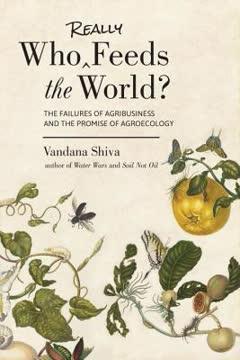
30 min
ExpertWho Really Feeds the World? The Failures of Agribusiness and the Promise of Agroecology
Vandana Shiva
4.0Food

Book summary
by Gabe Brown
Premium summary · Opens in the app · 30 min read
In the fall of 1995, Gabe Brown stood in his fields near Bismarck, North Dakota, watching hail destroy his crops for the fourth time in five years. The family farm, which his wife's parents had built over decades, was drowning in debt. The conventional approach to farming, with its heavy reliance on chemical inputs, tillage, and monoculture crops, had left the land depleted and the family's finances in ruins.
**Author:** Gabe Brown **Estimated Reading Time:** 42 minutes
**What You'll Learn:** How one family's farm went from the brink of financial ruin to becoming a model of regenerative agriculture, and how the principles they discovered can restore degraded land, improve profitability, and build resilience against climate extremes anywhere in the world.
**Who This Book Is For:** Farmers and ranchers seeking alternatives to conventional agriculture, gardeners interested in soil health, environmentalists looking for practical solutions to ecological challenges, and anyone who eats food and wants to understand how it should be produced.
In the fall of 1995, Gabe Brown stood in his fields near Bismarck, North Dakota, watching hail destroy his crops for the fourth time in five years. The family farm, which his wife's parents had built over decades, was drowning in debt. The conventional approach to farming, with its heavy reliance on chemical inputs, tillage, and monoculture crops, had left the land depleted and the family's finances in ruins. That hailstorm should have been the final blow. Instead, it became the beginning of something remarkable. Brown did not set out to become a pioneer in regenerative agriculture. He was simply a farmer trying to survive. But survival required a fundamental rethinking of everything he had been taught about how to farm. The conventional model told him to apply more fertilizer, spray more pesticides, and work the soil harder. Yet every year, the soil became less productive, the inputs more expensive, and the margins thinner. What Brown discovered over the following decades would transform not only his farm but also the way thousands of farmers around the world think about agriculture. He learned that the answer was not to fight nature with more chemistry and machinery. The answer was to work with nature, to understand how healthy ecosystems function, and to let those natural processes do the work that farmers had been paying dearly to do artificially. The problem Brown faced is the same problem confronting agriculture globally. Modern industrial farming has produced remarkable yields, but it has done so at an enormous cost. Soils around the world are degrading at alarming rates. The United Nations estimates that one third of the planet's soils are already degraded. Topsoil is being lost to erosion faster than it can be rebuilt. The microbial life that makes soil productive is being destroyed by tillage and chemicals. Water cycles are disrupted, making farms more vulnerable to both drought and flooding. And the food produced on depleted soils contains fewer nutrients than the food our grandparents ate. This is not merely an agricultural problem. It is a human problem. The health of our soils determines the health of our food, which determines the health of…
Continue reading in the MinuteRead app
Get the complete 30-minute summary of Dirt to Soil
Get the complete summary in the appNature cares about enduring, not yield. Build systems that last.
The five principles of soil health are: limit disturbance, keep soil covered, build diversity, maintain living roots, an
Tillage destroys soil biology. Stop tilling and let the soil heal.
Cover crops are biological primers that feed soil organisms and build soil health.
Managed grazing mimics nature and accelerates soil building.
Profit per acre matters more than yield per acre.
"Dirt to Soil" is a strong fit if you want practical ideas around agriculture, gardening, environment, especially themes like nature cares about enduring, not yield. build systems that last; the five principles of soil health are: limit disturbance, keep soil covered, build diversity, maintain living roots, an. The MinuteRead summary distills these concepts into a focused read, whether you're deciding whether to buy the book or applying its lessons at work.
Motivated to help readers with "Nature does not care about yield and pounds, Gabe Brown wrote “Dirt to Soil” to package those ideas for a fast, focused read. In “Dirt to Soil”, Gabe Brown focuses on "Nature does not care about yield and pounds. Through “Dirt to Soil”, Gabe Brown distills the core ideas on agriculture into lessons readers can absorb in a single short sitting. Readers turn to this work when they want Gabe Brown's perspective on the subject without working through the entire origin…
Continue Reading
Access the complete 30-minute summary and thousands more nonfiction books in the MinuteRead app.

Continue reading the complete summary in the MinuteRead app.