MinuteRead
30 min
Book summary
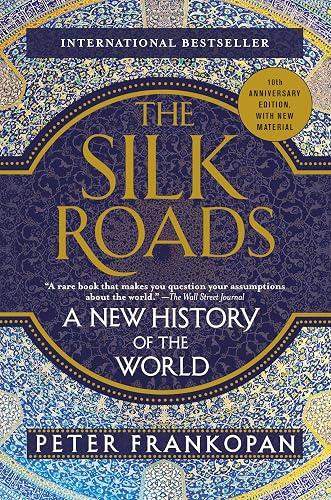
by Peter Frankopan
Premium summary · Opens in the app · 30 min read
For centuries, the story of the modern world has been told from a Western perspective. The rise of Europe, the industrial revolution, the American century, the spread of democracy and free markets. These narratives placed London, Paris, New York, and Washington at the center of the map. The rest of the world was peripheral, important only insofar as it supplied resources, labor, or markets for the developed West.
**Author:** Peter Frankopan **Estimated Reading Time:** 45 minutes
**What You'll Learn**
The global center of power is shifting from West to East at a speed few anticipated. This book reveals how trade routes, infrastructure projects, political alliances, and technological competitions are redrawing the world map. You will learn why Asia is reclaiming its historical dominance, how China's Belt and Road Initiative is transforming entire regions, why the United States and Europe are struggling to respond, and what this means for your understanding of the coming decades.
**Who This Book Is For**
This book is for anyone who senses that the old narratives about global power no longer match reality. It is for readers who want to understand why infrastructure deals in Pakistan matter to their daily lives, why technology competition between Washington and Beijing affects their future, and why the countries once dismissed as peripheral are now central to the world's story. If you want to see the world as it is becoming rather than as it was, this book is your guide.
For centuries, the story of the modern world has been told from a Western perspective. The rise of Europe, the industrial revolution, the American century, the spread of democracy and free markets. These narratives placed London, Paris, New York, and Washington at the center of the map. The rest of the world was peripheral, important only insofar as it supplied resources, labor, or markets for the developed West. That story is now obsolete. Peter Frankopan's The New Silk Roads is not a work of speculation about some distant future. It is a report from a transformation already underway. The evidence is everywhere. China has lifted hundreds of millions of people out of poverty and built the world's largest middle class in a single generation. India's economy has grown to rival those of the old European powers. Trade flows that once moved primarily across the Atlantic now surge across the Indian Ocean and the Eurasian landmass. The countries of Central Asia, long dismissed as remote and backward, are becoming vital nodes in a new global network. The problem is that most people in the West have not updated their mental maps. They still imagine a world where the United States and Europe set the rules, where the dollar is the only currency that matters, where Western technology leads and others follow. This outdated picture creates confusion. It makes the rise of China seem like a threat rather than a historical correction. It makes the assertiveness of Russia, Iran, and Turkey seem like disruption rather than a return to older patterns of power. It makes the decline of Western influence feel like a crisis rather than a predictable consequence…
Continue reading in the MinuteRead app
Get the complete 30-minute summary of The New Silk Roads
Get the complete summary in the appAsia is returning to its historical position as the center of the global economy.
The Belt and Road Initiative is reshaping the geography of trade and power.
Infrastructure creates dependencies that can be leveraged for political influence.
The United States is struggling to adapt to the rise of Asia.
Russia and Iran are reasserting themselves in the Middle East.
The technology race is becoming the central arena of great power competition.
"The New Silk Roads" is a strong fit if you want practical ideas around history, politics, economics, especially themes like asia is returning to its historical position as the center of the global economy; the belt and road initiative is reshaping the geography of trade and power. The MinuteRead summary distills these concepts into a focused read, whether you're deciding whether to buy the book or applying its lessons at work.
Motivated to help readers with the recent rise of Asia's economic and geopolitical strength, Peter Frankopan wrote “The New Silk Roads” as a practical guide drawn from years of experience and research. In “The New Silk Roads”, Peter Frankopan focuses on we are living in the Asian century already. Through “The New Silk Roads”, Peter Frankopan distills the core ideas on history into lessons readers can absorb in a single short sitting. Readers turn to this work when they want Peter Frankopan's per…
Continue Reading
Access the complete 30-minute summary and thousands more nonfiction books in the MinuteRead app.

Continue reading the complete summary in the MinuteRead app.