MinuteRead
30 min
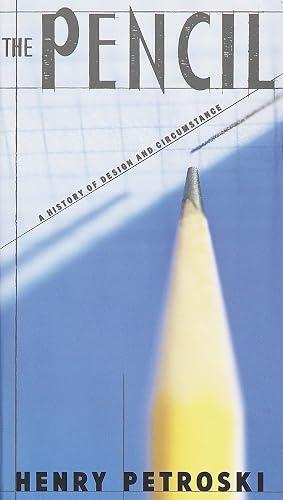
There is a pencil on your desk. Perhaps it sits in a drawer, forgotten beside dried-up pens and crumpled receipts. Maybe it rests behind your ear, or in a cup with other writing instruments, or on a workbench covered in sawdust. It is so familiar, so inexpensive, so utterly ordinary that you have probably never stopped to wonder where it came from or how it came to be.
**Author:** Henry Petroski **Estimated Reading Time:** 45 minutes
**What You'll Learn:**
Why the humble pencil represents one of humanity's greatest engineering achievements, how its evolution mirrors the development of civilization itself, and what this everyday object reveals about the nature of design, creativity, and problem-solving.
**Who This Book Is For:**
Anyone curious about how things are made, why good design matters, and how seemingly simple objects contain hidden worlds of complexity. Engineers, designers, writers, artists, and readers who enjoy discovering extraordinary stories behind ordinary things will find this book illuminating.
There is a pencil on your desk. Perhaps it sits in a drawer, forgotten beside dried-up pens and crumpled receipts. Maybe it rests behind your ear, or in a cup with other writing instruments, or on a workbench covered in sawdust. It is so familiar, so inexpensive, so utterly ordinary that you have probably never stopped to wonder where it came from or how it came to be. This is precisely what Henry Petroski wants to change. The pencil appears to be one of the simplest objects in your life. A thin rod of graphite wrapped in wood. You sharpen it, you write with it, you sharpen it again. What could be less complicated? What could be less worthy of deep investigation? Yet within this slender cylinder lies a story that spans centuries and continents. It involves Renaissance naturalists and American entrepreneurs, French revolutionaries and German chemists, English shepherds and Japanese manufacturers. It requires understanding geology, materials science, mechanical engineering, industrial design, and global trade. The pencil, it turns out, is not simple at all. It is a triumph of human ingenuity disguised as an everyday object. Petroski's central insight is that engineering surrounds us constantly, yet we rarely notice it. We live in a world of made things, from the buildings that shelter us to the devices that connect us, from the roads we travel to the tools we use. Every one of these objects exists because someone, somewhere, solved a problem. Someone identified a need, imagined a solution, worked through failures, refined the design, and eventually produced something that worked well enough to become ordinary. The pencil is the perfect vehicle for exploring this hidden world because it is so universally understood. Unlike a suspension bridge or a jet engine, a pencil requires no specialized knowledge to appreciate. You have held one. You have used one. You have probably broken one. This familiarity gives Petroski an entry point into deeper questions about how objects come to be and what they reveal about the people who make and use them. The story begins in the English countryside, where a strange black substance was discovered beneath the roots of a…
Continue reading in the MinuteRead app
Get the complete 30-minute summary of The Pencil
Get the complete summary in the appEvery made object embodies engineering decisions. The pencil is a record of how humans solve problems.
Engineering is not applied science. It has its own method, driven by practical necessity and shaped by constraints.
The engineering method is a cycle: identify a problem, imagine a solution, test it, refine it, repeat.
Failure is information. Each failed attempt teaches something that guides the next attempt.
Materials matter. The properties of materials determine design possibilities.
Competition and craftsmanship both drive progress. Competition provides incentive; craftsmanship provides skill.
"The Pencil" is a strong fit if you want practical ideas around history, technology, science, especially themes like every made object embodies engineering decisions. the pencil is a record of how humans solve problems; engineering is not applied science. it has its own method, driven by practical necessity and shaped by constraints. The MinuteRead summary distills these concepts into a focused read, whether you're deciding whether to buy the book or applying its lessons at work.
Motivated to help readers with all made objects owe their very existence to some kind of engineering, Henry Petroski wrote “The Pencil” to package those ideas for a fast, focused read. In “The Pencil”, Henry Petroski focuses on all made objects owe their very existence to some kind of engineering. Through “The Pencil”, Henry Petroski distills the core ideas on history into lessons readers can absorb in a single short sitting. Readers turn to this work when they want Henry Petroski's perspective …
View all summaries by Henry PetroskiContinue Reading
Access the complete 30-minute summary and thousands more nonfiction books in the MinuteRead app.

Continue reading the complete summary in the MinuteRead app.