MinuteRead
30 min
Book summary
Premium summary · Opens in the app · 30 min read
The weight loss industry thrives on a simple promise: lose weight fast. It sells pills, powders, teas, wraps, and programs that claim to melt fat while you sleep. Most of these products are worthless. Some are dangerous. And nearly all of them fail to deliver lasting results because they ignore the fundamental biology of how the human body actually loses fat.
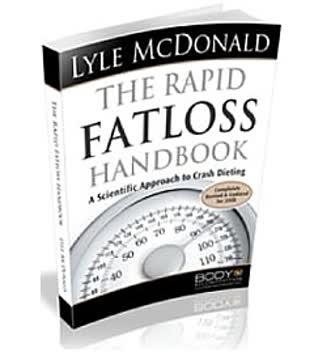
**Author:** Lyle McDonald
**Estimated Reading Time:** 45 minutes
**What You'll Learn:** How to lose fat at the maximum safe rate using a protein sparing modified fast, why most rapid weight loss is water, how to preserve muscle during extreme dieting, and how to keep the weight off permanently.
**Who This Book Is For:** Anyone who needs to lose significant fat quickly and safely, who has struggled with conventional diets, or who wants to understand the science behind extreme fat loss without falling for dangerous fads.
The weight loss industry thrives on a simple promise: lose weight fast. It sells pills, powders, teas, wraps, and programs that claim to melt fat while you sleep. Most of these products are worthless. Some are dangerous. And nearly all of them fail to deliver lasting results because they ignore the fundamental biology of how the human body actually loses fat. Lyle McDonald wrote The Rapid Fat Loss Handbook to address a real problem that most diet books refuse to acknowledge: sometimes people need to lose fat quickly, and they need a method that actually works without destroying their health or their muscle mass. The book is not a gentle guide to lifestyle change. It is a precise, science-based protocol for achieving the fastest possible fat loss while preserving lean body mass. The central problem McDonald addresses is that conventional dieting is slow, and crash dieting is usually done catastrophically wrong. People who attempt rapid weight loss typically starve themselves, lose significant muscle mass, wreck their metabolism, and regain everything they lost plus more. The diet industry responds by telling people that rapid weight loss is inherently impossible or dangerous. McDonald disagrees. The problem is not speed. The problem is method. The solution he presents is the Protein Sparing Modified Fast, or PSMF. This approach was developed in the 1970s by researchers studying the effects of total starvation on obese patients. They discovered something counterintuitive: when you give a starving person nothing but protein, they continue to lose fat rapidly while preserving their muscle mass. The body, deprived of carbohydrates and fat, burns its own fat stores for energy. The dietary protein provides the amino acids the brain and organs need, preventing the body from cannibalizing its own muscle tissue. This discovery led to a dark chapter in diet history. The infamous "Last Chance Diet" of the 1970s promoted a liquid protein fast that killed dozens of people. The deaths were not caused by the protein sparing concept itself. They were caused by using nutritionally worthless collagen protein and failing to provide essential minerals. The underlying science was sound. The implementation was catastrophic. McDonald's book is an attempt to rescue the PSMF from both its…
Continue reading in the MinuteRead app
Get the complete 30-minute summary of The Rapid Fat Loss Handbook
Get the complete summary in the appThe PSMF consists of lean protein, non-starchy vegetables, fish oil, and supplements, totaling 600 to 800 calories per d
Protein intake is calculated based on lean body mass, not total bodyweight, and ranges from 0.8 to 2.0 grams per pound d
Expect roughly half a pound of true fat loss per day. Early scale drops of 7 to 10 pounds are mostly water.
Dietary protein spares muscle during starvation by providing amino acids for gluconeogenesis instead of harvesting them
Body fat percentage determines your diet category, which sets protein intake, maximum diet duration, and break frequency
Skip cardio during the PSMF. Lift heavy weights 2 to 3 times per week to preserve muscle mass.
"The Rapid Fat Loss Handbook" is a strong fit if you want practical ideas around health & fitness, nutrition, fitness, especially themes like the psmf consists of lean protein, non-starchy vegetables, fish oil, and supplements, totaling 600 to 800 calories per d; protein intake is calculated based on lean body mass, not total bodyweight, and ranges from 0.8 to 2.0 grams per pound d. The MinuteRead summary distills these concepts into a focused read, whether you're deciding whether to buy the book or applying its lessons at work.
Lyle McDonald is a respected author and researcher in the field of nutrition and fitness. Known for his evidence-based approach, McDonald has written several books on dieting, body composition, and sports nutrition. He is recognized for his no-nonsense style and ability to explain complex scientific concepts in accessible terms. McDonald's work often focuses on the physiological aspects of fat loss and muscle preservation, and he has developed various dietary protocols, including the Protein Spa…
View all summaries by Lyle McDonaldContinue Reading
Access the complete 30-minute summary and thousands more nonfiction books in the MinuteRead app.

Continue reading the complete summary in the MinuteRead app.