MinuteRead
30 min
Book summary
Premium summary · Opens in the app · 30 min read
Most people believe resilience is something you either have or you don't. They watch colleagues crumble under pressure while others seem to glide through crises untouched. They see friends devastated by setbacks that barely register for others. And they conclude that resilience must be an inborn trait, something woven into the fabric of certain fortunate personalities.
**Author:** Karen Reivich and Andrew Shatté
**Estimated Reading Time:** 45 minutes
**What You'll Learn:** How to master seven essential skills that will transform how you respond to adversity, overcome setbacks, and build lasting resilience in every area of your life.
**Who This Book Is For:** Anyone who has ever felt overwhelmed by challenges, stuck in negative thinking patterns, or uncertain about their ability to bounce back from life's inevitable difficulties.
Most people believe resilience is something you either have or you don't. They watch colleagues crumble under pressure while others seem to glide through crises untouched. They see friends devastated by setbacks that barely register for others. And they conclude that resilience must be an inborn trait, something woven into the fabric of certain fortunate personalities. This belief is not just wrong. It is actively harmful. When you believe resilience is fixed, you surrender your power to change. You tell yourself that your struggles are permanent, that your reactions to adversity are simply who you are, and that trying to become more resilient is as futile as trying to become taller. You become a passive observer of your own emotional life rather than an active participant in shaping it. The truth, backed by decades of psychological research, is far more hopeful. Resilience is a set of skills. Like any skills, they can be learned, practiced, and mastered. The ability to bounce back from setbacks, to navigate daily stresses with grace, and to transform hardship into growth is not reserved for a lucky few. It is available to anyone willing to do the work. Karen Reivich and Andrew Shatté spent years studying resilience through the lens of cognitive behavioral psychology. They worked with people facing profound challenges: children growing up in poverty, adults navigating devastating losses, professionals burning out under relentless pressure. What they discovered was consistent across every population they studied. The difference between those who thrived and those who struggled was not the severity of their circumstances. It was how they thought about their circumstances. This insight forms the foundation of everything that follows. Your thoughts, not your circumstances, determine your resilience. The interpretations you make, the beliefs you hold, the explanations you construct: these are the raw materials of resilience. And they are entirely within your control. The book you are about to read is not a collection of abstract theories. It is a practical guide built around seven specific skills that have been tested and refined through years of research and application. You will learn how to identify the thinking patterns that undermine you, how to challenge beliefs that hold you back, and how to build a mindset that allows you to face adversity with confidence and…
Continue reading in the MinuteRead app
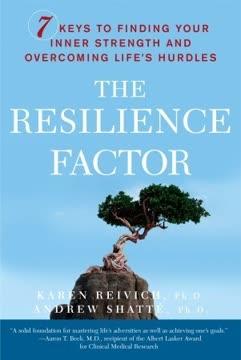
Get the complete 30-minute summary of The Resilience Factor
Get the complete summary in the appResilience is a learnable skill, not a fixed trait. You can become more resilient through practice.
Your thoughts, not events, determine your emotional responses. Change your thinking and you change your life.
Use the ABC model to understand your reactions: Adversity, Beliefs, Consequences.
Identify your thinking traps. Everyone has habitual patterns of distorted thinking.
Detect your iceberg beliefs. Deeply held beliefs drive your reactions more than you realize.
Challenge your beliefs with evidence. The goal is accuracy, not positivity.
"The Resilience Factor" is a strong fit if you want practical ideas around self help, psychology, mental health, especially themes like resilience is a learnable skill, not a fixed trait. you can become more resilient through practice; your thoughts, not events, determine your emotional responses. change your thinking and you change your life. The MinuteRead summary distills these concepts into a focused read, whether you're deciding whether to buy the book or applying its lessons at work.
Karen Reivich is a psychologist and researcher specializing in resilience and positive psychology. She co-authored The Resilience Factor with Andrew Shatte, drawing on years of experience in research, treatment, and training. Reivich's work focuses on helping people develop skills to overcome life's challenges and improve their mental well-being. She has conducted extensive studies on resilience and its application in various settings. Reivich is known for her ability to explain complex concepts…
View all summaries by Karen ReivichContinue Reading
Access the complete 30-minute summary and thousands more nonfiction books in the MinuteRead app.

Continue reading the complete summary in the MinuteRead app.