MinuteRead
30 min
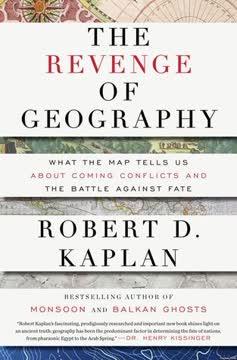
Book summary
Premium summary · Opens in the app · 30 min read
In the late twentieth century, a particular idea took hold among educated people in the West. The idea was that geography no longer mattered. Technology had conquered distance. The internet had made borders porous. Globalization had flattened the world. History, we were told, had ended. The future would be shaped by markets and democracy, not by mountains and rivers.
**Author:** Robert D. Kaplan **Estimated Reading Time:** 55 minutes
**What You'll Learn** Why the physical world still shapes the fate of nations. How mountains, rivers, deserts, and coastlines influence war, trade, and political power. Why the maps hanging in foreign ministries matter more than most leaders admit. And how geography offers a lens for understanding the great struggles of the twenty-first century, from China's rise to Russia's anxieties to America's dilemmas on its own borders.
**Who This Book Is For** Anyone who senses that international events are not random. Readers who want a deeper framework for understanding why nations behave as they do. Policymakers, strategists, students of history, and citizens trying to make sense of a world that seems chaotic but is, in fact, shaped by forces far older than any ideology.
In the late twentieth century, a particular idea took hold among educated people in the West. The idea was that geography no longer mattered. Technology had conquered distance. The internet had made borders porous. Globalization had flattened the world. History, we were told, had ended. The future would be shaped by markets and democracy, not by mountains and rivers. Robert D. Kaplan watched this consensus form and felt a deep unease. As a journalist who had spent decades reporting from war zones and failing states, he had seen something different on the ground. He had seen how the Sahara's expansion drove conflict in the Sahel. He had seen how the absence of navigable rivers kept African economies fragmented. He had seen how the vast openness of the Eurasian steppe haunted Russian strategic thinking across centuries. The maps on the walls of foreign ministries still mattered, even if Western academics had stopped looking at them. This book is Kaplan's response to what he saw as a dangerous forgetting. Geography, he argues, has not been conquered. It has been ignored. And ignoring geography does not make its effects disappear. It simply makes those effects surprising and painful when they arrive. The problem Kaplan addresses is straightforward. Human beings live in physical space. Nations occupy specific territories with specific characteristics. Some have natural harbors. Others are landlocked. Some have navigable rivers that connect interior regions to the sea. Others have deserts or mountain ranges that fragment their populations. Some have abundant resources. Others lack water. These facts are not destiny in any simple sense, but they are constraints. They set the stage on which human drama unfolds. Why does this matter now? Because the post-Cold War moment of American dominance is fading. New powers are rising. Old rivalries are reemerging. And the physical realities that shaped great-power competition in the past are reasserting themselves. China's push into the South China Sea…
Continue reading in the MinuteRead app
Get the complete 30-minute summary of The Revenge of Geography
Get the complete summary in the appGeography is not destiny, but it is the stage on which all human drama unfolds. Ignore it at your peril.
Russia's flat western frontier has made it vulnerable to invasion for centuries. Its expansionism is a defensive respons
China's geography forces it to be both a land power and a sea power. Its strategic dilemmas flow from this dual identity
The Middle East's borders were drawn by Europeans who ignored the region's actual geography. The resulting instability i
Iran's mountainous plateau makes it a natural fortress. Its geography has preserved its distinct identity for millennia.
The United States is protected by two oceans, but its southern border with Mexico is a geographical reality that cannot
"The Revenge of Geography" is a strong fit if you want practical ideas around history, politics, geography, especially themes like geography is not destiny, but it is the stage on which all human drama unfolds. ignore it at your peril; russia's flat western frontier has made it vulnerable to invasion for centuries. its expansionism is a defensive respons. The MinuteRead summary distills these concepts into a focused read, whether you're deciding whether to buy the book or applying its lessons at work.
Robert David Kaplan is an American journalist and National Correspondent for the Atlantic Monthly. His work has appeared in various prestigious publications, including The Washington Post and Foreign Affairs. Kaplan's writings often focus on geopolitics, international relations, and U.S. foreign policy. He is known for sparking debates about the nature of American power and exploring how cultural and historical tensions reemerge in the post-Cold War era. Kaplan's controversial essays have influe…
View all summaries by Robert D. KaplanContinue Reading
Access the complete 30-minute summary and thousands more nonfiction books in the MinuteRead app.

Continue reading the complete summary in the MinuteRead app.