MinuteRead
30 min
Book summary
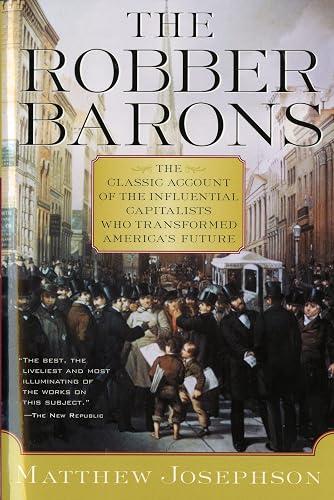
by Matthew Josephson
Premium summary · Opens in the app · 30 min read
In the decades following the American Civil War, the United States underwent a transformation more dramatic than any in its history. A nation of farmers, small merchants, and local craftsmen became, within a single generation, the greatest industrial power on earth. Railroads crossed the continent. Steel mills blazed through the night. Oil derricks dotted the Pennsylvania hills. Cities swelled with immigrants and factory workers. And at the center of it all stood a small group of men whose wealt
**Author:** Matthew Josephson
**Estimated Reading Time:** 45 minutes
**What You'll Learn:**
- How a handful of ambitious men transformed America from an agricultural republic into an industrial empire - The strategies they used to build monopolies in railroads, oil, steel, and finance - Why their methods sparked fierce debates about capitalism that still echo today - What their stories reveal about the relationship between ambition, power, and public good
**Who This Book Is For:**
Readers who want to understand the origins of modern American capitalism, the men who built it, and the price the nation paid for industrial supremacy. This condensed edition is for anyone curious about how wealth and power actually operate, beyond the myths and moralizing.
In the decades following the American Civil War, the United States underwent a transformation more dramatic than any in its history. A nation of farmers, small merchants, and local craftsmen became, within a single generation, the greatest industrial power on earth. Railroads crossed the continent. Steel mills blazed through the night. Oil derricks dotted the Pennsylvania hills. Cities swelled with immigrants and factory workers. And at the center of it all stood a small group of men whose wealth and power dwarfed anything the country had ever seen. Matthew Josephson called them the robber barons, borrowing a term from the medieval lords who charged tolls on the Rhine River. Like their medieval counterparts, these men did not create the resources they controlled. They seized them. They built empires not primarily by producing goods but by dominating the systems through which goods flowed. They mastered the art of consolidation, elimination of competitors, and manipulation of markets. And they did it all in the name of progress. The men Josephson profiles in this book are familiar names even today: Cornelius Vanderbilt, the gruff ferryman's son who built a shipping and railroad empire. Jay Gould, the cunning speculator who manipulated stock markets with cold precision. John D. Rockefeller, the pious bookkeeper who crushed competitors with systematic efficiency. Andrew Carnegie, the Scottish immigrant who revolutionized steel production while preaching the gospel of wealth. J.P. Morgan, the banker who stepped in to reorganize entire industries when chaos threatened. These men were not villains in the simple sense. They were products of their age, driven by an economic system that rewarded aggression and punished sentiment. Many of them believed sincerely that they were advancing civilization. Some gave away fortunes to libraries, universities, and charities. But their methods, Josephson argues, were fundamentally predatory. They built their empires on political corruption, labor exploitation, and the systematic destruction of competition. The story of the robber barons matters because it is not merely history. It is the origin story of modern American…
Continue reading in the MinuteRead app
Get the complete 30-minute summary of The Robber Barons
Get the complete summary in the appThe robber barons built their fortunes not primarily through production but through control of infrastructure, markets,
The railroad was the first great monopoly, demonstrating that whoever controlled transportation could extract wealth fro
Rockefeller's Standard Oil pioneered the trust, a legal structure that allowed centralized control of an entire industry
Carnegie's steel empire showed the power of vertical integration, controlling every stage of production from raw materia
Jay Gould demonstrated that financial manipulation could be more profitable than productive enterprise.
J.P. Morgan represented the apotheosis of private power, wielding more influence over the economy than any government of
"The Robber Barons" is a strong fit if you want practical ideas around history, economics, business, especially themes like the robber barons built their fortunes not primarily through production but through control of infrastructure, markets,; the railroad was the first great monopoly, demonstrating that whoever controlled transportation could extract wealth fro. The MinuteRead summary distills these concepts into a focused read, whether you're deciding whether to buy the book or applying its lessons at work.
Motivated to help readers with "These men were robber barons as were their medieval counterparts, Matthew Josephson wrote “The Robber Barons” to package those ideas for a fast, focused read. In “The Robber Barons”, Matthew Josephson focuses on "These men were robber barons as were their medieval counterparts. Through “The Robber Barons”, Matthew Josephson distills the core ideas on history into lessons readers can absorb in a single short sitting. Readers turn to this work when they want Matthew…
Continue Reading
Access the complete 30-minute summary and thousands more nonfiction books in the MinuteRead app.

Continue reading the complete summary in the MinuteRead app.