MinuteRead
30 min
Book summary
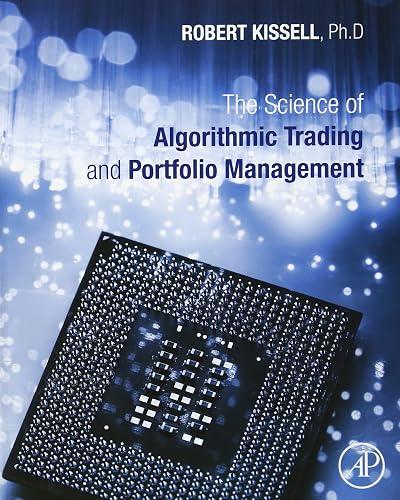
by Robert Kissell
Premium summary · Opens in the app · 30 min read
The trading floor was once the beating heart of finance. Hundreds of people shouting orders, waving tickets, and racing between desks. The noise was deafening. The energy was electric. And the inefficiency was staggering.
**Author:** Robert Kissell
**Estimated Reading Time:** 45 minutes
**What You'll Learn:** - How electronic trading transformed financial markets from human floors to machine-driven systems - Why transaction costs, not just returns, determine investment success - How to measure and model market impact with mathematical precision - The frameworks professionals use to align trading strategy with investment goals - How to build independent trading intelligence without relying on broker black boxes - Practical techniques for implementing transaction cost analysis on your own desktop
**Who This Book Is For:** - Portfolio managers seeking to understand how execution affects returns - Quantitative analysts building or refining trading models - Traders transitioning from manual to algorithmic execution - Students of financial markets wanting a rigorous foundation in trading science - Anyone responsible for investment performance who needs to understand the hidden costs of trading
The trading floor was once the beating heart of finance. Hundreds of people shouting orders, waving tickets, and racing between desks. The noise was deafening. The energy was electric. And the inefficiency was staggering. Today, that floor is mostly silent. The shouting has been replaced by the hum of servers in data centers located miles from the exchanges they serve. The tickets have become packets of data traveling at speeds measured in microseconds. The human decision to buy or sell has been decomposed into mathematical rules executed by machines. This transformation did not happen gradually. It happened with the force of a tidal wave. In the early 2000s, electronic trading accounted for a meaningful but not dominant share of market volume. By the time Robert Kissell wrote this book, electronic trading represented over 99 percent of equity volume, with algorithms executing roughly 92 percent of all trades. The question was no longer whether to use algorithms. The question was how to use them intelligently. Yet here lies a paradox. The tools have become more sophisticated, but the understanding of those tools has not kept pace. Many traders and portfolio managers use algorithms the way drivers use cars: they know how to press the accelerator and turn the wheel, but they have no idea what happens under the hood. When the car runs smoothly, this ignorance is harmless. When market conditions change unexpectedly, it becomes dangerous. The central problem this book addresses is not the technology itself. The problem is the gap between what algorithms can do and what their users understand about them. A trader who selects a VWAP algorithm without understanding how it responds to volume shocks is not really making a decision. They are delegating a decision to a machine they do not understand. This matters because trading costs are not trivial. They are not a minor friction…
Continue reading in the MinuteRead app
Get the complete 30-minute summary of The Science of Algorithmic Trading and Portfolio Management
Get the complete summary in the appBest execution means aligning trading strategy with investment objectives, not minimizing commissions.
Transaction costs include ten components, and the hidden ones are often the largest.
Market impact is the price change caused by your trade and must be modeled, not measured directly.
The I-Star model estimates market impact using order size, volatility, and trading strategy.
Volatility measures uncertainty, and forecasting it requires both historical data and market expectations.
Volume forecasting is essential because the cost of a trade depends on the liquidity available.
"The Science of Algorithmic Trading and Portfolio Management" is a strong fit if you want practical ideas around finance, business, economics, especially themes like best execution means aligning trading strategy with investment objectives, not minimizing commissions; transaction costs include ten components, and the hidden ones are often the largest. The MinuteRead summary distills these concepts into a focused read, whether you're deciding whether to buy the book or applying its lessons at work.
Motivated to help readers with to say that electronic algorithmic trading has disrupted the financial environment is truly an understatement, Robert Kissell wrote “The Science of Algorithmic Trading and Portfolio Management” to package those ideas for a fast, focused read. In “The Science of Algorithmic Trading and Portfolio Management”, Robert Kissell focuses on to say that electronic algorithmic trading has disrupted the financial environment is truly an understatement. Through “The Science of…
Continue Reading
Access the complete 30-minute summary and thousands more nonfiction books in the MinuteRead app.

Continue reading the complete summary in the MinuteRead app.