MinuteRead
30 min
Book summary
Premium summary · Opens in the app · 30 min read
There is a moment that separates every human being from every other creature on earth. It is the space between something happening to you and your response to it. In that space lies your freedom. In that space lies your power. And in that space lies the difference between a life of quiet frustration and a life of genuine effectiveness.
**Author:** Stephen R. Covey
**Estimated Reading Time:** 45 minutes
**What You'll Learn:** How to build a character-based foundation for personal and professional effectiveness, master the seven classic habits that transform how you live and work, and discover the eighth habit that moves you from effectiveness to greatness.
**Who This Book Is For:** Anyone who feels stuck in reactive patterns, overwhelmed by competing demands, frustrated by failed communication, or searching for a deeper sense of purpose and contribution. This book is for people who want to stop managing their lives and start leading them.
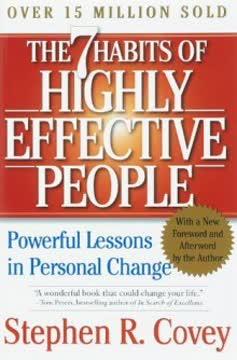
There is a moment that separates every human being from every other creature on earth. It is the space between something happening to you and your response to it. In that space lies your freedom. In that space lies your power. And in that space lies the difference between a life of quiet frustration and a life of genuine effectiveness. Stephen Covey spent decades studying the literature of success. He read Benjamin Franklin's autobiography. He studied the writings of the founding fathers. He examined the self-help movements that swept through America in the twentieth century. What he discovered was a profound shift in how people thought about success, and that shift changed everything about how we understand human effectiveness. For the first 150 years of American history, success literature focused on character. It talked about integrity, humility, fidelity, courage, patience, and hard work. These were the foundations of a successful life. Then, after World War I, something changed. The focus shifted from character to personality. Success became about public image, positive attitude, communication skills, and techniques for getting people to like you. The underlying assumption was that you could change your outward behavior without changing your inner self. Covey saw the flaw in this approach. Personality techniques without character are like painting a beautiful exterior on a house with a crumbling foundation. It looks good for a while, but eventually the cracks show. The techniques fail. The relationships break down. The success proves hollow. The seven habits are Covey's answer to this problem. They are not quick fixes or superficial techniques. They are principles, rooted in timeless truths about how human beings actually function. They work because they align with natural laws, the same way a farmer works with the seasons rather than against them. You cannot cram for a harvest. You cannot fake a good crop. You must plant, tend, and wait. The seven habits work the same way. They require patience, practice, and a willingness to grow from the inside out. The first three habits move you from dependence to independence. They are habits of self-mastery. Be proactive. Begin with the end in mind. Put…
Continue reading in the MinuteRead app
Get the complete 30-minute summary of The Seven Habits Of Highly Effective People And The 8th Habit
Get the complete summary in the appYou are responsible for your own life. Your response to any situation is your choice.
Define your mission before you start your journey. Begin with the end in mind.
Focus on what is important, not just what is urgent. Put first things first.
Seek mutual benefit in every interaction. Think win-win.
Listen to understand, not to reply. Seek first to understand.
Value differences and create something new. Synergize.
"The Seven Habits Of Highly Effective People And The 8th Habit" is a strong fit if you want practical ideas around self help, business, leadership, especially themes like you are responsible for your own life. your response to any situation is your choice; define your mission before you start your journey. begin with the end in mind. The MinuteRead summary distills these concepts into a focused read, whether you're deciding whether to buy the book or applying its lessons at work.
Stephen R. Covey was a renowned American author, educator, and businessman. His most famous work, The 7 Habits of Highly Effective People , became a bestseller and established him as a leading voice in personal development. Covey authored several other books on leadership and effectiveness, including "First Things First" and "The 8th Habit." His influence extended beyond literature; Time magazine recognized him as one of the 25 most influential people in 1996. Covey's academic career included a …
View all summaries by Stephen R. CoveyContinue Reading
Access the complete 30-minute summary and thousands more nonfiction books in the MinuteRead app.

Continue reading the complete summary in the MinuteRead app.