 MinuteRead
30 min
Book summary
Premium summary · Opens in the app · 30 min read
Every leader knows the phrase "strategic thinking." It appears in job descriptions, performance reviews, and leadership competency frameworks. Executives claim to value it above almost any other capability. Yet when you ask people to define what strategic thinking actually is, most struggle to give a clear answer.
**Author:** Michael D. Watkins
**Estimated Reading Time:** 45 minutes
**What You'll Learn:**
- The six mental disciplines that separate exceptional strategic thinkers from average ones - How to recognize patterns before competitors see them - How to build simplified models of complex business environments - How to create visions that genuinely motivate organizations - How to navigate organizational politics with integrity and effectiveness - How to develop these capabilities in yourself and your team
**Who This Book Is For:**
Leaders who have been promoted beyond functional expertise and now face ambiguous, complex challenges. Managers who want to move from tactical execution to strategic contribution. Executives who need to build strategic thinking capacity across their organizations. Anyone who wants to train their brain to see what others miss.
Every leader knows the phrase "strategic thinking." It appears in job descriptions, performance reviews, and leadership competency frameworks. Executives claim to value it above almost any other capability. Yet when you ask people to define what strategic thinking actually is, most struggle to give a clear answer. Some describe it as seeing the big picture. Others talk about anticipating the future. Many conflate it with strategic planning, as if the ability to create a plan and the ability to think strategically were the same thing. They are not. Michael Watkins has spent decades studying leaders who consistently make good decisions in complex, uncertain environments. He has advised executives at some of the world's largest companies, taught at Harvard Business School, INSEAD, and IMD, and written extensively about leadership transitions and organizational change. Through this work, he observed something important: strategic thinking is not a mysterious gift that some people are born with and others lack. It is a set of identifiable mental disciplines that can be learned, practiced, and developed. This matters because the demands on leaders have changed dramatically. A generation ago, a senior executive could succeed by being excellent at execution. The competitive landscape moved slowly enough that companies could rely on established strategies for years at a time. Information was scarce, and those who had it held an advantage. Today, the opposite is true. Information is abundant, even overwhelming. Competitive advantages erode quickly. Technologies disrupt industries in months rather than decades. The pace of change means that leaders cannot simply execute a fixed plan. They must constantly reassess their environment, identify emerging threats and opportunities, and adjust course before it is too late. The problem is that most leaders have never been taught how to do this. Business schools focus on analytical tools and frameworks. Companies train people to execute processes and manage projects. But the mental disciplines that enable someone to recognize a pattern before it becomes obvious, to…
Continue reading in the MinuteRead app
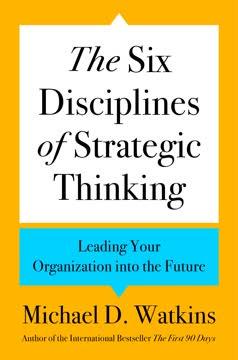
Get the complete 30-minute summary of The Six Disciplines of Strategic Thinking
Get the complete summary in the appStrategic thinking is a set of six mental disciplines: pattern recognition, systems analysis, mental agility, structured
Pattern recognition allows you to see emerging threats and opportunities before competitors do.
Systems analysis focuses on interconnections, not individual elements. The whole is greater than the sum of its parts.
Mental agility enables you to shift between big picture and details, and to anticipate competitive responses.
Structured problem-solving begins with framing the problem as a specific question. A well-framed problem is half-solved.
Visioning creates compelling mental pictures that align and motivate. A vision is not a goal; it is an image of the futu
"The Six Disciplines of Strategic Thinking" is a strong fit if you want practical ideas around business, leadership, management, especially themes like strategic thinking is a set of six mental disciplines: pattern recognition, systems analysis, mental agility, structured; pattern recognition allows you to see emerging threats and opportunities before competitors do. The MinuteRead summary distills these concepts into a focused read, whether you're deciding whether to buy the book or applying its lessons at work.
Michael D. Watkins is a renowned leadership and transition expert, best known for his work on organizational change and executive development. He has authored several influential books, including the bestseller "The First 90 Days." Watkins is a professor of Leadership and Organizational Change at IMD Business School and previously taught at INSEAD and Harvard Business School. He co-founded Genesis Advisers, a leadership development consultancy. With extensive experience in both academia and busi…
View all summaries by Michael D. WatkinsContinue Reading
Access the complete 30-minute summary and thousands more nonfiction books in the MinuteRead app.

Continue reading the complete summary in the MinuteRead app.






