MinuteRead
30 min
Book summary
by Gregor Hohpe
Premium summary · Opens in the app · 30 min read
Every large organization has a problem that nobody likes to talk about. The people making strategic decisions at the top don't understand how software actually gets built. The people building software in the trenches don't understand why the decisions from above seem so disconnected from reality. Between them sits a vast middle layer of managers, processes, and documents that often makes the problem worse rather than better.
**Author:** Gregor Hohpe
**Estimated Reading Time:** 45 minutes
**What You'll Learn:**
- Why the most valuable architects move constantly between business strategy and technical implementation - How to think about architecture as a discipline of managing change, not just designing systems - Why selling options is a better mental model than making decisions - How systems thinking reveals problems that structural thinking misses - Why speed beats efficiency in the digital economy - How to communicate technical ideas to non-technical audiences without losing meaning - What it really takes to transform an organization, not just its technology
**Who This Book Is For:**
This book is for software architects who feel trapped between business leaders who don't understand technology and developers who don't understand business constraints. It's for technology leaders who suspect their organization is optimized for the wrong things. It's for anyone who has ever wondered why digital transformation initiatives fail despite massive investment. If you've ever felt like you're speaking a different language from the people on other floors of your organization, this book will teach you to ride the elevator between them.
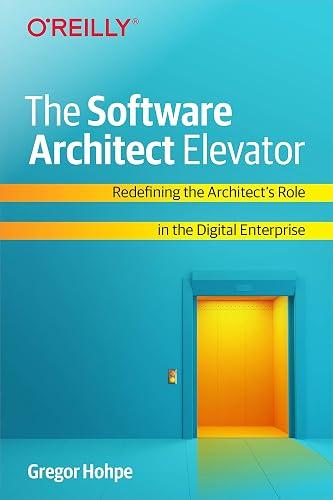
Every large organization has a problem that nobody likes to talk about. The people making strategic decisions at the top don't understand how software actually gets built. The people building software in the trenches don't understand why the decisions from above seem so disconnected from reality. Between them sits a vast middle layer of managers, processes, and documents that often makes the problem worse rather than better. This gap is not new. What is new is how dangerous it has become. For most of the twentieth century, information technology was a support function. It processed payroll, managed inventory, and printed reports. When technology failed, the business could limp along for a few days. When technology succeeded, it made existing processes slightly more efficient. The stakes were real but manageable. That world no longer exists. Today, software is the product. Banks are software companies that happen to hold banking licenses. Retailers are software companies that happen to move physical goods. Airlines are software companies that happen to own airplanes. When the software fails, the business fails. When the software is slow, the business loses to competitors who can move faster. This shift has created an unprecedented demand for people who can bridge the gap between business strategy and technical implementation. These people need to understand both worlds deeply enough to translate between them, challenge assumptions on both sides, and make decisions that honor the constraints of each. Gregor Hohpe calls these people architects, and he calls the gap they bridge the architect elevator. The metaphor is deceptively simple. Picture a skyscraper. At the top is the penthouse,…
Continue reading in the MinuteRead app
Get the complete 30-minute summary of The Software Architect Elevator
Get the complete summary in the app**Ride the elevator.** Connect business strategy with technical implementation. This is your most important job.
**Live in the first derivative.** Design for change. The rate of change is the most important factor in architecture.
**Sell options.** Defer irreversible decisions until you have more information. Flexibility has value.
**Think in systems.** Focus on behavior, not just structure. Address root causes, not symptoms.
**Automate everything.** Make manual processes repeatable and reliable. Expose them through self-service.
**Treat infrastructure as software.** Use version control, code review, and automated testing for infrastructure.
"The Software Architect Elevator" is a strong fit if you want practical ideas around technology, business, architecture, especially themes like **ride the elevator.** connect business strategy with technical implementation. this is your most important job; **live in the first derivative.** design for change. the rate of change is the most important factor in architecture. The MinuteRead summary distills these concepts into a focused read, whether you're deciding whether to buy the book or applying its lessons at work.
Motivated to help readers with if you picture the levels of an organization as the floors in a building, Gregor Hohpe wrote “The Software Architect Elevator” to package those ideas for a fast, focused read. In “The Software Architect Elevator”, Gregor Hohpe focuses on if you picture the levels of an organization as the floors in a building. Through “The Software Architect Elevator”, Gregor Hohpe distills the core ideas on technology into lessons readers can absorb in a single short sitting. Read…
Continue Reading
Access the complete 30-minute summary and thousands more nonfiction books in the MinuteRead app.

Continue reading the complete summary in the MinuteRead app.