MinuteRead
30 min
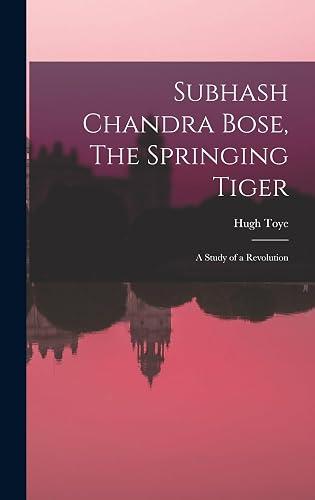
In the pantheon of Indian freedom fighters, most names evoke a singular, unambiguous response. Mahatma Gandhi represents non-violence. Jawaharlal Nehru represents democratic socialism. But Subhash Chandra Bose defies easy categorization. He was a revolutionary who allied with fascist regimes. A democrat who embraced authoritarian methods. A man of peace who believed that only war could free his nation.
**Author:** Hugh Toye
**Estimated Reading Time:** 42 minutes
**What You'll Learn:**
The complete story of Subhash Chandra Bose, one of India's most dynamic and controversial freedom fighters. You will understand his ideological break with Gandhi, his daring escape from India, his alliance with Axis powers, his leadership of the Indian National Army, and the complex legacy he left behind. More importantly, you will grasp the strategic thinking behind his radical approach to liberation and why his methods continue to provoke debate decades after his death.
**Who This Book Is For:**
Readers interested in Indian history, World War II geopolitics, revolutionary movements, and leadership under extreme circumstances. Anyone seeking to understand why Bose remains both revered and contested, and what his life reveals about the moral complexities of fighting for freedom.
In the pantheon of Indian freedom fighters, most names evoke a singular, unambiguous response. Mahatma Gandhi represents non-violence. Jawaharlal Nehru represents democratic socialism. But Subhash Chandra Bose defies easy categorization. He was a revolutionary who allied with fascist regimes. A democrat who embraced authoritarian methods. A man of peace who believed that only war could free his nation. Hugh Toye's "The Springing Tiger" confronts this complexity directly. Written by a British intelligence officer who spent years tracking Bose during World War II, the book offers something rare: a portrait of the revolutionary from the perspective of those who hunted him. Toye had access to classified files, intercepted communications, and firsthand accounts from British officers who considered Bose one of the most dangerous men in the empire. Yet rather than producing a hostile caricature, Toye created a nuanced study of a man whose commitment to Indian independence forced him into impossible choices. The central question that animates this book is not whether Bose was right or wrong. It is how a brilliant, idealistic young man from a privileged Bengali family became the leader of an army fighting alongside the Japanese and Germans, and what that transformation reveals about the nature of colonial resistance. The problem Bose faced was straightforward: the British Empire was the most powerful military force on earth, and India had no army of its own. The Indian National Congress, under Gandhi's leadership, had chosen non-violent resistance as its weapon. This approach had moral clarity but uncertain effectiveness. The British had demonstrated repeatedly that they could absorb protests, strikes, and civil disobedience campaigns without losing their grip on power. They had jailed Gandhi multiple times. They had killed unarmed protesters at Jallianwala Bagh. They had shown that empire was not easily shamed into retreat. Bose looked at this situation and drew a different conclusion. He believed that the British would only leave India when the cost of staying became…
Continue reading in the MinuteRead app
Get the complete 30-minute summary of The Springing Tiger
Get the complete summary in the appSubhash Chandra Bose believed that only armed struggle could free India from British rule, a conviction that put him at
Bose's break with the Indian National Congress in 1939 was the result of fundamental disagreements about strategy, not p
The Forward Bloc, founded after his resignation, represented Bose's attempt to build a revolutionary alternative to the
Bose's escape from house arrest in 1941 demonstrated his resourcefulness and his willingness to take personal risks.
Bose sought support from Nazi Germany and Imperial Japan because he believed that any enemy of Britain was a potential f
The Indian National Army, formed from Indian prisoners of war in Southeast Asia, was Bose's most ambitious attempt to cr
"The Springing Tiger" is a strong fit if you want practical ideas around history, biography, especially themes like subhash chandra bose believed that only armed struggle could free india from british rule, a conviction that put him at; bose's break with the indian national congress in 1939 was the result of fundamental disagreements about strategy, not p. The MinuteRead summary distills these concepts into a focused read, whether you're deciding whether to buy the book or applying its lessons at work.
Motivated to help readers with in the pantheon of Indian freedom fighters, Hugh Toye wrote “The Springing Tiger” to package those ideas for a fast, focused read. In “The Springing Tiger”, Hugh Toye focuses on in the pantheon of Indian freedom fighters. Through “The Springing Tiger”, Hugh Toye distills the core ideas on history into lessons readers can absorb in a single short sitting. Readers turn to this work when they want Hugh Toye's perspective on the subject without working through the enti…
View all summaries by Hugh ToyeContinue Reading
Access the complete 30-minute summary and thousands more nonfiction books in the MinuteRead app.

Continue reading the complete summary in the MinuteRead app.