MinuteRead
30 min
Book summary
Premium summary · Opens in the app · 30 min read
We like to believe we understand power. We picture it as a pyramid, with a clear chain of command running from the top down. Presidents command. Generals order. CEOs decide. This is the world of the tower, the hierarchical structure that has dominated our mental models for centuries.
**Author:** Niall Ferguson
**Estimated Reading Time:** 45 minutes
**What You'll Learn:** How networks have shaped history more profoundly than hierarchies, why the tension between these two forms of organization defines every era, and what this means for power, influence, and society in the digital age.
**Who This Book Is For:** Anyone who wants to understand why the world works the way it does. Whether you are a student of history, a business leader navigating disruption, a policymaker grappling with social media, or simply a curious reader wondering how power actually operates, this book provides the lens you have been missing.
We like to believe we understand power. We picture it as a pyramid, with a clear chain of command running from the top down. Presidents command. Generals order. CEOs decide. This is the world of the tower, the hierarchical structure that has dominated our mental models for centuries. But this picture has always been incomplete. Beneath every formal structure lies something messier, more fluid, and often more consequential: the square. The square is the network, the web of human connections through which ideas spread, alliances form, and influence flows in ways that no organizational chart can capture. Niall Ferguson, one of the most provocative historians of our time, argues that we have been telling history wrong. We have focused on the towers while ignoring the squares. We have studied kings and parliaments while missing the networks of merchants, printers, reformers, and revolutionaries who actually drove change. The result is a distorted understanding of how the world works. This book is an attempt to correct that distortion. Ferguson's central insight is that networks and hierarchies have always existed in tension. Sometimes hierarchies dominate, imposing order and stability. Sometimes networks surge, disrupting established powers and reshaping society. The great transformations of history, from the Reformation to the American Revolution, from the rise of empires to the Industrial Revolution, can be understood as moments when networks successfully challenged hierarchies. The stakes of this argument are not merely academic. We live in an age of unprecedented network power. The Internet has connected billions of people, creating the largest human networks ever assembled. Social media platforms have given ordinary individuals the ability to reach global audiences. Decentralized movements have toppled governments and disrupted industries. The square has never been more crowded. Yet this network revolution has not produced the utopia its early champions predicted. It has also spawned misinformation, polarization, cyber warfare, and new forms of manipulation. The same tools that empower dissidents also empower terrorists. The same platforms that connect friends also spread conspiracy theories. We are living through a period of profound disruption, and we lack the conceptual tools to understand it. Ferguson's…
Continue reading in the MinuteRead app
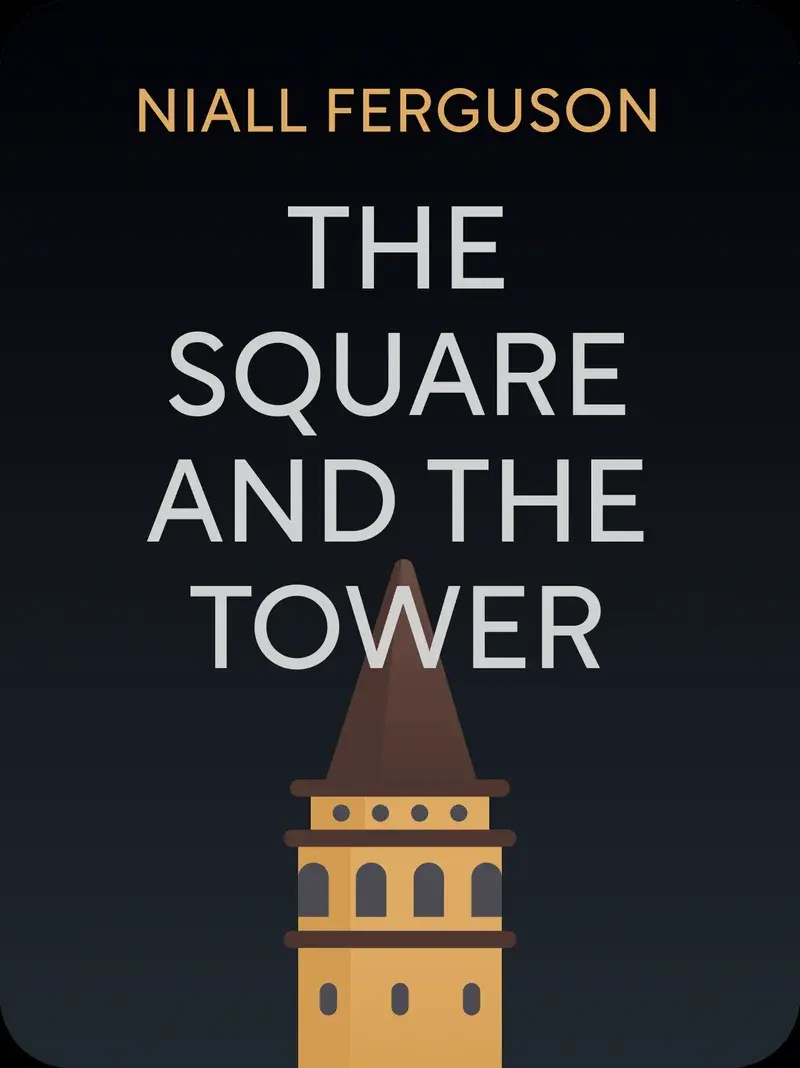
Get the complete 30-minute summary of The Square and the Tower
Get the complete summary in the appNetworks have shaped history more than hierarchies, and we have consistently underestimated their power.
The tension between networks and hierarchies is a permanent feature of human society.
New communication technologies tend to empower networks, while crises tend to empower hierarchies.
The printing press enabled the Reformation by allowing ideas to spread through networks.
The Industrial Revolution was a network phenomenon, driven by connections between innovators.
The Internet has shifted the balance of power back toward networks.
"The Square and the Tower" is a strong fit if you want practical ideas around history, politics, economics, especially themes like networks have shaped history more than hierarchies, and we have consistently underestimated their power; the tension between networks and hierarchies is a permanent feature of human society. The MinuteRead summary distills these concepts into a focused read, whether you're deciding whether to buy the book or applying its lessons at work.
Motivated to help readers with 1) Networks have shaped history more than hierarchies 2) The Illuminati: A case study in network power and, Niall Ferguson wrote “The Square and the Tower” to package those ideas for a fast, focused read. In “The Square and the Tower”, Niall Ferguson focuses on 1) Networks have shaped history more than hierarchies 2) The Illuminati: A case study in network power and. Through “The Square and the Tower”, Niall Ferguson distills the core ideas on history into lessons …
View all summaries by Niall FergusonContinue Reading
Access the complete 30-minute summary and thousands more nonfiction books in the MinuteRead app.

Continue reading the complete summary in the MinuteRead app.