MinuteRead
30 min
Book summary
Premium summary · Opens in the app · 30 min read
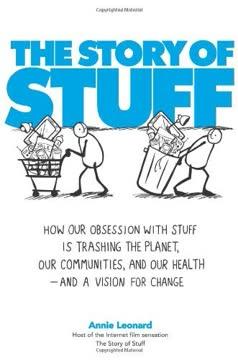
Every object in your life has a story. The cotton shirt in your closet, the smartphone in your pocket, the aluminum can in your recycling bin, the plastic toy your child no longer plays with. Each of these items traveled through a complex global system before reaching you, and each will continue its journey long after you are finished with it.
**Author:** Annie Leonard **Estimated Reading Time:** 45 minutes
**What You'll Learn:** - Why the hidden costs of everyday products are destroying ecosystems and communities - How the linear "take-make-waste" economy was designed and why it cannot last - What actually drives consumer dissatisfaction despite rising material wealth - How to shift from passive consumer to engaged citizen - Practical ways to participate in building a circular, equitable economy
**Who This Book Is For:** Anyone who has ever looked around their home and wondered where their possessions came from, what they cost beyond the price tag, and where they go when discarded. This book is for people who sense that something is deeply wrong with how we produce and consume, but need a clear framework to understand the problem and practical pathways toward solutions.
Every object in your life has a story. The cotton shirt in your closet, the smartphone in your pocket, the aluminum can in your recycling bin, the plastic toy your child no longer plays with. Each of these items traveled through a complex global system before reaching you, and each will continue its journey long after you are finished with it. Most of us never hear these stories. We see products as they appear on store shelves, clean and new and seemingly without history. We do not see the forests cleared to make way for cotton fields. We do not see the factories where workers inhale toxic fumes. We do not see the container ships burning heavy fuel oil as they cross oceans. We do not see the landfills where our discards pile up, leaking chemicals into groundwater. Annie Leonard spent decades traveling the world to trace these hidden stories. She visited textile factories in Haiti, electronics recycling yards in China, oil fields in Nigeria, and waste dumps in India. What she found was not a series of isolated problems but a single interconnected system, a global economy designed to extract, produce, consume, and discard at a pace the planet cannot sustain. The problem is not simply that we own too much stuff, though we do. The problem is that the entire system is built on a fundamental lie: that infinite growth is possible on a finite planet. This lie shapes our economies, our policies, our daily habits, and even our sense of what it means to live a good life. The Story of Stuff emerged from Leonard's realization that most people genuinely do not know how the materials economy works. They do not know that the average American consumes resources at a rate that would require five planets to sustain if everyone on Earth lived the same way. They do not know that toxic chemicals are…
Continue reading in the MinuteRead app
Get the complete 30-minute summary of The Story of Stuff
Get the complete summary in the appThe materials economy has five stages: extraction, production, distribution, consumption, and disposal. Each stage has h
The true costs of products are externalized, making them artificially cheap and encouraging overconsumption.
Toxic chemicals are now found in every human body tested, including newborns. The regulatory system places the burden of
There is no "away." Waste goes somewhere, usually someone else's backyard, disproportionately affecting poor communities
The culture of consumption was deliberately created after World War II. It does not deliver the happiness it promises.
Beyond a certain point, additional consumption does not increase well-being. What matters more is relationships, purpose
"The Story of Stuff" is a strong fit if you want practical ideas around health & fitness, environment, sustainability, especially themes like the materials economy has five stages: extraction, production, distribution, consumption, and disposal. each stage has h; the true costs of products are externalized, making them artificially cheap and encouraging overconsumption. The MinuteRead summary distills these concepts into a focused read, whether you're deciding whether to buy the book or applying its lessons at work.
Annie Leonard is an environmental activist and author who has dedicated her career to investigating and addressing issues of sustainability and social justice. She is best known for creating "The Story of Stuff" project, which includes a book and video series. Leonard has extensive experience in environmental health, having traveled to 40 countries to study factories and waste sites. She has worked with various organizations, including Greenpeace International and Global Alliance for Incinerator…
View all summaries by Annie LeonardContinue Reading
Access the complete 30-minute summary and thousands more nonfiction books in the MinuteRead app.

Continue reading the complete summary in the MinuteRead app.