MinuteRead
30 min
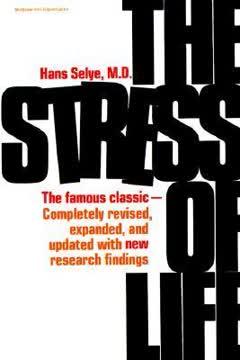
Book summary
by Hans Selye
Premium summary · Opens in the app · 30 min read
In the mid-twentieth century, a young medical researcher working in a laboratory at McGill University noticed something peculiar. While studying the effects of various hormone extracts on rats, he observed that regardless of what substance he injected, the animals exhibited a remarkably similar pattern of physical changes. Their adrenal glands enlarged. Their thymus and lymph nodes shrank. They developed stomach ulcers. They lost weight.
**Author:** Hans Selye
**Estimated Reading Time:** 45 minutes
**What You'll Learn:**
- Why stress is not something to eliminate but a fundamental feature of life itself - How your body responds to challenges through a predictable three-stage process - Why some diseases are actually "diseases of adaptation" caused by your own stress response - How stress shapes aging, individuality, and your capacity to thrive - Practical wisdom for managing stress through balance, self-expression, and gratitude
**Who This Book Is For:**
This book is for anyone who has ever felt overwhelmed by the demands of modern life and wondered why their body and mind react the way they do. It is for professionals navigating high-pressure careers, parents juggling endless responsibilities, students facing constant evaluation, and anyone curious about the hidden biological forces that shape health, performance, and longevity. If you have ever tried to "eliminate stress" and failed, this book will fundamentally change how you understand the problem.
In the mid-twentieth century, a young medical researcher working in a laboratory at McGill University noticed something peculiar. While studying the effects of various hormone extracts on rats, he observed that regardless of what substance he injected, the animals exhibited a remarkably similar pattern of physical changes. Their adrenal glands enlarged. Their thymus and lymph nodes shrank. They developed stomach ulcers. They lost weight. At first, he thought he had discovered a new hormone. But as he tested more substances, including toxic chemicals, extreme temperatures, and physical injury, the same pattern appeared again and again. The rats were not responding to any specific chemical. They were responding to the experience of being challenged, disrupted, and forced to adapt. That researcher was Hans Selye, and his observation would eventually revolutionize medicine, psychology, and our understanding of the human condition. He called the phenomenon "stress," borrowing a term from physics where it described the force acting upon a material. In biological terms, stress became the body's nonspecific response to any demand placed upon it. The idea seems obvious now. We talk about stress constantly. We blame it for our headaches, our sleepless nights, our irritability, our declining health. But before Selye's work, medicine had no unified framework for understanding why such different experiences as a viral infection, a demanding job, a family conflict, or exposure to cold could produce such similar physical effects. Doctors treated each disease as a separate entity with its own specific cause and cure. Selye's insight was that beneath the surface of these diverse challenges lay a common biological process. The body has a general way of responding to being pushed beyond its comfort zone, whether the push comes from a physical injury, an emotional shock, or a demanding deadline. This…
Continue reading in the MinuteRead app
Get the complete 30-minute summary of The Stress of Life
Get the complete summary in the appStress is the nonspecific response of the body to any demand. It is a fundamental feature of life, not an enemy to be el
The General Adaptation Syndrome has three stages: alarm, resistance, and exhaustion. Chronic stress leads to exhaustion
The Stage of Resistance is deceptive. You may appear fine while actually depleting your reserves.
Many common diseases are diseases of adaptation, caused by the body's stress response becoming harmful through excessive
Your capacity for adaptation is finite. Every stressful experience makes a withdrawal from your account of vitality.
Balance between activity and rest is essential. Rest is not a luxury but a necessity for stress management.
"The Stress of Life" is a strong fit if you want practical ideas around health & fitness, psychology, health, especially themes like stress is the nonspecific response of the body to any demand. it is a fundamental feature of life, not an enemy to be el; the general adaptation syndrome has three stages: alarm, resistance, and exhaustion. chronic stress leads to exhaustion. The MinuteRead summary distills these concepts into a focused read, whether you're deciding whether to buy the book or applying its lessons at work.
Hans Selye was a Hungarian-Canadian scientist renowned as the founder of stress theory and the father of stress research. His work revolutionized our understanding of the body's response to stress. Selye introduced pivotal concepts such as distress, eustress, and general adaptation syndrome. He conducted extensive laboratory research, primarily with rats, to develop his theories. Selye's approach was notable for its interdisciplinary nature, bridging biology, medicine, and psychology. His work o…
View all summaries by Hans SelyeContinue Reading
Access the complete 30-minute summary and thousands more nonfiction books in the MinuteRead app.

Continue reading the complete summary in the MinuteRead app.