MinuteRead
30 min
Book summary
Premium summary · Opens in the app · 30 min read
Most people lose money in the stock market. They lose money not because they are unintelligent or uninformed, but because they approach investing with the wrong set of assumptions. They believe the market rewards opinions, predictions, and gut feelings. They believe that buying a good company at any price is a sound strategy. They believe that holding through every decline will eventually make them whole. These beliefs feel reasonable, but they are quietly destructive.
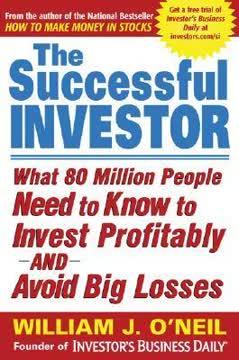
**Author:** William J. O'Neil **Estimated Reading Time:** 42 minutes
**What You'll Learn:** How to read market direction, identify leading stocks before they make major moves, protect your capital with disciplined selling rules, and build a portfolio that can deliver consistent gains regardless of market conditions.
**Who This Book Is For:** Individual investors who want a proven, rule-based approach to the stock market. Whether you are a beginner tired of losing money or an experienced trader looking for a systematic framework, this book provides the tools to invest with confidence instead of emotion.
Most people lose money in the stock market. They lose money not because they are unintelligent or uninformed, but because they approach investing with the wrong set of assumptions. They believe the market rewards opinions, predictions, and gut feelings. They believe that buying a good company at any price is a sound strategy. They believe that holding through every decline will eventually make them whole. These beliefs feel reasonable, but they are quietly destructive. William J. O'Neil spent decades studying the stock market with a different lens. He did not start with theories about how the market should behave. He started with evidence about how it actually behaves. He studied the greatest stock market winners of the past century, examining thousands of charts, earnings reports, and price movements. What he found was not a random walk. He found patterns. He found that winning stocks share common characteristics before they make their biggest moves. He found that market tops and bottoms leave identifiable footprints. He found that the investors who succeed over the long run are not the ones with the highest IQs or the boldest predictions. They are the ones who follow rules. The problem is that most investors never learn these rules. They absorb advice from television pundits, social media, and well-meaning friends. They buy stocks based on stories rather than evidence. They hold losing positions hoping for a rebound while selling winners too early to lock in small gains. They let fear and hope override judgment. The result is predictable: frustration, losses, and the belief that the stock market is a casino. O'Neil's approach is different. He treats investing as a discipline, not a gamble. His method is built on the observation that the market is governed by supply and demand, not by opinions. When demand for a stock exceeds supply, the price rises. When supply exceeds demand, the price falls. Everything else is commentary. The investor's job is to identify when demand is building in a particular stock and to ride that demand until it exhausts itself. This book is not about getting rich quickly. It is about building a repeatable process for identifying opportunity,…
Continue reading in the MinuteRead app
Get the complete 30-minute summary of The Successful Investor
Get the complete summary in the appDetermine market direction before buying any stock. Three out of four stocks follow the market's trend.
Cut every loss at 7 to 8 percent below your purchase price. No exceptions.
Take most profits at 20 to 25 percent above your purchase price.
Use the CAN SLIM criteria to identify stocks with the highest potential for significant gains.
Buy leaders, not laggards. The number one or number two company in an industry is usually the best investment.
Sell when you see climax runs, late-stage bases, or weakening relative strength.
"The Successful Investor" is a strong fit if you want practical ideas around finance, business, personal finance, especially themes like determine market direction before buying any stock. three out of four stocks follow the market's trend; cut every loss at 7 to 8 percent below your purchase price. no exceptions. The MinuteRead summary distills these concepts into a focused read, whether you're deciding whether to buy the book or applying its lessons at work.
William J. O'Neil is a prominent figure in the stock trading and investment industry. He founded Investor's Business Daily, a business newspaper, and William O'Neil & Co. Inc., a stock brokerage firm. O'Neil is best known for developing the CAN SLIM investment strategy, which has gained popularity among traders and investors. His educational background includes a Bachelor's degree in business from Southern Methodist University. O'Neil also served in the United States Air Force, combining militar…
View all summaries by William J. O'NeilContinue Reading
Access the complete 30-minute summary and thousands more nonfiction books in the MinuteRead app.

Continue reading the complete summary in the MinuteRead app.