MinuteRead
30 min
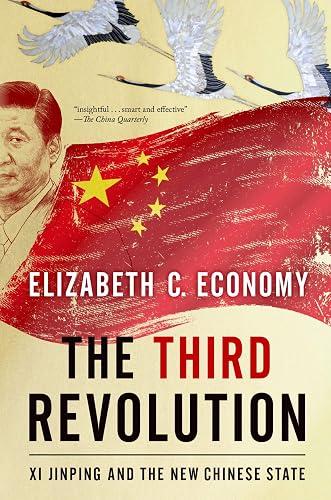
Book summary
by Elizabeth C. Economy
Premium summary · Opens in the app · 30 min read
For nearly four decades, the world operated on a simple assumption about China. The country was opening up. Markets were expanding. The Communist Party was gradually retreating from daily life. Integration with the global economy would eventually produce political liberalization, or so the thinking went. This assumption shaped Western policy, business strategy, and academic analysis. It was the foundation upon which the United States and Europe built their engagement with Beijing.
**Author:** Elizabeth C. Economy
**Estimated Reading Time:** 45 minutes
**What You'll Learn:** How Xi Jinping fundamentally reversed China's decades-long trajectory of reform and opening, consolidated unprecedented personal power, extended party control into every corner of society, and transformed China's role on the world stage. You will understand the mechanics of China's domestic transformation and how it shapes the country's increasingly assertive foreign policy.
**Who This Book Is For:** Anyone seeking to understand contemporary China beyond headlines and soundbites. Policymakers, business leaders, students of international relations, and curious readers who want a clear-eyed assessment of where China is heading and why it matters for the rest of the world.
For nearly four decades, the world operated on a simple assumption about China. The country was opening up. Markets were expanding. The Communist Party was gradually retreating from daily life. Integration with the global economy would eventually produce political liberalization, or so the thinking went. This assumption shaped Western policy, business strategy, and academic analysis. It was the foundation upon which the United States and Europe built their engagement with Beijing. That assumption is now obsolete. Elizabeth Economy's book arrives at a moment when the old frameworks for understanding China have collapsed. The China of Deng Xiaoping, the China that joined the World Trade Organization in 2001, the China that welcomed foreign investment and ideas, has been replaced by something fundamentally different. Xi Jinping has not merely adjusted course. He has reversed it. The book's title refers to Xi's self-described project: a "Third Revolution" that follows Mao Zedong's communist revolution and Deng Xiaoping's market-oriented reforms. But where Mao sought to transform society through ideology and Deng sought to transform the economy through opening, Xi's revolution is defined by what it rejects. He has abandoned the premise that China's future lies in greater integration with the outside world. He has rejected the idea that the party should step back from society. He has discarded the collective leadership model that prevented any single leader from accumulating too much power. The result is a China that is simultaneously more powerful and more brittle. More assertive abroad and more repressive at home. More confident in its global ambitions and more anxious about its domestic stability. Understanding this transformation is not an academic exercise. China is the world's second-largest economy, its largest trading nation, and a growing military power. Its decisions shape global markets, environmental outcomes, technological development, and security dynamics across Asia and beyond. Whether the question is climate change, pandemic response, supply chains, or regional stability, China's choices matter. And those choices are increasingly shaped by the domestic political logic of Xi's revolution. Economy brings a rare combination of scholarly rigor and policy experience to…
Continue reading in the MinuteRead app
Get the complete 30-minute summary of The Third Revolution
Get the complete summary in the appXi Jinping's Third Revolution reverses China's decades-long trajectory of reform and opening.
Xi has consolidated unprecedented personal power, becoming the most powerful leader since Mao.
The party has expanded its control across society, reversing the Deng era's withdrawal from daily life.
China has built a walled garden around its internet, controlling information and manipulating discourse.
Economic policy prioritizes state dominance over market efficiency, with predictable costs in debt and overcapacity.
China excels at innovation but struggles with invention, a gap that constrains its technology ambitions.
"The Third Revolution" is a strong fit if you want practical ideas around china, politics, history, especially themes like xi jinping's third revolution reverses china's decades-long trajectory of reform and opening; xi has consolidated unprecedented personal power, becoming the most powerful leader since mao. The MinuteRead summary distills these concepts into a focused read, whether you're deciding whether to buy the book or applying its lessons at work.
Motivated to help readers with yet in seeking to realize this common vision, Elizabeth C. Economy wrote “The Third Revolution” to package those ideas for a fast, focused read. In “The Third Revolution”, Elizabeth C. Economy focuses on yet in seeking to realize this common vision. Through “The Third Revolution”, Elizabeth C. Economy distills the core ideas on china into lessons readers can absorb in a single short sitting. Readers turn to this work when they want Elizabeth C. Economy's perspectiv…
Continue Reading
Access the complete 30-minute summary and thousands more nonfiction books in the MinuteRead app.

Continue reading the complete summary in the MinuteRead app.