MinuteRead
30 min
Most trading books fail their readers. They present strategies in sterile isolation, as if markets were machines that respond predictably to inputs. They ignore the messy reality that every trader discovers within weeks of placing a first order: markets are not orderly. They are not balanced. They are not rational.
**Author:** Anne-Marie Baiynd
**Estimated Reading Time:** 45 minutes
**What You'll Learn:** - How to read market structure through the lens of technical indicators - A complete framework for identifying high-probability trade setups - The psychological discipline required to execute consistently - Risk management strategies that protect both capital and emotional well-being - How to build a systematic approach that removes guesswork from trading
**Who This Book Is For:** This condensed edition is for anyone who has ever looked at a price chart and felt overwhelmed by the noise. It is for the new trader trying to build a foundation, the struggling trader who cannot understand why a good strategy still loses money, and the experienced trader seeking a more disciplined framework. If you want to understand not just what indicators do but how they work together to reveal market intention, this book is for you.
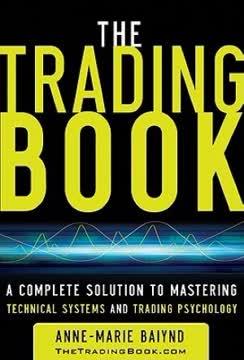
Most trading books fail their readers. They present strategies in sterile isolation, as if markets were machines that respond predictably to inputs. They ignore the messy reality that every trader discovers within weeks of placing a first order: markets are not orderly. They are not balanced. They are not rational. Anne-Marie Baiynd wrote The Trading Book because she understood something fundamental that many educators miss. Trading is not about finding the perfect indicator or memorizing chart patterns. Trading is about learning to read the emotional state of the market and, more importantly, learning to manage your own emotional state while doing so. The problem most traders face is not a lack of information. It is a lack of structure. They collect indicators like souvenirs, adding moving averages and oscillators to their charts without understanding how these tools relate to one another. They enter trades based on hope, exit based on fear, and repeat the cycle until their accounts are depleted. They blame the market, their broker, or bad luck. Rarely do they blame their own lack of a systematic approach. Baiynd's insight is that successful trading requires a decision-making framework that operates independently of emotion. She calls this framework the Market Positioning System, or MPS. It combines a small set of technical tools: moving averages, Bollinger Bands, Fibonacci retracements, and volume analysis. These tools are not used in isolation. They are layered together to create a complete picture of market conditions before any trade is placed. What makes Baiynd's approach different is her emphasis on the relationship between indicators. A moving average means little on its own. But a moving average with a specific slope, positioned relative to another moving average, while price tests a Fibonacci level, with Bollinger Bands showing volatility contraction: that combination tells a story. It reveals whether buyers or sellers are…
Continue reading in the MinuteRead app
Get the complete 30-minute summary of The Trading Book
Get the complete summary in the appMarkets are emotional entities that oscillate between extremes. They are never in balance for more than an instant.
Slope is everything. No slope, no trade. Moving averages with clear slope provide the trend information you need.
Bollinger Band squeezes precede significant breakouts. Learn to recognize them.
Fibonacci retracement levels identify likely reversal zones during pullbacks. The 61.8% level is most significant.
Confluence creates high-probability trades. Look for multiple indicators aligning before entering.
Risk management is the foundation of success. Determine your maximum loss before every trade and place stops at technica
"The Trading Book" is a strong fit if you want practical ideas around finance, economics, business, especially themes like markets are emotional entities that oscillate between extremes. they are never in balance for more than an instant; slope is everything. no slope, no trade. moving averages with clear slope provide the trend information you need. The MinuteRead summary distills these concepts into a focused read, whether you're deciding whether to buy the book or applying its lessons at work.
Anne-Marie Baiynd is the author of The Trading Book, a guide that combines technical analysis techniques with trading psychology. Her writing style is described as heartfelt and thorough, suggesting a deep personal investment in helping traders succeed. Baiynd's approach focuses on simplifying complex trading concepts and providing practical strategies for navigating market fluctuations. Her expertise appears to stem from personal experience in trading, allowing her to offer insights into both t…
View all summaries by Anne-Marie BaiyndContinue Reading
Access the complete 30-minute summary and thousands more nonfiction books in the MinuteRead app.

Continue reading the complete summary in the MinuteRead app.