MinuteRead
30 min
Book summary
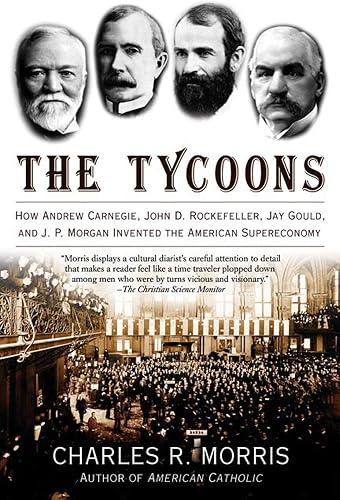
by Charles R. Morris
Premium summary · Opens in the app · 30 min read
The story of American economic dominance is often told as a story of inevitability. A vast continent, abundant resources, a free people, and the rest simply followed. But this narrative misses something essential. The American economic miracle was not a natural phenomenon. It was built, deliberately and often brutally, by a small group of men who saw possibilities that others could not imagine and who possessed the will to turn those visions into reality.
**Author:** Charles R. Morris
**Estimated Reading Time:** 45 minutes
**What You'll Learn:**
How four extraordinary men, Andrew Carnegie, John D. Rockefeller, Jay Gould, and J.P. Morgan, built the industrial foundations of modern America. You will understand the technological revolutions that made their rise possible, the organizational innovations they pioneered, the financial systems they created, and the social upheaval their achievements triggered. You will see how America transformed from a war-torn agricultural nation into the world's dominant economic power in less than four decades.
**Who This Book Is For:**
Readers who want to understand how American capitalism actually worked during its most transformative period. This is not a collection of heroic business myths or simplistic morality tales. It is for anyone who wants to grasp the real mechanics of industrial growth, the genuine complexity of these men, and the lasting institutions they created. If you have ever wondered how America became America, economically speaking, this is where the story begins.
The story of American economic dominance is often told as a story of inevitability. A vast continent, abundant resources, a free people, and the rest simply followed. But this narrative misses something essential. The American economic miracle was not a natural phenomenon. It was built, deliberately and often brutally, by a small group of men who saw possibilities that others could not imagine and who possessed the will to turn those visions into reality. Charles R. Morris's *The Tycoons* tells the story of how four men, Andrew Carnegie, John D. Rockefeller, Jay Gould, and J.P. Morgan, reshaped the American economy during the decades following the Civil War. These were not interchangeable businessmen. Each brought a distinctive genius to the task. Carnegie understood cost. Rockefeller understood systems. Gould understood markets. Morgan understood order. Together, their work created the infrastructure of modern American capitalism. The period from 1865 to 1900 was one of the most extraordinary economic transformations in human history. In 1865, America was a nation recovering from a devastating civil war, still primarily agricultural, still dependent on European capital and European technology. By 1900, America had become the world's leading industrial power, producing more steel than Britain and Germany combined, building the largest railroad network on earth, and creating corporations of unprecedented scale and complexity. This transformation did not happen smoothly. It involved massive social dislocation, brutal labor conflicts, financial panics, and political battles over the nature of economic power. The tycoons were not universally admired in their own time. They were called robber barons, monopolists, and worse. Yet they were also recognized, even by their critics, as men of extraordinary capability who were building something genuinely new. Morris approaches these figures with a historian's eye and a financier's understanding. He…
Continue reading in the MinuteRead app
Get the complete 30-minute summary of The Tycoons
Get the complete summary in the appAmerica became an economic superpower by developing a machine culture that prioritized systematization over individual s
The railroads created the first modern corporations and pioneered management techniques that spread throughout the econo
Andrew Carnegie built his steel empire on obsessive cost control and aggressive investment in technology.
John D. Rockefeller built Standard Oil on systematic consolidation and operational efficiency.
Jay Gould understood financial markets and industry structure better than anyone of his generation.
J.P. Morgan created the investment banking industry and used his power to impose order on chaotic industries.
"The Tycoons" is a strong fit if you want practical ideas around history, biography, business, especially themes like america became an economic superpower by developing a machine culture that prioritized systematization over individual s; the railroads created the first modern corporations and pioneered management techniques that spread throughout the econo. The MinuteRead summary distills these concepts into a focused read, whether you're deciding whether to buy the book or applying its lessons at work.
Motivated to help readers with "America was not only the most populous of industrial countries but the richest by any standard—per capita, Charles R. Morris wrote “The Tycoons” to package those ideas for a fast, focused read. In “The Tycoons”, Charles R. Morris focuses on "America was not only the most populous of industrial countries but the richest by any standard—per capita. Through “The Tycoons”, Charles R. Morris distills the core ideas on history into lessons readers can absorb in a single…
Continue Reading
Access the complete 30-minute summary and thousands more nonfiction books in the MinuteRead app.

Continue reading the complete summary in the MinuteRead app.