MinuteRead
30 min
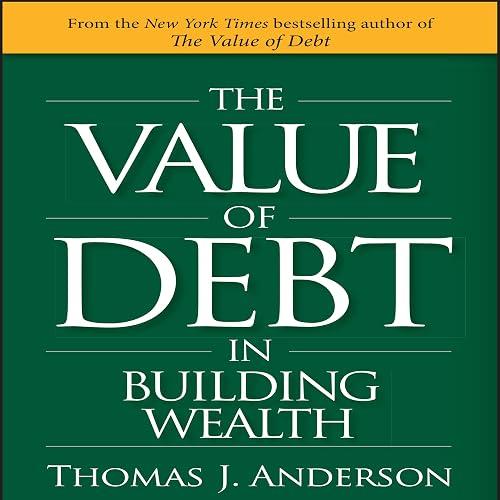
Book summary
by Thomas J. Anderson
Premium summary · Opens in the app · 30 min read
Most personal finance advice treats debt as a problem to be eliminated. The standard narrative goes something like this: debt is bad, debt is dangerous, and the sooner you pay it all off, the better off you will be. Financial gurus build entire careers telling people to cut up their credit cards, pay off their mortgages early, and live debt-free. The message is simple, emotionally satisfying, and deeply embedded in our cultural understanding of financial responsibility.
**Author:** Thomas J. Anderson
**Estimated Reading Time:** 45 minutes
**What You'll Learn:**
- Why the conventional wisdom that all debt is bad may be costing you hundreds of thousands of dollars - How to distinguish between debt that destroys wealth and debt that builds it - A life-stage framework for making smarter financial decisions at every age - Why liquidity and flexibility matter more than being debt-free - How strategic debt can improve your retirement outcomes
**Who This Book Is For:**
This book is for anyone who has ever been told that getting out of debt should be their top financial priority. It is for people who sense that the standard advice about debt may be too simplistic, and who want a more nuanced understanding of how debt and wealth interact. Whether you are just starting your career, building assets in midlife, or approaching retirement, this book offers a framework for thinking about debt that goes beyond the typical "all debt is bad" mantra.
Most personal finance advice treats debt as a problem to be eliminated. The standard narrative goes something like this: debt is bad, debt is dangerous, and the sooner you pay it all off, the better off you will be. Financial gurus build entire careers telling people to cut up their credit cards, pay off their mortgages early, and live debt-free. The message is simple, emotionally satisfying, and deeply embedded in our cultural understanding of financial responsibility. Thomas J. Anderson believes this message is incomplete. In fact, he argues that it can be actively harmful to your long-term financial health. The problem is not that the conventional advice is entirely wrong. High-interest credit card debt is indeed destructive. Payday loans are predatory. Carrying balances on cards with 20 percent interest rates will absolutely erode your wealth. The problem is that the conventional advice paints all debt with the same brush, and in doing so, it throws away one of the most powerful tools available for building wealth. Anderson's central insight is that debt exists on a spectrum. Some debt is oppressive and should be eliminated as quickly as possible. Some debt is working debt that serves a specific purpose. And some debt is enriching debt that can actually help you build wealth when managed strategically. The key is understanding the difference. This matters because the stakes are enormous. Consider a simple example. A couple in their sixties has accumulated a million dollars in retirement savings. They also have a four hundred thousand dollar mortgage at a low interest rate. The conventional wisdom says they should pay off that mortgage before retiring. But if they do, they will have six hundred thousand dollars left to generate income. If…
Continue reading in the MinuteRead app
Get the complete 30-minute summary of The Value of Debt in Building Wealth
Get the complete summary in the appDebt falls into three categories: oppressive, working, and enriching. Eliminate oppressive debt, manage working debt, an
The return on paying down debt equals its after-tax cost. Prioritize paying off high-interest debt before investing.
Liquidity is insurance. Maintain three to twelve months of expenses in cash reserves depending on your life stage.
Save 15 to 20 percent of your gross income. Automate your savings to make it the default.
Compounding works both ways. Start investing early and eliminate high-interest debt quickly.
Diversify across asset classes. No single asset class consistently outperforms.
"The Value of Debt in Building Wealth" is a strong fit if you want practical ideas around finance, business, self help, especially themes like debt falls into three categories: oppressive, working, and enriching. eliminate oppressive debt, manage working debt, an; the return on paying down debt equals its after-tax cost. prioritize paying off high-interest debt before investing. The MinuteRead summary distills these concepts into a focused read, whether you're deciding whether to buy the book or applying its lessons at work.
Motivated to help readers with used appropriately, Thomas J. Anderson wrote “The Value of Debt in Building Wealth” to package those ideas for a fast, focused read. In “The Value of Debt in Building Wealth”, Thomas J. Anderson focuses on used appropriately. Through “The Value of Debt in Building Wealth”, Thomas J. Anderson distills the core ideas on finance into lessons readers can absorb in a single short sitting. Readers turn to this work when they want Thomas J. Anderson's perspective on the s…
Continue Reading
Access the complete 30-minute summary and thousands more nonfiction books in the MinuteRead app.

Continue reading the complete summary in the MinuteRead app.