MinuteRead
30 min
Book summary
by Kenneth M. Morris
Premium summary · Opens in the app · 30 min read
Money is one of the most powerful inventions in human history, yet most people spend remarkably little time understanding what it actually is. We earn it, spend it, save it, and worry about it. We check account balances and watch prices rise and fall. But ask the average person to explain what money really is, how it is created, or why a stock has value, and the answers quickly become vague.
**Author:** Kenneth M. Morris
**Estimated Reading Time:** 45 minutes
**What You'll Learn:**
- How money evolved from shells and salt to the electronic transactions that dominate modern life - Why the Federal Reserve matters to your daily financial decisions - How stocks, bonds, mutual funds, futures, and options actually work - What economic indicators reveal about where the economy is heading - How to think clearly about risk, return, and the forces that move markets
**Who This Book Is For:**
This book is for anyone who has ever felt confused by financial news, uncertain about investment choices, or simply curious about how the vast machinery of money operates. You do not need a background in finance. You need only a willingness to understand the systems that shape your financial life.
Money is one of the most powerful inventions in human history, yet most people spend remarkably little time understanding what it actually is. We earn it, spend it, save it, and worry about it. We check account balances and watch prices rise and fall. But ask the average person to explain what money really is, how it is created, or why a stock has value, and the answers quickly become vague. This is not a personal failing. The financial world has developed its own language, its own institutions, and its own logic. It operates through systems that are rarely explained in plain terms. The result is that millions of intelligent people make financial decisions with only a partial understanding of the forces at work. Kenneth M. Morris wrote this guide to close that gap. The book exists because financial literacy is not a luxury. It is a practical necessity. Whether you are choosing a savings account, participating in a retirement plan, or simply trying to understand the evening news, you need a working knowledge of how money and markets function. The problem the book addresses is straightforward: the financial world affects everyone, but it is explained in ways that confuse rather than clarify. Terms like monetary policy, bond yields, and derivatives sound intimidating. The institutions that manage money seem distant and opaque. The result is that many people either avoid thinking about finance altogether or make decisions based on incomplete information. Why does this matter? Because financial decisions compound. Small misunderstandings early in life can lead to significant consequences later. A person who does not understand inflation may not grasp why saving alone is insufficient. Someone who does not understand risk may either avoid investing entirely or take on far more risk than they realize. The cost of financial confusion is not abstract. It shows up in retirement accounts that fall short, in opportunities missed, and in vulnerability to financial…
Continue reading in the MinuteRead app
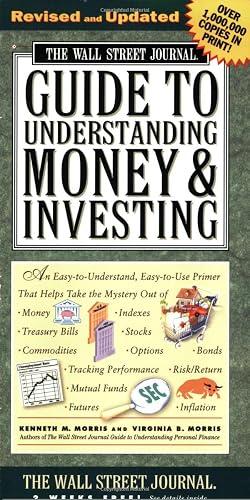
Get the complete 30-minute summary of The Wall Street Journal Guide to Understanding Money and Investing
Get the complete summary in the appMoney has no intrinsic value. It is worth what it can buy.
The Federal Reserve manages the money supply to balance growth and inflation.
Stocks represent ownership in a company. Their value depends on earnings and growth.
Bonds are loans. Their prices fall when interest rates rise.
Mutual funds provide diversification, but costs matter.
Diversification is the most reliable way to manage risk.
"The Wall Street Journal Guide to Understanding Money and Investing" is a strong fit if you want practical ideas around finance, business, economics, especially themes like money has no intrinsic value. it is worth what it can buy; the federal reserve manages the money supply to balance growth and inflation. The MinuteRead summary distills these concepts into a focused read, whether you're deciding whether to buy the book or applying its lessons at work.
Motivated to help readers with most money doesn't have any value of its own, Kenneth M. Morris wrote “The Wall Street Journal Guide to Understanding Money and Investing” to package those ideas for a fast, focused read. Through “The Wall Street Journal Guide to Understanding Money and Investing”, Kenneth M. Morris distills the core ideas on finance into lessons readers can absorb in a single short sitting. Readers turn to this work when they want Kenneth M. Morris's perspective on the subject wit…
Continue Reading
Access the complete 30-minute summary and thousands more nonfiction books in the MinuteRead app.

Continue reading the complete summary in the MinuteRead app.