MinuteRead
30 min
Book summary
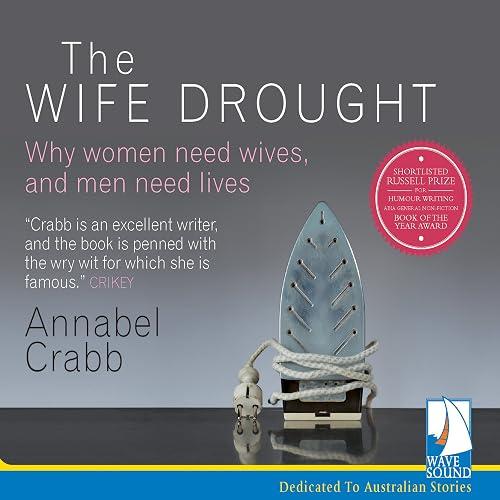
by Annabel Crabb
Premium summary · Opens in the app · 30 min read
Every so often, a joke circulates among working women. It goes something like this: "What I really need is a wife." The line gets a laugh because everyone understands the underlying truth. A wife, in this context, means someone who handles the domestic machinery of life. Someone who remembers the school permission slips, books the dental appointments, knows what is in the fridge, buys the birthday presents, and generally ensures that the household runs smoothly while another person focuses on pa
**Author:** Annabel Crabb **Estimated Reading Time:** 45 minutes
**What You'll Learn:** Why working women face a hidden disadvantage that almost no one talks about, how the structure of work and family life creates unequal outcomes for men and women, and what can actually be done to address the imbalance.
**Who This Book Is For:** Anyone who has ever wondered why career advancement remains stubbornly unequal between men and women. Anyone who has juggled work and family responsibilities. Anyone who has suspected that the conversation about work-life balance is missing something fundamental.
Every so often, a joke circulates among working women. It goes something like this: "What I really need is a wife." The line gets a laugh because everyone understands the underlying truth. A wife, in this context, means someone who handles the domestic machinery of life. Someone who remembers the school permission slips, books the dental appointments, knows what is in the fridge, buys the birthday presents, and generally ensures that the household runs smoothly while another person focuses on paid work. The joke is funny because it is true. And the truth it reveals is far more significant than most people realize. For decades, the conversation about gender equality in the workplace has focused on getting women in. Breaking down barriers. Smashing glass ceilings. Ensuring that women have access to education, employment, and promotion. These efforts have achieved remarkable results. Women now outnumber men in university graduation rates across many countries. They enter professions in roughly equal numbers. They aspire to leadership roles and increasingly attain them. Yet a stubborn gap remains. Women continue to earn less than men over their lifetimes. They remain underrepresented in senior leadership positions. They drop out of full-time work at higher rates after having children. The explanations offered for these patterns typically focus on individual choices, workplace discrimination, or the demands of motherhood. Annabel Crabb offers a different diagnosis. The problem, she argues, is not simply that women face barriers entering the workforce. The problem is that men face barriers leaving it. Consider a simple statistic from Australian Census data. Among full-time working fathers, 76 percent have a partner who works part-time or not at all. Among full-time working mothers, only 15 percent have a partner who works part-time or not at all. In other words, working fathers are five times more likely to have a "wife" than working mothers are to have a "husband" in the domestic sense. This disparity is not a minor detail. It is a structural feature of modern working life that profoundly shapes career trajectories, earning potential, and the distribution of power in both public and private spheres. A person with a supportive domestic partner can work…
Continue reading in the MinuteRead app
Get the complete 30-minute summary of The Wife Drought
Get the complete summary in the appThe wife drought is real: working fathers are five times more likely to have domestic support than working mothers.
The solution is not just getting women into work. It is also getting men out of it.
The lifetime earnings gap between mothers and fathers is $1.2 million.
Women do twice as much unpaid domestic work as men, even when both work full-time.
Domestic work is invisible in economic and legal systems, rendering women's contribution undervalued.
Dad moments and Mum moments reveal the double standards that maintain the wife drought.
"The Wife Drought" is a strong fit if you want practical ideas around feminism, sociology, women, especially themes like the wife drought is real: working fathers are five times more likely to have domestic support than working mothers; the solution is not just getting women into work. it is also getting men out of it. The MinuteRead summary distills these concepts into a focused read, whether you're deciding whether to buy the book or applying its lessons at work.
Motivated to help readers with working women are in an advanced, Annabel Crabb wrote “The Wife Drought” to package those ideas for a fast, focused read. In “The Wife Drought”, Annabel Crabb focuses on working women are in an advanced. Through “The Wife Drought”, Annabel Crabb distills the core ideas on feminism into lessons readers can absorb in a single short sitting. Readers turn to this work when they want Annabel Crabb's perspective on the subject without working through the entire original …
Continue Reading
Access the complete 30-minute summary and thousands more nonfiction books in the MinuteRead app.

Continue reading the complete summary in the MinuteRead app.