MinuteRead
30 min
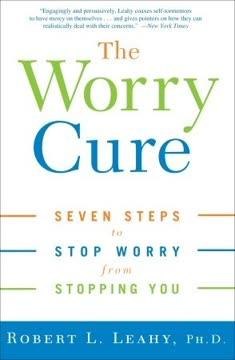
Book summary
Premium summary · Opens in the app · 30 min read
You are lying in bed at 2 a.m., staring at the ceiling. Your mind is racing through tomorrow's presentation, the conversation you had with your boss last week, the strange noise your car made on the way home, and whether your partner seemed distant at dinner. You know you should sleep. You know the worry is not helping. But you cannot stop.
**Author:** Robert L. Leahy
**Estimated Reading Time:** 45 minutes
**What You'll Learn:**
- Why worry feels necessary and how that belief keeps you trapped - The seven thinking errors that fuel chronic worry - How to distinguish productive concern from destructive worry - Practical techniques to break the worry cycle in real time - How to build lasting resilience against anxiety
**Who This Book Is For:**
Anyone who lies awake at night replaying conversations, anticipating disasters, or feeling unable to stop the endless loop of "what if" questions. If worry has become a constant companion rather than an occasional visitor, this book offers a way out.
You are lying in bed at 2 a.m., staring at the ceiling. Your mind is racing through tomorrow's presentation, the conversation you had with your boss last week, the strange noise your car made on the way home, and whether your partner seemed distant at dinner. You know you should sleep. You know the worry is not helping. But you cannot stop. If this sounds familiar, you are not alone. Millions of people live with chronic worry, convinced that their constant vigilance is somehow protecting them from disaster. They believe that if they stop worrying, something terrible will happen. They believe that worry is the price they pay for being responsible, prepared, and safe. Robert L. Leahy, one of the world's leading cognitive behavioral therapists, has spent decades working with chronic worriers. His central insight is both simple and profound: worry is not something that happens to you. It is something you do. It is a strategy, a habit, a set of behaviors that you have learned over time. And because it is learned, it can be unlearned. The problem is that most people never question their worry. They treat it as an inevitable part of their personality, like having brown eyes or being left-handed. They say things like "I've always been a worrier" as if that settles the matter. But Leahy argues that this is exactly the wrong way to think about it. Worry is a behavior, not a trait. It is a mental habit that you have practiced thousands of times, often without realizing it. Each time you worry, you strengthen the neural pathways that make future worry more likely. You are not born a worrier. You become one through repetition. The good news is that the same process works in reverse. Just as you trained your brain to worry, you can train it to stop. This book shows you how. Leahy's approach is grounded in cognitive behavioral therapy, one of the most rigorously tested psychological treatments in existence. But he does not write like an academic. He writes like someone who…
Continue reading in the MinuteRead app
Get the complete 30-minute summary of The Worry Cure
Get the complete summary in the appWorry is a strategy you think helps you. It does not.
Uncertainty is unavoidable. Learn to tolerate it.
Ask: "Is there something I can do about this right now?" If yes, do it. If no, release it.
Your thoughts are not facts. Challenge them.
Identify your thinking errors: mind reading, fortune telling, catastrophizing, personalizing, all-or-nothing thinking, e
Core beliefs drive worry. Identify and challenge them.
"The Worry Cure" is a strong fit if you want practical ideas around health & fitness, self help, psychology, especially themes like worry is a strategy you think helps you. it does not; uncertainty is unavoidable. learn to tolerate it. The MinuteRead summary distills these concepts into a focused read, whether you're deciding whether to buy the book or applying its lessons at work.
Robert L. Leahy is a highly accomplished psychologist specializing in cognitive behavioral therapy. He holds multiple prestigious positions, including Director of the American Institute for Cognitive Therapy and Clinical Professor at Weill-Cornell University Medical School. Leahy has authored numerous books on cognitive therapy and anxiety, with "The Worry Cure" being particularly successful, translated into multiple languages. He has received awards for his contributions to cognitive therapy an…
View all summaries by Robert L. LeahyContinue Reading
Access the complete 30-minute summary and thousands more nonfiction books in the MinuteRead app.

Continue reading the complete summary in the MinuteRead app.