MinuteRead
30 min
For most of his life, BJ Fogg struggled with his weight. He tried diets. He bought exercise equipment. He made grand plans. Nothing worked for long. The pattern was familiar: a burst of motivation, a flurry of activity, and then the slow fade back to old behaviors. He felt frustrated and ashamed.
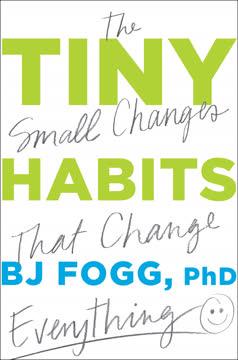
**Author:** BJ Fogg, PhD
**Estimated Reading Time:** 45 minutes
**What You'll Learn**
Why motivation fails you and what actually drives lasting change. How to design behaviors so small they require zero willpower. The science of prompts and why no habit forms without one. How celebration wires habits into your brain permanently. A systematic method for untangling bad habits without struggle. How to reshape your identity through tiny actions repeated consistently.
**Who This Book Is For**
Anyone who has ever set a goal and failed to follow through. People exhausted by the cycle of motivation and guilt. Those who believe lasting change requires superhuman discipline. Anyone curious why some habits stick effortlessly while others collapse. Readers ready to stop fighting themselves and start working with their own psychology.
For most of his life, BJ Fogg struggled with his weight. He tried diets. He bought exercise equipment. He made grand plans. Nothing worked for long. The pattern was familiar: a burst of motivation, a flurry of activity, and then the slow fade back to old behaviors. He felt frustrated and ashamed. But Fogg was not an ordinary dieter. He was a behavior scientist at Stanford University, running a lab dedicated to understanding exactly how human behavior works. He had spent decades studying what actually causes people to act. And yet, when it came to his own habits, he was failing just like everyone else. This contradiction bothered him deeply. If he understood behavior so well, why could he not change his own? The answer, he eventually discovered, was hiding in plain sight. He had been designing his habits around motivation. He had been aiming too big. He had been ignoring the two factors that actually determine whether a behavior happens: ability and prompts. So he tried something that felt almost ridiculous. Instead of committing to a full workout, he decided to do two pushups after every trip to the bathroom. That was it. Two pushups. Something so small it seemed laughable. Seven years later, he was still doing them. Not because he was disciplined. Not because he was motivated. But because the habit was so tiny, so perfectly anchored into his routine, and so reliably celebrated that it became automatic. It grew organically into a full fitness regimen. And it taught him something that changed the course of his career. He called the method Tiny Habits. The core insight is simple but counterintuitive: lasting change does not come from big moves. It comes from tiny ones. When you start small enough, you bypass the brain's resistance. You stop needing willpower. You build momentum through success rather than grinding through failure. And over time, those tiny behaviors compound into transformations that feel almost…
Continue reading in the MinuteRead app
Get the complete 30-minute summary of Tiny Habits
Get the complete summary in the appBehavior happens when motivation, ability, and a prompt converge. Remove any one, and the behavior stops.
Motivation is unreliable. Design your habits to work even when motivation is low.
Make behaviors so tiny that they require almost no effort. Two pushups. One sentence. One deep breath.
Anchor new habits to existing routines using the format: "After I [anchor], I will [tiny behavior]."
Celebrate immediately after every tiny habit. Positive emotion wires the behavior into your brain.
Use the Swarm of Behaviors to generate many options before choosing which habit to build.
"Tiny Habits" is a strong fit if you want practical ideas around self help, psychology, productivity—especially themes like behavior happens when motivation, ability, and a prompt converge. remove any one, and the behavior stops; motivation is unreliable. design your habits to work even when motivation is low. The MinuteRead summary distills these concepts into a focused read, whether you're deciding whether to buy the book or applying its lessons at work.
BJ Fogg, PhD is a behavior scientist and founder of the Behavior Design Lab at Stanford University. He has over 20 years of research experience and teaches industry innovators about creating successful products. Fogg's book, Tiny Habits, became a New York Times Bestseller and was named Amazon's #1 book in Leadership and Business for 2020. The book combines his academic research with insights gained from coaching over 40,000 people in the Tiny Habits method. Fogg offers a free 5-day Tiny Habits p…
View all summaries by B.J. FoggContinue Reading
Access the complete 30-minute summary and thousands more nonfiction books in the MinuteRead app.

Continue reading the complete summary in the MinuteRead app.