MinuteRead
30 min
Book summary
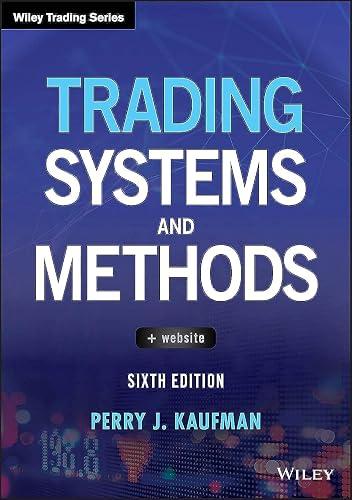
by Perry J. Kaufman
Premium summary · Opens in the app · 30 min read
The financial markets present a paradox. They generate enormous amounts of data every second, yet most participants struggle to extract meaningful signals from that data. Prices move constantly, sometimes in patterns that seem obvious in hindsight but remain maddeningly difficult to anticipate in real time. The challenge is not a lack of information. The challenge is knowing what information matters and how to use it.
**Author:** Perry J. Kaufman
**Estimated Reading Time:** 45 minutes
**What You'll Learn:** How to build, test, and apply systematic trading methods using technical analysis, statistical tools, and market behavior patterns. You will understand trend systems, momentum indicators, cycle analysis, charting techniques, and the role of human psychology in market movements.
**Who This Book Is For:** Traders and investors who want to move beyond intuition and develop disciplined, rule-based approaches to the markets. Whether you are new to systematic trading or an experienced practitioner, this condensed edition provides the essential frameworks for understanding and applying technical trading methods.
The financial markets present a paradox. They generate enormous amounts of data every second, yet most participants struggle to extract meaningful signals from that data. Prices move constantly, sometimes in patterns that seem obvious in hindsight but remain maddeningly difficult to anticipate in real time. The challenge is not a lack of information. The challenge is knowing what information matters and how to use it. Perry J. Kaufman wrote Trading Systems and Methods to address this fundamental problem. The book emerged from decades of practical experience in futures markets, where the stakes are high and the margin for error is small. Kaufman recognized that successful trading is not about predicting the future with certainty. It is about developing systematic approaches that tilt the odds in your favor while managing risk. The core insight running through Kaufman's work is that markets are not random, but they are also not perfectly predictable. They occupy a middle ground where patterns exist but constantly shift. A trading system that works today may fail tomorrow, not because the underlying logic was wrong, but because market conditions changed. The trader's job is to understand the tools available, know when to apply them, and recognize when they are no longer working. Kaufman's approach stands apart from much of the trading literature because it is deeply analytical without being inaccessible. He does not promise easy riches or secret formulas. Instead, he builds a foundation of statistical understanding, then layers on specific techniques for identifying trends, measuring momentum, analyzing cycles, and interpreting chart patterns. Each tool has its place, and each has limitations. The book also addresses a tension that many traders feel: the apparent conflict between fundamental and technical analysis. Kaufman argues that this conflict is largely artificial. Fundamental analysis examines the underlying economic forces of supply and demand. Technical analysis examines the price movements that result from those forces. Both are trying to understand the same market, just from different angles. Technical analysis has the advantage of being self-contained, relying only on price, volume, and open interest data that is available to everyone. Why does this matter? Because most individual…
Continue reading in the MinuteRead app
Get the complete 30-minute summary of Trading Systems and Methods
Get the complete summary in the appTechnical analysis is a legitimate and powerful approach to understanding markets. It is self-contained and provides tim
Markets are anticipatory. Prices reflect expectations of future events.
Averages can be misleading. Understand the distribution of data before drawing conclusions.
Trend-following captures the largest market moves. Accept drawdowns as the cost of being positioned for trends.
Momentum measures the speed of price change. Divergence between price and momentum warns of potential reversals.
Seasonality and cycles create recurring patterns that can be exploited.
"Trading Systems and Methods" is a strong fit if you want practical ideas around finance, business, economics, especially themes like technical analysis is a legitimate and powerful approach to understanding markets. it is self-contained and provides tim; markets are anticipatory. prices reflect expectations of future events. The MinuteRead summary distills these concepts into a focused read, whether you're deciding whether to buy the book or applying its lessons at work.
Motivated to help readers with in many ways, Perry J. Kaufman wrote “Trading Systems and Methods” to package those ideas for a fast, focused read. In “Trading Systems and Methods”, Perry J. Kaufman focuses on in many ways. Through “Trading Systems and Methods”, Perry J. Kaufman distills the core ideas on finance into lessons readers can absorb in a single short sitting. Readers turn to this work when they want Perry J. Kaufman's perspective on the subject without working through the entire origi…
Continue Reading
Access the complete 30-minute summary and thousands more nonfiction books in the MinuteRead app.

Continue reading the complete summary in the MinuteRead app.