MinuteRead
30 min
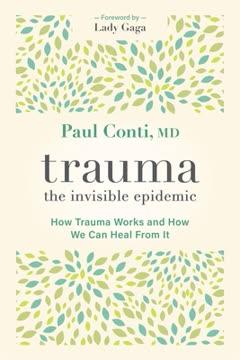
Book summary
by Paul Conti
Premium summary · Opens in the app · 30 min read
Most people think they understand trauma. They picture a soldier returning from war, a survivor of a violent assault, a child who witnessed something terrible. They imagine trauma as an event, something that happened once and left visible damage. This understanding is not wrong, but it is dangerously incomplete.
**Author:** Paul Conti, MD
**Estimated Reading Time:** 45 minutes
**What You'll Learn:** How trauma operates invisibly in individuals and society, why shame keeps people trapped, how the brain changes after traumatic experiences, and what genuine healing requires.
**Who This Book Is For:** Anyone who has experienced trauma directly, loves someone who has, works in healthcare or education, or wants to understand why cycles of suffering persist across families and communities despite our best efforts to break them.
Most people think they understand trauma. They picture a soldier returning from war, a survivor of a violent assault, a child who witnessed something terrible. They imagine trauma as an event, something that happened once and left visible damage. This understanding is not wrong, but it is dangerously incomplete. Paul Conti has spent decades treating people whose lives have been shaped by trauma. What he has learned through thousands of clinical hours is that trauma is far more pervasive, far more subtle, and far more destructive than most of us recognize. It hides in plain sight. It masquerades as depression, anxiety, addiction, chronic pain, relationship failures, and self-sabotage. It passes from parent to child, from community to community, from generation to generation. And it thrives on silence. The problem is not simply that trauma exists. The problem is that we have built a society that refuses to see it. Our healthcare system treats symptoms rather than causes. Our culture tells people to move on, to get over it, to stop dwelling on the past. Our families keep secrets. Our institutions perpetuate the very conditions that create trauma in the first place. And at the center of it all sits shame, the quiet voice that tells traumatized people they are broken, unworthy, and alone. Conti's approach is different because he refuses to separate the biological from the psychological, the individual from the social, the scientific from the human. He understands that trauma changes the brain in measurable ways, altering how people process emotions, form memories, and make decisions. But he also understands that healing requires more than medication or cognitive techniques. It requires compassion, connection, and a willingness to bring hidden pain into the light. This book exists because the cost of ignorance is too high. Every untreated trauma ripples outward. It shapes how parents raise children. It influences how teachers respond to struggling students. It determines who receives help and who gets blamed. It creates cycles of violence, addiction, and despair that repeat across decades. And yet, the tools to interrupt these cycles are available. Understanding trauma is the first step toward neutralizing its power. What makes Conti's perspective valuable is his insistence on both scientific rigor and deep humanity. He does not…
Continue reading in the MinuteRead app
Get the complete 30-minute summary of Trauma
Get the complete summary in the appTrauma is a pervasive, invisible epidemic that affects individuals and society.
Shame is trauma's accomplice, keeping people trapped in cycles of self-blame and isolation.
Trauma changes the brain, affecting emotions, memories, and decision-making.
Childhood trauma has lifelong effects on physical and mental health.
The healthcare system often fails to address trauma, treating symptoms rather than causes.
Racism, poverty, and inequality perpetuate cycles of trauma.
"Trauma" is a strong fit if you want practical ideas around health & fitness, psychology, self help, especially themes like trauma is a pervasive, invisible epidemic that affects individuals and society; shame is trauma's accomplice, keeping people trapped in cycles of self-blame and isolation. The MinuteRead summary distills these concepts into a focused read, whether you're deciding whether to buy the book or applying its lessons at work.
Paul Conti, MD is a psychiatrist specializing in trauma treatment. He practices across multiple sites in the United States and draws from his clinical experience to explore trauma's effects on individuals and society. Conti is known for his accessible communication style, using simple language and anecdotes to explain complex concepts. He has appeared on popular podcasts like The Peter Attia Drive and Huberman Lab, where his insights on trauma have garnered attention. Conti advocates for increas…
View all summaries by Paul ContiContinue Reading
Access the complete 30-minute summary and thousands more nonfiction books in the MinuteRead app.

Continue reading the complete summary in the MinuteRead app.