MinuteRead
30 min
Book summary
Premium summary · Opens in the app · 30 min read
There is a strange silence that surrounds psychological trauma. We live in a world where violence is everywhere: wars rage across continents, children are abused in their own homes, women are assaulted by people they know, and entire communities are shattered by disaster. Yet despite the prevalence of these experiences, we struggle to speak honestly about what they do to the human mind. We look away. We change the subject. We tell survivors to move on, to get over it, to stop dwelling on the pas
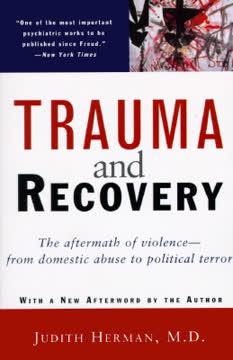
**Author:** Judith Lewis Herman **Estimated Reading Time:** 45 minutes
**What You'll Learn:**
- Why psychological trauma shatters our most basic assumptions about safety and human connection - How trauma manifests in the mind and body, from PTSD to the deeper wounds of prolonged captivity - The three essential stages of recovery that guide survivors from chaos to reconnection - Why childhood trauma shapes personality in ways adult trauma does not - How healing requires not just individual therapy but collective social action
**Who This Book Is For:**
This book is for anyone who has experienced trauma, anyone who loves or works with trauma survivors, and anyone who wants to understand why violence leaves such deep marks on the human psyche. It is for therapists, social workers, medical professionals, activists, and ordinary readers who sense that something essential about human suffering has been misunderstood or ignored. If you have ever wondered why some wounds seem invisible yet refuse to heal, this book will illuminate the path from devastation to recovery.
There is a strange silence that surrounds psychological trauma. We live in a world where violence is everywhere: wars rage across continents, children are abused in their own homes, women are assaulted by people they know, and entire communities are shattered by disaster. Yet despite the prevalence of these experiences, we struggle to speak honestly about what they do to the human mind. We look away. We change the subject. We tell survivors to move on, to get over it, to stop dwelling on the past. This silence is not accidental. Judith Lewis Herman argues that the study of psychological trauma has a history marked by periods of intense investigation followed by periods of collective amnesia. Every time researchers and clinicians have begun to understand the effects of overwhelming experiences, their findings have been forgotten, suppressed, or dismissed. The knowledge exists, but it keeps getting lost. The reason for this amnesia is uncomfortable. To acknowledge the reality of trauma is to acknowledge the reality of human cruelty. It means confronting the fact that people do terrible things to one another, often deliberately, often systematically. It means recognizing that the institutions we trust to protect us sometimes fail, and that the people we love sometimes hurt us. This recognition threatens the comfortable beliefs that hold society together: that the world is basically safe, that people are basically good, that justice eventually prevails. Trauma destroys these beliefs. When a person experiences overwhelming terror, helplessness, and horror, the psychological foundations of their life collapse. The world no longer feels safe. Other people no longer feel trustworthy. Even one's own mind and body become sources of fear rather than sources of stability. The survivor is…
Continue reading in the MinuteRead app
Get the complete 30-minute summary of Trauma and Recovery
Get the complete summary in the appTrauma is an injury, not a weakness. The symptoms of PTSD are normal responses to abnormal events.
Traumatic events destroy the sustaining bonds between individual and community. Recovery requires rebuilding these bonds
The core dynamic of trauma is oscillation between intrusion (reliving the trauma) and constriction (emotional numbing).
Prolonged trauma under conditions of captivity results in complex PTSD, which involves deeper and more pervasive harm th
Childhood trauma forms and deforms the personality, affecting attachment, emotional regulation, sense of self, and physi
Recovery unfolds in three stages: safety, remembrance and mourning, and reconnection.
"Trauma and Recovery" is a strong fit if you want practical ideas around inspiration, psychology, mental health, especially themes like trauma is an injury, not a weakness. the symptoms of ptsd are normal responses to abnormal events; traumatic events destroy the sustaining bonds between individual and community. recovery requires rebuilding these bonds. The MinuteRead summary distills these concepts into a focused read, whether you're deciding whether to buy the book or applying its lessons at work.
Judith Lewis Herman is a renowned psychiatrist, researcher, and author specializing in traumatic stress and incest. Her work has significantly contributed to understanding and treating the effects of trauma. Herman's groundbreaking research led to the recognition of Complex PTSD as a distinct condition. She has taught at Harvard Medical School and Cambridge Hospital, focusing on the intersection of trauma, politics, and feminist theory. Herman's influential writings have shaped the field of trau…
View all summaries by Judith Lewis HermanContinue Reading
Access the complete 30-minute summary and thousands more nonfiction books in the MinuteRead app.

Continue reading the complete summary in the MinuteRead app.