MinuteRead
30 min
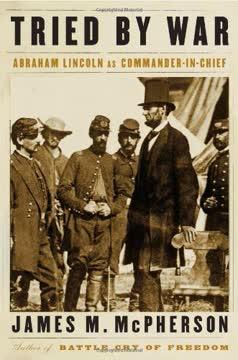
When Abraham Lincoln took the oath of office in March 1861, he inherited a nation already coming apart. Seven Southern states had seceded. Federal forts and arsenals across the South had been seized. The outgoing administration of James Buchanan had done nothing effective to stop the disintegration. And the new president had almost no relevant experience for the job ahead.
**Abraham Lincoln as Commander in Chief**
By James M. McPherson
**Estimated Reading Time:** 45 minutes
**What You'll Learn**
How a self-taught frontier lawyer with almost no military experience became one of the most effective commanders in chief in American history. You will learn how Lincoln mastered military strategy through relentless study, how he navigated the impossible political pressures of a divided nation, and how he ultimately found and empowered the generals who would win the Civil War. This is not a story of natural genius. It is a story of intellectual growth under the most extreme pressure any American president has ever faced.
**Who This Book Is For**
Anyone who wants to understand leadership in its rawest form. Anyone who believes great commanders are born, not made. Anyone facing a challenge for which they feel unprepared. And anyone who wants to see how the Civil War was actually won, not just on the battlefields, but in the mind of the man who directed it all from a telegraph office in Washington.
When Abraham Lincoln took the oath of office in March 1861, he inherited a nation already coming apart. Seven Southern states had seceded. Federal forts and arsenals across the South had been seized. The outgoing administration of James Buchanan had done nothing effective to stop the disintegration. And the new president had almost no relevant experience for the job ahead. Lincoln's military background was famously thin. He had served as a volunteer militia captain during the Black Hawk War of 1832, a conflict in which he later joked he fought nothing but mosquitoes. His total active service amounted to roughly three months. He had never commanded troops in combat. He had never studied at a military academy. He had never held executive office of any kind. The generals he inherited had spent decades preparing for war. Winfield Scott, the general in chief, had been a general since before Lincoln was born. The officers of the regular army had been trained at West Point and tested in the Mexican War. By any conventional measure, they knew far more about military affairs than the new president. Yet four years later, Lincoln had become the architect of Union victory. He had mastered the art of military strategy. He had identified, promoted, and empowered the generals who would finally defeat the Confederacy. He had expanded the powers of the presidency in ways that permanently changed the office. And he had done all of this while managing a fractious political coalition, a restive Northern public, and the constant threat of foreign intervention. How did this happen? James McPherson's answer is both simple and profound. Lincoln was not a natural strategist. He became one through…
Continue reading in the MinuteRead app
Get the complete 30-minute summary of Tried by War
Get the complete summary in the appLincoln taught himself military strategy through books, questions, and relentless study of the war's progress.
The Union's early generals failed not because they were incompetent but because they were too cautious for the war they
Lincoln learned strategy through failure. His early interventions were often clumsy. He got better.
The Emancipation Proclamation was a military measure, issued under the commander in chief's war powers.
The telegraph allowed Lincoln to command the war in real time. He had to learn when to use this power and when to restra
Every military decision had political consequences. Lincoln never forgot this.
"Tried by War" is a strong fit if you want practical ideas around history, civil war, biography, especially themes like lincoln taught himself military strategy through books, questions, and relentless study of the war's progress; the union's early generals failed not because they were incompetent but because they were too cautious for the war they. The MinuteRead summary distills these concepts into a focused read, whether you're deciding whether to buy the book or applying its lessons at work.
James M. McPherson is a renowned American Civil War historian and Professor Emeritus at Princeton University. He earned his Ph.D. from Johns Hopkins University in 1963 and his B.A. from Gustavus Adolphus College. McPherson is best known for his Pulitzer Prize-winning book "Battle Cry of Freedom." His expertise in Civil War history has earned him numerous accolades, including the presidency of the American Historical Association in 2003. McPherson's contributions to the field extend beyond academ…
View all summaries by James M. McPhersonContinue Reading
Access the complete 30-minute summary and thousands more nonfiction books in the MinuteRead app.

Continue reading the complete summary in the MinuteRead app.