MinuteRead
30 min
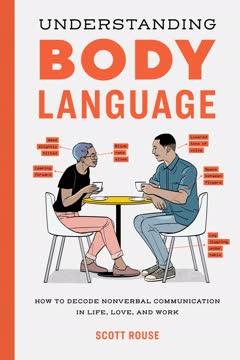
Book summary
by Scott Rouse
Premium summary · Opens in the app · 30 min read
You have seen every body language signal that exists. Thousands of times. At dinner tables, in conference rooms, on first dates, during job interviews, and across every awkward family gathering you have ever attended. The crossed arms, the forced smiles, the nervous foot tapping, the eyes that dart away at exactly the wrong moment. You have witnessed all of it.
**Estimated Reading Time:** 45 minutes
**What You'll Learn:** - Why no single body language cue ever proves anything on its own - How to spot hidden stress, deception, and genuine emotion - The specific gestures that build trust, authority, and connection - How culture changes the meaning of everyday signals - Practical techniques used by interrogators, negotiators, and leaders
**Who This Book Is For:** Anyone who wants to read people more accurately, communicate with greater impact, and understand what others are really thinking beneath their words. Whether you are leading a team, negotiating a deal, navigating a relationship, or simply curious about human behavior, this book will change how you see every interaction.
You have seen every body language signal that exists. Thousands of times. At dinner tables, in conference rooms, on first dates, during job interviews, and across every awkward family gathering you have ever attended. The crossed arms, the forced smiles, the nervous foot tapping, the eyes that dart away at exactly the wrong moment. You have witnessed all of it. What you have not done, until now, is understand what any of it actually means. Most people go through life with a vague sense that something is off in certain interactions. A conversation feels wrong, but you cannot say why. A colleague seems agreeable, yet you leave the meeting uneasy. A date smiles and nods, but something tells you there will not be a second one. Your intuition picks up on signals, but without training, intuition remains fuzzy and unreliable. Scott Rouse has spent his career training people whose lives depend on reading others accurately. Law enforcement officers, military interrogators, corporate negotiators, and executives have all learned his methods. The stakes in those rooms are high. Misreading a suspect can cost a case. Misreading a counterpart across a negotiating table can cost millions. Misreading a hostile individual can cost lives. The problem is that most popular advice about body language is dangerously oversimplified. You have heard the clichés. Crossed arms mean defensiveness. Looking away means lying. A firm handshake signals confidence. These tidy rules feel useful, but they collapse under real-world complexity. Crossed arms might mean someone is cold, comfortable, or simply has nowhere else to put their hands. Looking away might mean someone is thinking, not deceiving. A crushing handshake might signal insecurity rather than strength. Rouse's approach is different. He does not offer a dictionary of gestures with fixed meanings. Instead, he teaches a method for observing behavior in context, identifying clusters of signals, and asking better questions before drawing conclusions. The goal is not to become a human lie detector who sees deception everywhere. The goal is to become a more accurate observer of…
Continue reading in the MinuteRead app
Get the complete 30-minute summary of Understanding Body Language
Get the complete summary in the appNo single body language cue proves anything. Look for clusters of at least three converging signals.
Liars often maintain eye contact to monitor whether their lie is believed.
The slow and tiny smile builds rapport through mirror neurons. Start barely perceptible, grow gradually, never go big.
Adaptors are unconscious self-soothing behaviors that reveal hidden stress. Watch for escalation.
Feet point toward what interests us and away from what does not. They are among the most honest signals.
Body language varies across cultures. Learn the norms of the cultures you interact with.
"Understanding Body Language" is a strong fit if you want practical ideas around inspiration, psychology, self help, especially themes like no single body language cue proves anything. look for clusters of at least three converging signals; liars often maintain eye contact to monitor whether their lie is believed. The MinuteRead summary distills these concepts into a focused read, whether you're deciding whether to buy the book or applying its lessons at work.
Continue Reading Pricing • Terms of Service • Privacy Policy • 30-Day Refund Policy • DMCA • Affiliate • Twitter • Support • Follow Listen 1 mins Now playing Understanding Body Language 0:00 -0:00 Now playing Understanding Body Language 0:00 -0:00 1x Queue Voice Speed Music Voice Dan Jennifer Andrew Sarah Michelle Lauren – 1.0 × + 200 words per minute Off Low Medium High Music Volume Off Low Medium High Contents Bookmark Share Want to Read Currently Reading Read Did Not Finish Home Search Swipe …
View all summaries by Scott RouseContinue Reading
Access the complete 30-minute summary and thousands more nonfiction books in the MinuteRead app.

Continue reading the complete summary in the MinuteRead app.