MinuteRead
30 min
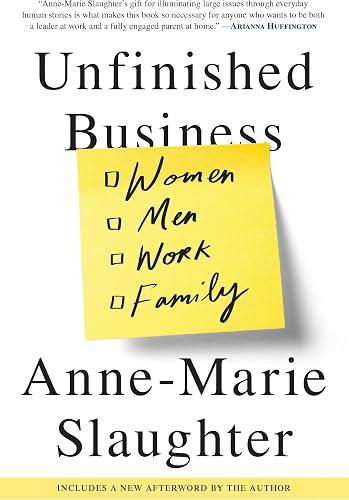
Book summary
by Anne-Marie Slaughter
Premium summary · Opens in the app · 30 min read
Anne-Marie Slaughter wrote an article in 2012 that became one of the most read pieces in the history of The Atlantic. Its title was provocative: "Why Women Still Can't Have It All." The response was overwhelming. Millions of women recognized themselves in her story. They had done everything right, earned the degrees, landed the jobs, delayed having children until their careers were established, and still found themselves exhausted, stretched thin, and quietly wondering why the promised land of h
**Author:** Anne-Marie Slaughter **Estimated Reading Time:** 45 minutes
**What You'll Learn:** Why the pursuit of work-life balance has failed so many women, how caregiving became invisible labor, and what genuine equality between men and women actually requires. You will discover why the problem is not women's ambition but the structure of work itself, and how rethinking careers, care, and success can transform your life and society.
**Who This Book Is For:** Anyone who has ever felt torn between professional ambition and family responsibility. Anyone who has wondered why women still earn less, advance more slowly, and carry more of the burden at home. Anyone ready to stop blaming themselves and start changing the rules.
Anne-Marie Slaughter wrote an article in 2012 that became one of the most read pieces in the history of The Atlantic. Its title was provocative: "Why Women Still Can't Have It All." The response was overwhelming. Millions of women recognized themselves in her story. They had done everything right, earned the degrees, landed the jobs, delayed having children until their careers were established, and still found themselves exhausted, stretched thin, and quietly wondering why the promised land of having it all felt more like a desert. The article touched a nerve because it named something that had been simmering beneath the surface of American life for decades. Women had been told that if they worked hard enough, planned carefully enough, and leaned in far enough, they could have both a fulfilling career and a rich family life. The obstacles they faced were framed as personal challenges to be overcome through better time management, more assertiveness, or choosing a more supportive partner. The solution was always individual. The problem was always you. Slaughter's article suggested something different. The problem was not women. The problem was the structure of work, the devaluation of care, and a set of social expectations that had not caught up with the reality of modern life. The article was a confession, a critique, and a call to action all at once. But it was also incomplete. An article, even a long one, can only do so much. This book is the fuller argument. The central problem Slaughter identifies is deceptively simple. American society claims to value family, but it structures work as though no one has one. The ideal worker is someone who is always available, never distracted by sick children or aging parents, willing to relocate at a moment's notice, and committed to the job above all else. This ideal was created when most workers were men with wives at home handling everything else. It persists even though most families no longer look like that. Women have adapted to this reality by…
Continue reading in the MinuteRead app
Get the complete 30-minute summary of Unfinished Business
Get the complete summary in the appThe problem is not women. The problem is a system that devalues care and structures work around the assumption that some
Care is essential work that is systematically devalued. Valuing care is a root solution to gender inequality.
The tipping point is real. It is not a personal failure but a structural reality.
Workplaces must shift from measuring hours to measuring results. Flexibility should be the default, not an accommodation
Men must become equal caregivers. Gender equality cannot be achieved by women alone.
Career paths should be intervals, not linear trajectories. Periods of caregiving are normal and can be planned for.
"Unfinished Business" is a strong fit if you want practical ideas around feminism, business, sociology, especially themes like the problem is not women. the problem is a system that devalues care and structures work around the assumption that some; care is essential work that is systematically devalued. valuing care is a root solution to gender inequality. The MinuteRead summary distills these concepts into a focused read, whether you're deciding whether to buy the book or applying its lessons at work.
Motivated to help readers with "If family comes first, Anne-Marie Slaughter wrote “Unfinished Business” to package those ideas for a fast, focused read. Through “Unfinished Business”, Anne-Marie Slaughter distills the core ideas on feminism into lessons readers can absorb in a single short sitting. Readers turn to this work when they want Anne-Marie Slaughter's perspective on the subject without working through the entire original volume. The book is structured so each chapter highlights a pract…
Continue Reading
Access the complete 30-minute summary and thousands more nonfiction books in the MinuteRead app.

Continue reading the complete summary in the MinuteRead app.