MinuteRead
30 min
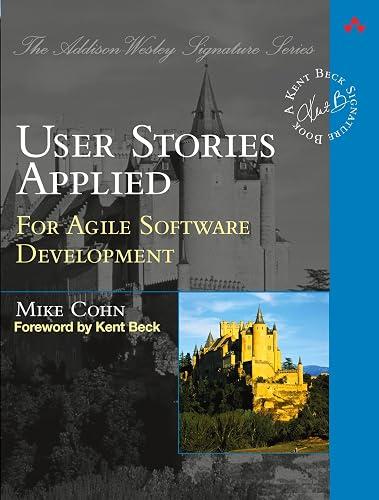
Book summary
by Mike Cohn
Premium summary · Opens in the app · 30 min read
Software projects fail for many reasons, but one cause stands above the rest: the people building the software do not fully understand what the people using the software actually need. This is not because developers lack intelligence or customers lack clarity. It is because the traditional ways of documenting requirements create distance between the two groups.
**Author:** Mike Cohn
**Estimated Reading Time:** 45 minutes
**What You'll Learn:**
- How to write user stories that capture real customer needs - Why stories work better than traditional requirements documents - How to gather stories through interviews, workshops, and observation - How to estimate and plan using story points and velocity - How acceptance tests turn stories into working software - How to apply stories across projects of any size
**Who This Book Is For:**
Software developers, product managers, business analysts, designers, and anyone involved in building software who wants to understand what customers actually need and deliver it efficiently. Whether you are new to agile development or experienced with Scrum and looking to deepen your practice, this book provides a practical foundation for working with user stories.
Software projects fail for many reasons, but one cause stands above the rest: the people building the software do not fully understand what the people using the software actually need. This is not because developers lack intelligence or customers lack clarity. It is because the traditional ways of documenting requirements create distance between the two groups. Consider how most software requirements are written. They arrive as thick documents filled with technical language, diagrams, and specifications that attempt to describe every detail before a single line of code is written. Customers sign off on these documents, often without fully understanding them. Developers then interpret these documents, often without fully understanding the customer's intent. Months later, the software is delivered, and everyone discovers that what was built is not what was wanted. The problem is not a lack of effort. The problem is the medium. Written specifications, no matter how detailed, cannot capture the nuance of human needs. They freeze requirements at a moment in time, assuming that what was true at the start of a project will remain true throughout. They privilege documentation over conversation, and in doing so, they strip away the very context that gives requirements meaning. Mike Cohn wrote User Stories Applied to offer a different approach. Instead of writing long requirement documents, teams write short, simple descriptions of functionality from the user's perspective. These are called user stories. A story might be as simple as: "As a frequent traveler, I want to save my payment information so that I can book flights faster." It fits on an index card. It captures who wants something, what they want, and why they want it. It invites conversation rather than pretending to replace it. This approach emerged from the agile software development movement, which Cohn helped shape as a co-founder of the Scrum Alliance and a pioneer of techniques like Planning Poker. But User Stories Applied is not a book about…
Continue reading in the MinuteRead app
Get the complete 30-minute summary of User Stories Applied
Get the complete summary in the appWrite stories in the format "As a [role], I want [goal] so that [benefit]."
Keep stories small enough to complete within a single iteration.
Identify user roles and create personas before writing stories.
Gather stories through interviews, workshops, and observation.
Estimate stories in relative points, not absolute hours.
Let customers prioritize stories while developers provide estimates.
"User Stories Applied" is a strong fit if you want practical ideas around programming, business, technology, especially themes like write stories in the format "as a [role], i want [goal] so that [benefit]."; keep stories small enough to complete within a single iteration. The MinuteRead summary distills these concepts into a focused read, whether you're deciding whether to buy the book or applying its lessons at work.
Motivated to help readers with stories are comprehensible by both customers and developers, Mike Cohn wrote “User Stories Applied” to package those ideas for a fast, focused read. In “User Stories Applied”, Mike Cohn focuses on stories are comprehensible by both customers and developers. Through “User Stories Applied”, Mike Cohn distills the core ideas on programming into lessons readers can absorb in a single short sitting. Readers turn to this work when they want Mike Cohn's perspective on the…
Continue Reading
Access the complete 30-minute summary and thousands more nonfiction books in the MinuteRead app.

Continue reading the complete summary in the MinuteRead app.