MinuteRead
30 min
Book summary
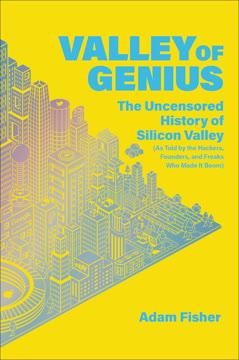
by Adam Fisher
Premium summary · Opens in the app · 30 min read
Silicon Valley did not start in a garage. It started with a vision of human potential.
**Author:** Adam Fisher
**Estimated Reading Time:** 45 minutes
**What You'll Learn:** The true, uncensored origin story of Silicon Valley, told by the people who built it. From the counterculture hackers of the 1960s to the social media titans of the 2000s, you will understand how a small stretch of California farmland became the epicenter of the global technology industry. This is not a story of lone geniuses but of a unique culture, a series of collisions between art and science, and a relentless belief that technology could change what it means to be human.
**Who This Book Is For:** Anyone who has ever wondered how the digital world came to be. If you use a smartphone, search the web, or connect with friends online, you are living in a world these people imagined. This book is for readers who want to understand the human drama behind the screens, the wild parties, the bitter rivalries, and the shared dream that built the future.
Silicon Valley did not start in a garage. It started with a vision of human potential. The standard mythology tells a clean story: brilliant young men in dorm rooms and garages invent the future, strike it rich, and change the world. That story is not wrong, exactly, but it is incomplete. It misses the mess. It misses the government funding, the psychedelic drugs, the spectacular failures, the stolen ideas, and the strange, persistent belief that computers could be tools for personal liberation rather than corporate control. Adam Fisher spent years tracking down the people who were actually there. He interviewed more than two hundred of them, from the famous names everyone knows to the obscure engineers whose contributions were written out of history. Then he did something unusual. Rather than synthesizing their words into a traditional narrative, he arranged their voices into a kind of oral history, a chorus of competing memories and perspectives that together form something closer to the truth than any single account could provide. The result is a book that feels less like a history lesson and more like eavesdropping on a long, fascinating dinner party where the guests happen to have invented personal computing, the internet, and social media. What emerges from these conversations is a portrait of a place with a unique culture. Silicon Valley was never just about technology. It was about a set of ideas: that information wants to be free, that authority should be questioned, that the best way to predict the future is to build it, and that work should feel like play. These ideas came from the counterculture of the 1960s, from the hacker ethic that emerged at MIT and spread westward, and from the peculiar social…
Continue reading in the MinuteRead app
Get the complete 30-minute summary of Valley of Genius
Get the complete summary in the app**Silicon Valley is a culture, not a place.** Its values, openness, creativity, tolerance for failure, and belief in ind
**Doug Engelbart showed the future in 1968.** The graphical interface, the mouse, hypertext, and collaborative computing
**Community drives innovation.** The Homebrew Computer Club, Xerox PARC, and countless other communities created the con
**Design is about how things work, not how they look.** Apple's success came from obsessing over the user experience and
**Network effects create winner-take-all markets.** Once a platform like Facebook or Google reaches critical mass, it is
**The internet disrupts industries built on scarcity.** Napster and the music industry showed what happens when distribu
"Valley of Genius" is a strong fit if you want practical ideas around history, technology, business, especially themes like **silicon valley is a culture, not a place.** its values, openness, creativity, tolerance for failure, and belief in ind; **doug engelbart showed the future in 1968.** the graphical interface, the mouse, hypertext, and collaborative computing. The MinuteRead summary distills these concepts into a focused read, whether you're deciding whether to buy the book or applying its lessons at work.
Adam Fisher is a technology journalist and author known for his work on Silicon Valley history. He conducted extensive interviews with over 200 industry experts, entrepreneurs, and innovators to compile "Valley of Genius." Fisher's approach to storytelling involves creatively arranging interview snippets to form a coherent narrative without traditional prose. His background includes writing for Wired magazine, which likely influenced his decision to include significant coverage of tech publicati…
View all summaries by Adam FisherContinue Reading
Access the complete 30-minute summary and thousands more nonfiction books in the MinuteRead app.

Continue reading the complete summary in the MinuteRead app.