MinuteRead
30 min
Book summary
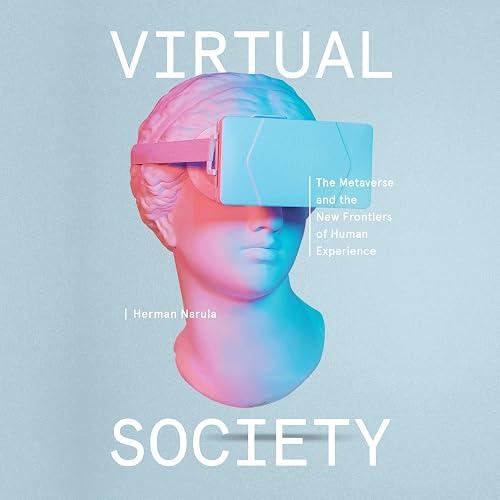
by Herman Narula
Premium summary · Opens in the app · 30 min read
Human beings have always lived in more than one world. We inhabit the physical realm of objects, weather, and biology, but we also dwell in worlds of our own making: the worlds of stories, religions, nations, corporations, and games. These constructed realities are not escapes from life. They are extensions of it. They give shape to our desires, structure our relationships, and provide the meaning that makes existence bearable.
**Author:** Herman Narula **Estimated Reading Time:** 45 minutes
**What You'll Learn:**
- Why virtual worlds are not a new phenomenon but a fundamental human drive - How the modern economy has created a crisis of fulfillment - What actually makes virtual worlds valuable, and why graphics matter far less than complexity - How virtual employment could reshape the global economy - Why regulation will determine whether the metaverse becomes liberating or exploitative - What the long-term implications are for human identity and society
**Who This Book Is For:**
This book is for anyone curious about why we build worlds, why millions of people spend increasing amounts of time in digital spaces, and what the future of work, meaning, and human connection might look like. Whether you are a technologist, a business leader, a policymaker, or simply someone trying to understand the pull of games and virtual communities, this book offers a framework for thinking clearly about what is coming.
Human beings have always lived in more than one world. We inhabit the physical realm of objects, weather, and biology, but we also dwell in worlds of our own making: the worlds of stories, religions, nations, corporations, and games. These constructed realities are not escapes from life. They are extensions of it. They give shape to our desires, structure our relationships, and provide the meaning that makes existence bearable. Herman Narula opens *Virtual Society* with a deceptively simple observation: we have always been a species of worldbuilders. The pyramids of Egypt, the mythologies of ancient Greece, the elaborate rituals of religious traditions, the legal fictions that underpin modern economies: all of these are virtual worlds in the broadest sense. They are shared imaginative structures that exist because enough people agree they exist, and they generate real consequences in the physical world. This matters because the current conversation about the metaverse is dangerously narrow. Most discussions focus on technology: which headsets will dominate, which platforms will win, how realistic the graphics will be. Narula argues that this is like discussing the future of literature by debating the quality of printing presses. The technology matters, but only insofar as it enables something far more important: the creation of worlds that people actually care about. The problem the book addresses is not technological. It is existential. Modern economies have become extraordinarily efficient at producing goods and services, but they have become terrible at producing meaning. Many people spend their working lives in jobs that feel pointless, performing tasks that could disappear tomorrow without anyone noticing. The promise of automation was supposed to free us from drudgery. Instead, it has often replaced meaningful labor with empty busywork. At the same time, millions of people are…
Continue reading in the MinuteRead app
Get the complete 30-minute summary of Virtual Society
Get the complete summary in the appVirtual worlds are ancient. Humans have always created shared imaginative structures that generate meaning and shape the
The modern economy has a fulfillment problem. It prioritizes productivity over meaning, leaving many people in jobs that
Virtual worlds are fulfillment engines. They are designed to satisfy psychological needs for autonomy, competence, and r
Useful complexity matters more than graphics. The value of a virtual world is determined by the richness of interactions
A metaverse is a network of worlds, not a single world. Its key characteristic is the transfer of value and meaning betw
Virtual jobs will create a fulfillment economy. Millions of people will earn a living creating meaningful experiences fo
"Virtual Society" is a strong fit if you want practical ideas around technology, sociology, science, especially themes like virtual worlds are ancient. humans have always created shared imaginative structures that generate meaning and shape the; the modern economy has a fulfillment problem. it prioritizes productivity over meaning, leaving many people in jobs that. The MinuteRead summary distills these concepts into a focused read, whether you're deciding whether to buy the book or applying its lessons at work.
Motivated to help readers with we have always been a species of worldbuilders, Herman Narula wrote “Virtual Society” to package those ideas for a fast, focused read. Through “Virtual Society”, Herman Narula distills the core ideas on technology into lessons readers can absorb in a single short sitting. Readers turn to this work when they want Herman Narula's perspective on the subject without working through the entire original volume. The book is structured so each chapter highlights a practica…
Continue Reading
Access the complete 30-minute summary and thousands more nonfiction books in the MinuteRead app.

Continue reading the complete summary in the MinuteRead app.