MinuteRead
30 min
Book summary
by Euan Sinclair
Premium summary · Opens in the app · 30 min read
Most people approach options the way they approach stocks. They ask a simple question: will the price go up or down? They buy calls when they are bullish, buy puts when they are bearish, and hope the market cooperates. This approach occasionally works, but it misses the entire point of what options actually are.
**Author:** Euan Sinclair
**Estimated Reading Time:** 45 minutes
**What You'll Learn:**
- Why volatility, not direction, is the true foundation of option trading - How to forecast volatility as a distribution rather than a single number - The essential role of hedging and why it costs more than most traders realize - How to size positions for long-term survival and growth - The behavioral biases that create exploitable market inefficiencies - Why the variance premium offers a persistent edge in index options - How to build a complete trading process that survives market turbulence
**Who This Book Is For:**
This book is for traders who want to move beyond directional bets and understand the deeper mechanics of option markets. It is for the retail trader who has dabbled in options and lost money, the professional who wants a rigorous framework for volatility trading, and the quantitative-minded investor who suspects there is more to options than strike prices and expiration dates. If you have ever wondered why implied volatility rarely matches realized volatility, or why selling options seems profitable until it suddenly is not, this book will give you the tools to understand and navigate those dynamics.
Most people approach options the way they approach stocks. They ask a simple question: will the price go up or down? They buy calls when they are bullish, buy puts when they are bearish, and hope the market cooperates. This approach occasionally works, but it misses the entire point of what options actually are. An option is not primarily a directional instrument. It is a volatility instrument. The price of an option is determined not by where the underlying asset will go, but by how much it will move along the way. A stock can finish exactly where it started, and an option on that stock can still lose most of its value. Conversely, a stock can move significantly in the "wrong" direction, and a properly hedged option position can still profit. This distinction matters because most option traders are playing the wrong game. They are using volatility instruments to make directional bets, and they are competing against sophisticated market participants who understand the true nature of what is being traded. The result is predictable: the directional trader loses money over time, while the volatility trader captures the edge that exists in the market. Euan Sinclair wrote this book to bridge the gap between academic option pricing theory and the practical realities of trading volatility. His background in theoretical physics gives him a unique perspective. Physicists are trained to build models, understand their limitations, and extract useful predictions from imperfect frameworks. That is exactly what successful volatility trading requires. The central problem this book…
Continue reading in the MinuteRead app
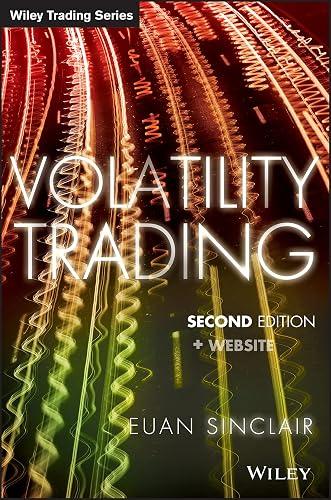
Get the complete 30-minute summary of Volatility Trading, + website
Get the complete summary in the appVolatility, not direction, is the core of option trading. Options are volatility instruments.
The Black-Scholes-Merton model is a language for translating option prices into implied volatility, not a perfect model
Volatility clusters and mean-reverts, making it somewhat predictable.
Forecast volatility as a distribution, not a point estimate. Use volatility cones to visualize the range of possibilitie
Hedging is essential but costly. Include hedging costs in your breakeven analysis.
Position sizing is as important as edge. Use fractional Kelly to balance growth and survival.
"Volatility Trading, + website" is a strong fit if you want practical ideas around finance, business, economics, especially themes like volatility, not direction, is the core of option trading. options are volatility instruments; the black-scholes-merton model is a language for translating option prices into implied volatility, not a perfect model. The MinuteRead summary distills these concepts into a focused read, whether you're deciding whether to buy the book or applying its lessons at work.
Motivated to turn hard-won expertise into something readers can use every day, Euan Sinclair wrote “Volatility Trading, + website” to distill the ideas behind the work into clear, actionable lessons. Through “Volatility Trading, + website”, Euan Sinclair distills the core ideas on finance into lessons readers can absorb in a single short sitting. Readers turn to this work when they want Euan Sinclair's perspective on the subject without working through the entire original volume. The book is str…
Continue Reading
Access the complete 30-minute summary and thousands more nonfiction books in the MinuteRead app.

Continue reading the complete summary in the MinuteRead app.