MinuteRead
30 min
Book summary
Premium summary · Opens in the app · 30 min read
In 1845, a twenty-seven-year-old man borrowed an axe and walked into the woods near Concord, Massachusetts. He built a small cabin beside a pond called Walden. He lived there for two years, two months, and two days. He did not go there to hide from the world. He went there to find out what the world actually was, and what he actually was, once you removed the noise.
**Author:** Henry David Thoreau
**Estimated Reading Time:** 45 minutes
**What You'll Learn:** How to strip away the clutter of modern life and discover what is truly essential. You will learn why solitude is not loneliness but a path to self-discovery, how nature teaches lessons civilization cannot, why material wealth often creates spiritual poverty, and what it means to live deliberately rather than sleepwalk through your days. You will also learn why a just person sometimes has a moral duty to break unjust laws.
**Who This Book Is For:** Anyone who has ever felt that their life is too busy, too expensive, or too far from their own values. Anyone who suspects that working harder to buy more things is a trap. Anyone curious about what happens when you step off the treadmill and ask a deeper question: What is life actually for?
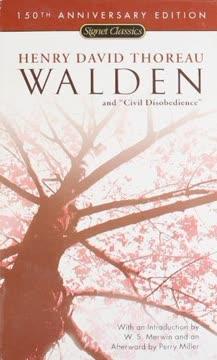
In 1845, a twenty-seven-year-old man borrowed an axe and walked into the woods near Concord, Massachusetts. He built a small cabin beside a pond called Walden. He lived there for two years, two months, and two days. He did not go there to hide from the world. He went there to find out what the world actually was, and what he actually was, once you removed the noise. The book he wrote about that experience, *Walden*, is not a wilderness survival story. Thoreau was not a hermit. He walked into town regularly. He entertained visitors. He bought supplies. What he did was far more radical. He conducted an experiment in living. He wanted to know what a human being actually needs to live a good life, and what is merely convention, habit, or unnecessary burden. The problem Thoreau identified in 1854 has only grown more acute. People spend their lives working jobs they dislike to buy things they do not need, to impress people they do not particularly like, all while postponing the life they actually want to live. He called this quiet desperation. The phrase stings because it is recognizable. Many people sense that their lives are not quite their own, that they are following scripts written by someone else, that their days are filled with busyness but empty of meaning. Thoreau's approach is different from most self-help or philosophical writing because he did not merely theorize. He built the cabin. He grew the beans. He kept meticulous accounts of every expense. He measured the ice on the pond and listened to the owls at night. He lived the questions, and then he wrote down what he learned. His writing is precise, witty, sometimes prickly, and deeply honest. The second work included here, *On the Duty of Civil Disobedience*, extends the logic of *Walden* into the political…
Continue reading in the MinuteRead app
Get the complete 30-minute summary of Walden Or, Life In The Woods And "On The Duty Of Civil Disobedience"
Get the complete summary in the appLive deliberately. Make conscious choices rather than following scripts written by others.
The true cost of anything is the amount of life you must exchange for it.
Wealth is not having many things. Wealth is needing few things.
Solitude is not loneliness. It is a skill that opens the door to self-knowledge.
Nature is not a backdrop. It is a teacher, and it rewards patient attention.
Simplify. Most of what fills your days is unnecessary and can be let go.
"Walden Or, Life In The Woods And "On The Duty Of Civil Disobedience"" is a strong fit if you want practical ideas around classics, philosophy, essays, especially themes like live deliberately. make conscious choices rather than following scripts written by others; the true cost of anything is the amount of life you must exchange for it. The MinuteRead summary distills these concepts into a focused read, whether you're deciding whether to buy the book or applying its lessons at work.
Henry David Thoreau was an American author, philosopher, and naturalist best known for Walden and Civil Disobedience. Born in 1817, he graduated from Harvard and became a key figure in the Transcendentalist movement. Thoreau's writings, spanning over 20 volumes, covered topics such as simple living, nature, and civil rights. His two-year experiment living in a cabin at Walden Pond inspired his most famous work. Thoreau's philosophy of nonviolent resistance influenced later figures like Gandhi an…
View all summaries by Henry David ThoreauContinue Reading
Access the complete 30-minute summary and thousands more nonfiction books in the MinuteRead app.

Continue reading the complete summary in the MinuteRead app.