MinuteRead
30 min
Book summary
Premium summary · Opens in the app · 30 min read
In 1956, a twenty-five-year-old Warren Buffett started an investment partnership with $105,100. Seven family members and friends trusted him with their savings. He had no track record to speak of, no Wall Street pedigree, and no institutional backing. He worked from a small room in his home in Omaha, Nebraska.
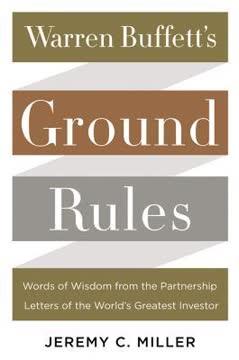
### Words of Wisdom from the Partnership Letters of the World's Greatest Investor
**Author:** Jeremy C. Miller
**Estimated Reading Time:** 45 minutes
**What You'll Learn:**
- Why thinking like a business owner transforms your investment results - How to use market volatility as an opportunity instead of fearing it - The real definition of conservative investing - Why most investors should simply buy index funds - How to measure investment performance honestly - The discipline required to avoid speculative manias
**Who This Book Is For:**
This book is for anyone who wants to understand how Warren Buffett actually built his fortune during the partnership years, from 1956 to 1970. It is for individual investors tired of chasing hot tips and short-term trends. It is for professionals who want to understand the foundational principles behind one of history's greatest investment records. And it is for anyone who suspects that the financial industry's complexity often serves the industry more than the investor.
In 1956, a twenty-five-year-old Warren Buffett started an investment partnership with $105,100. Seven family members and friends trusted him with their savings. He had no track record to speak of, no Wall Street pedigree, and no institutional backing. He worked from a small room in his home in Omaha, Nebraska. Over the next fourteen years, he delivered returns that remain among the greatest in financial history. The partnership compounded money at nearly 30 percent annually before fees. An investor who put $10,000 with Buffett in 1957 and left it there would have had roughly $260,000 by 1969, after all fees. During that same period, the Dow Jones Industrial Average delivered less than a third of that return. But the numbers are not the real story. The real story lies in the letters Buffett wrote to his partners every year. These letters were not marketing documents. They were teaching tools. Buffett used them to explain his philosophy, set expectations, admit mistakes, and educate his partners about how to think about money, markets, and business. He wrote with unusual candor. He explained what he was doing and why. He warned partners when he thought returns would be harder to achieve. He told them when he had nothing good to buy. Jeremy Miller spent years studying these letters, most of which were never publicly available until recently. What he found was a complete investment philosophy laid out in plain language, written by a young man who was already thinking with remarkable clarity about how to allocate capital. The problem most investors face is not a lack of information. It is a lack of a coherent framework for interpreting that information. Every day, the financial media produces endless commentary about markets, stocks, and the…
Continue reading in the MinuteRead app
Get the complete 30-minute summary of Warren Buffett's Ground Rules
Get the complete summary in the appBuy stocks as if you were buying the entire business.
Use market volatility as an opportunity, not a threat.
Compounding is the most powerful force in investing. Start early and avoid interruptions.
Most investors should buy low-cost index funds.
Measure performance against a benchmark over five years or longer.
Concentrate on your best ideas within your circle of competence.
"Warren Buffett's Ground Rules" is a strong fit if you want practical ideas around finance, business, money, especially themes like buy stocks as if you were buying the entire business; use market volatility as an opportunity, not a threat. The MinuteRead summary distills these concepts into a focused read, whether you're deciding whether to buy the book or applying its lessons at work.
Jeremy C. Miller is a financial analyst and author known for his expertise in branding and investment analysis. He has written two books on branding and spent considerable time studying Warren Buffett's investment methods. Miller's work on "Warren Buffett's Ground Rules" involved extensive research and analysis of Buffett's partnership letters from the 1950s and 1960s. He systematically organized and interpreted these letters to provide readers with a comprehensive understanding of Buffett's inv…
View all summaries by Jeremy C. MillerContinue Reading
Access the complete 30-minute summary and thousands more nonfiction books in the MinuteRead app.

Continue reading the complete summary in the MinuteRead app.