MinuteRead
30 min
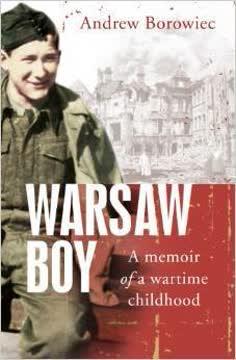
Andrew Borowiec was eleven years old when he saw his first person shot. He was a boy living in a comfortable Polish home, a boy whose concerns should have been school lessons, friendships, and the small adventures of childhood. Instead, he found himself watching a man die in the street, and nothing about his life would ever be the same.
**Author:** Andrew Borowiec **Estimated Reading Time:** 42 minutes
**What You'll Learn:**
How a childhood in wartime Poland was shattered by invasion, occupation, and uprising. How a boy became a soldier at sixteen. How survival demanded courage, cunning, and the ability to find humanity in the midst of atrocity. And how the scars of war shaped a life that followed.
**Who This Book Is For:**
Readers who want to understand World War II from the ground level, not through generals and politicians but through the eyes of a child who lived it. Anyone interested in the Warsaw Uprising, the Polish resistance, or the moral complexities of survival under occupation. And those who believe that the stories of ordinary people caught in extraordinary circumstances carry the deepest truths about war.
Andrew Borowiec was eleven years old when he saw his first person shot. He was a boy living in a comfortable Polish home, a boy whose concerns should have been school lessons, friendships, and the small adventures of childhood. Instead, he found himself watching a man die in the street, and nothing about his life would ever be the same. This book exists because certain stories must be told by those who lived them. The history of World War II is often written in sweeping terms: armies that advanced, cities that fell, populations that suffered. But within those broad strokes are millions of individual lives, each with a texture and specificity that no overview can capture. Borowiec's memoir is one of those lives, rendered with the clarity that only direct experience can provide. The problem this book addresses is not merely historical. It is the problem of understanding what war actually does to people, particularly to the young. We live in a world where conflict continues to erupt, where children continue to be caught in violence they did not create. To understand what that means, we need accounts like this one. We need to see war not as an abstraction but as a force that enters a home, separates a family, and demands impossible choices from those who should be protected from such decisions. Poland's experience of World War II was uniquely brutal. The country was invaded from the west by Nazi Germany and from the east by the Soviet Union. It was occupied, partitioned, and subjected to policies designed to destroy its culture and its people. Warsaw, the capital, became a symbol of resistance and a site of extraordinary suffering. The Warsaw Uprising of 1944, in which Borowiec fought as a sixteen-year-old, was one of the largest resistance operations of the entire war. It lasted sixty-three days and ended in the near-total destruction of the city. What makes Borowiec's account different…
Continue reading in the MinuteRead app
Get the complete 30-minute summary of Warsaw Boy
Get the complete summary in the appWar destroys not just lives but the structures that give lives meaning.
The first encounter with violent death is a threshold that cannot be uncrossed.
Poland was caught between two totalitarian powers, both seeking to erase Polish identity.
Small acts of resistance carried enormous risk and meaning.
The Warsaw Uprising was a desperate gamble that failed due to lack of external support.
The destruction of Warsaw was deliberate, aimed at erasing Polish culture.
"Warsaw Boy" is a strong fit if you want practical ideas around history, biography, world war ii, especially themes like war destroys not just lives but the structures that give lives meaning; the first encounter with violent death is a threshold that cannot be uncrossed. The MinuteRead summary distills these concepts into a focused read, whether you're deciding whether to buy the book or applying its lessons at work.
Andrew Borowiec was a Polish-born author and journalist who experienced World War II as a young boy and teenager. He fought in the Warsaw Uprising at age 16 and later became a prisoner of war. After the war, Borowiec emigrated to the United States, where he pursued a career as a foreign correspondent. His firsthand experiences during the war, particularly his involvement in the Polish resistance, shaped his perspective and informed his writing. Borowiec's memoir, Warsaw Boy, is considered an imp…
View all summaries by Andrew BorowiecContinue Reading
Access the complete 30-minute summary and thousands more nonfiction books in the MinuteRead app.

Continue reading the complete summary in the MinuteRead app.