MinuteRead
30 min
Book summary
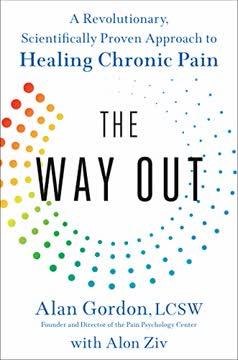
by Alan Gordon
Premium summary · Opens in the app · 30 min read
For millions of people, chronic pain is a prison. It limits movement, drains energy, disrupts sleep, and steals joy. The medical system offers a range of treatments: anti-inflammatory medications, steroid injections, physical therapy, and in severe cases, surgery. Some people find relief through these interventions. Many do not.
**Author:** Alan Gordon with Alon Ziv
**Estimated Reading Time:** 45 minutes
**What You'll Learn:**
- Why most chronic pain is not caused by structural damage in the body - How the brain creates pain as a learned response, even when no injury exists - The role fear plays in keeping pain alive - A step-by-step method for retraining your brain to turn off pain signals - Practical techniques you can use immediately to reduce pain and reclaim your life
**Who This Book Is For:**
This book is for anyone who has struggled with chronic pain that has not responded to conventional treatments. If you have tried medications, injections, physical therapy, or surgery and still hurt, this book offers a different path. It is also for healthcare providers who want to understand the neuroscience of pain and offer their patients more effective treatment options. Most importantly, it is for anyone who has been told their pain is "all in their head" and felt dismissed, because the truth is both more complex and more hopeful than that phrase suggests.
For millions of people, chronic pain is a prison. It limits movement, drains energy, disrupts sleep, and steals joy. The medical system offers a range of treatments: anti-inflammatory medications, steroid injections, physical therapy, and in severe cases, surgery. Some people find relief through these interventions. Many do not. Alan Gordon was one of those people. For years, he suffered from chronic back pain that resisted every treatment he tried. He saw specialists, underwent tests, and followed medical advice. Nothing worked. The pain persisted, and with it came a growing sense of hopelessness. Then Gordon discovered something that changed everything. The pain he was experiencing was not coming from his back. It was coming from his brain. This was not a dismissal of his suffering. The pain was real. It hurt just as much as if there were a physical injury. But the source of the pain was not structural damage. It was a learned neural pathway in the brain that had begun generating pain signals even though his body had healed. Gordon's discovery led him to develop Pain Reprocessing Therapy, or PRT, a systematic approach to retraining the brain to stop generating chronic pain. He founded the Pain Psychology Center in Los Angeles and has helped thousands of patients recover from conditions that had resisted years of conventional treatment. The central insight of Gordon's work is both simple and profound: pain is a danger signal generated by the brain, not a direct report of tissue damage. When the brain perceives a threat, it creates pain to alert you to that threat. In acute pain, this system works beautifully. You touch a hot stove,…
Continue reading in the MinuteRead app
Get the complete 30-minute summary of The Way Out
Get the complete summary in the appMost chronic pain is neuroplastic. It is generated by the brain, not by structural damage.
Fear is the fuel that keeps pain alive. Reducing fear is essential for recovery.
The brain can learn to generate pain, and it can learn to stop. Neuroplasticity works in both directions.
Somatic tracking involves observing pain with curiosity, openness, and no fear.
Messages of safety teach the brain that the body is not in danger.
Structural abnormalities are common in people with no pain. They may not explain your symptoms.
"The Way Out" is a strong fit if you want practical ideas around health & fitness, health, self help, especially themes like most chronic pain is neuroplastic. it is generated by the brain, not by structural damage; fear is the fuel that keeps pain alive. reducing fear is essential for recovery. The MinuteRead summary distills these concepts into a focused read, whether you're deciding whether to buy the book or applying its lessons at work.
Alan Gordon is a psychotherapist and the founder/director of the Pain Psychology Center in Los Angeles. He developed Pain Reprocessing Therapy (PRT) based on his personal experience overcoming chronic pain and extensive research in neuroscience. Alan Gordon co-authored "The Way Out" with Alon Ziv, presenting their innovative approach to treating chronic pain by retraining the brain. Gordon's work combines elements of cognitive-behavioral therapy, mindfulness, and neuroscience. He has conducted n…
View all summaries by Alan GordonContinue Reading
Access the complete 30-minute summary and thousands more nonfiction books in the MinuteRead app.

Continue reading the complete summary in the MinuteRead app.