MinuteRead
30 min
Book summary
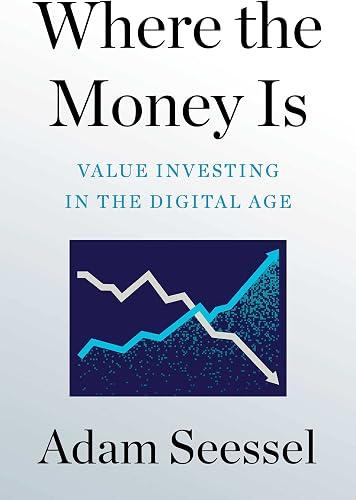
by Adam Seessel
Premium summary · Opens in the app · 30 min read
For decades, value investing offered a reliable path to wealth. The formula was simple: find companies trading below their intrinsic worth, buy them patiently, and wait for the market to recognize what you saw. Benjamin Graham created this discipline in the 1930s. Warren Buffett refined it in the 1970s and 1980s. Generations of investors built fortunes by following their example.
**Author:** Adam Seessel
**Estimated Reading Time:** 45 minutes
**What You'll Learn:** How value investing evolved from Benjamin Graham's asset-based approach to Warren Buffett's quality-focused strategy, and why both fall short in today's digital economy. You'll discover a new framework called Value 3.0 that adapts proven principles to technology companies, including a practical method for valuing digital businesses that traditional metrics miss.
**Who This Book Is For:** Investors who feel torn between the discipline of value investing and the undeniable wealth creation happening in technology. If you've ever looked at Amazon or Alphabet and wondered whether a value investor can own them without abandoning core principles, this book provides the answer.
For decades, value investing offered a reliable path to wealth. The formula was simple: find companies trading below their intrinsic worth, buy them patiently, and wait for the market to recognize what you saw. Benjamin Graham created this discipline in the 1930s. Warren Buffett refined it in the 1970s and 1980s. Generations of investors built fortunes by following their example. Then something changed. The digital revolution arrived, and the old rules stopped working. Companies like Amazon, Alphabet, and Facebook created staggering amounts of wealth, yet they looked expensive by every traditional measure. Value investors who refused to adapt watched their portfolios stagnate while the information technology sector drove most of the market's gains. The fossil fuel sector, once a cornerstone of value portfolios, shrank dramatically as a percentage of the U.S. stock market's value. Amazon became worth more than Exxon Mobil and Wells Fargo combined. Adam Seessel lived this problem firsthand. As a professional money manager, he watched the old playbook fail repeatedly. The companies that looked cheap through the lens of traditional metrics were often cheap for good reason. Their futures were bleak. Meanwhile, the companies creating most of the world's incremental wealth seemed permanently out of reach, trading at valuations that made no sense under the old framework. The conventional response was to dismiss technology stocks as overvalued and wait for a crash that never came. Seessel realized this approach was intellectually dishonest. To continue as he had would have been to ignore economic reality and to consign himself and his clients to a future of dismal performance. The problem wasn't value investing itself. The problem was that the tools hadn't evolved. Graham's system focused on tangible assets because that's what mattered in the industrial economy. Buffett's system focused on brands and moats because that's what mattered in the consumer economy. Neither framework was designed for a world where the most valuable companies own almost no physical assets and report earnings that systematically understate their true profitability. Seessel set out to solve this problem. He studied the history…
Continue reading in the MinuteRead app
Get the complete 30-minute summary of Where the Money Is
Get the complete summary in the appValue investing must adapt to the digital age or become irrelevant. The principles remain valid, but the tools must evol
The BMP checklist provides a complete framework for investment analysis: Business, Management, and Price.
Network effects are the most powerful source of competitive advantage in the digital age.
Rapid growth alone does not constitute a competitive advantage. Look for durable moats.
Management quality matters enormously. The best managers think and act like owners and allocate capital wisely.
Traditional valuation metrics systematically understate the profitability of digital businesses.
"Where the Money Is" is a strong fit if you want practical ideas around finance, business, economics, especially themes like value investing must adapt to the digital age or become irrelevant. the principles remain valid, but the tools must evol; the bmp checklist provides a complete framework for investment analysis: business, management, and price. The MinuteRead summary distills these concepts into a focused read, whether you're deciding whether to buy the book or applying its lessons at work.
Motivated to help readers with to continue as I had would have been to ignore economic reality and to consign myself and my clients to a, Adam Seessel wrote “Where the Money Is” to package those ideas for a fast, focused read. In “Where the Money Is”, Adam Seessel focuses on to continue as I had would have been to ignore economic reality and to consign myself and my clients to a. Through “Where the Money Is”, Adam Seessel distills the core ideas on finance into lessons readers can absorb in a si…
Continue Reading
Access the complete 30-minute summary and thousands more nonfiction books in the MinuteRead app.

Continue reading the complete summary in the MinuteRead app.