MinuteRead
30 min
Book summary
Premium summary · Opens in the app · 30 min read
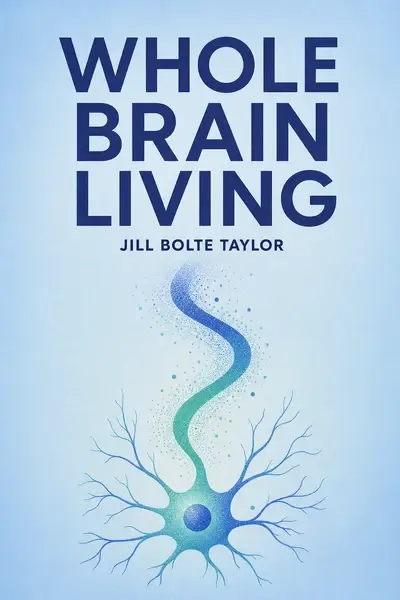
In 1996, Jill Bolte Taylor experienced something that few people survive and even fewer can describe with scientific precision. A blood vessel exploded in the left hemisphere of her brain. As a neuroanatomist at Harvard, she had spent her career studying the brain's intricate architecture. Now she was watching her own mind dismantle itself from the inside.
**Author:** Jill Bolte Taylor
**Estimated Reading Time:** 48 minutes
**What You'll Learn:**
- Why you are not a single self but four distinct characters living in your brain - How each character shapes your emotions, decisions, and relationships - The Brain Huddle: a five-step practice for integrating your four characters - Why peace is not a distant goal but a neurological choice available to you at any moment - How to recognize which character is running your life and how to shift consciously
**Who This Book Is For:**
This book is for anyone who has ever felt hijacked by their own emotions, trapped in repetitive thought patterns, or confused by the warring voices inside their head. It is for people who want to understand why they react the way they do and who are ready to take responsibility for their inner experience. It is for readers who suspect that peace, joy, and connection are not personality traits but skills that can be learned.
In 1996, Jill Bolte Taylor experienced something that few people survive and even fewer can describe with scientific precision. A blood vessel exploded in the left hemisphere of her brain. As a neuroanatomist at Harvard, she had spent her career studying the brain's intricate architecture. Now she was watching her own mind dismantle itself from the inside. Over the course of four hours, she lost the ability to walk, talk, read, write, and remember her own name. But as her left brain went silent, something unexpected happened. She experienced a profound sense of peace, expansiveness, and connection to everything around her. The constant chatter of her mind stopped. The boundaries between herself and the world dissolved. She felt what she later described as nirvana. Her recovery took eight years. During that time, she had to rebuild her brain from scratch, relearning how to think, speak, and function in the world. But she also gained something rare: a firsthand understanding of how different parts of the brain create different experiences of reality. She learned that the brain is not one unified self but a collection of distinct modules, each with its own personality, values, and way of perceiving the world. This book is the culmination of that insight. It presents a radical but scientifically grounded idea: you are not one person. You are four characters living in a single brain. Each character has its own strengths, weaknesses, fears, and desires. Each character can take control of your thoughts, emotions, and behavior. And each character can be consciously chosen. Most people live their entire lives at the mercy of whichever character happens to be dominant in any given moment. They feel angry, anxious, joyful, or peaceful without understanding why.…
Continue reading in the MinuteRead app
Get the complete 30-minute summary of Whole Brain Living
Get the complete summary in the appYour brain contains four distinct characters: the Organizer, the Protector, the Adventurer, and the Connector.
Each character has its own strengths, weaknesses, and way of perceiving reality.
You are not your emotions. You are the awareness that can observe them.
Peace is a neurological state that already exists in your brain. You do not need to create it. You need to learn to acce
The Brain Huddle is your core tool: Breathe, Recognize, Appreciate, Inquire, Navigate.
Emotions are signals, not facts. They tell you about your internal state, not necessarily about external reality.
"Whole Brain Living" is a strong fit if you want practical ideas around health & fitness, psychology, science, especially themes like your brain contains four distinct characters: the organizer, the protector, the adventurer, and the connector; each character has its own strengths, weaknesses, and way of perceiving reality. The MinuteRead summary distills these concepts into a focused read, whether you're deciding whether to buy the book or applying its lessons at work.
Jill Bolte Taylor is a neuroanatomist, author, and public speaker known for her work on brain anatomy and mental illness. Her personal experience with a stroke at age 37 and subsequent recovery greatly influenced her career and research. Taylor founded a nonprofit organization and serves as a spokesperson for the Harvard Brain Tissue Resource Center. Her work has garnered significant recognition, including being named to Time Magazine's 100 most influential people list in 2008. Her book "My Stro…
View all summaries by Jill Bolte TaylorContinue Reading
Access the complete 30-minute summary and thousands more nonfiction books in the MinuteRead app.

Continue reading the complete summary in the MinuteRead app.