MinuteRead
30 min
Book summary
by Bhagat Singh
Premium summary · Opens in the app · 30 min read
In the autumn of 1930, a young man sat in a prison cell in Lahore, awaiting execution. He was twenty-three years old. Outside, the British Empire moved through the machinery of justice, preparing to hang him for his role in the revolutionary movement against colonial rule. Inside, Bhagat Singh wrote an essay that would outlive him, outlive the empire that imprisoned him, and continue to provoke readers decades after both had passed into history.
**Author:** Bhagat Singh **Estimated Reading Time:** 45 minutes
**What You'll Learn:**
The intellectual foundations of Bhagat Singh's atheism, his revolutionary philosophy, his vision for a just society, and the principles that guided one of India's most influential freedom fighters.
**Who This Book Is For:**
Readers interested in political philosophy, the history of Indian independence, the relationship between reason and faith, and the moral convictions that drive revolutionary movements.
In the autumn of 1930, a young man sat in a prison cell in Lahore, awaiting execution. He was twenty-three years old. Outside, the British Empire moved through the machinery of justice, preparing to hang him for his role in the revolutionary movement against colonial rule. Inside, Bhagat Singh wrote an essay that would outlive him, outlive the empire that imprisoned him, and continue to provoke readers decades after both had passed into history. The essay was titled "Why I Am an Atheist." The question that prompted it was not philosophical. A fellow prisoner, perhaps a friend, perhaps a well-meaning religious man, had suggested that Singh's atheism was a product of vanity. The argument went something like this: in moments of crisis, when death approaches and fear takes hold, even the most defiant nonbeliever will call out to God. Singh's atheism, the man implied, was a luxury of good times, a posture that would crumble when the gallows loomed. Singh's response was not angry. It was methodical, personal, and devastating in its clarity. He explained that his atheism was not a rebellion against his upbringing, not a rejection of his family, and certainly not an act of vanity. It was the product of years of reading, questioning, and thinking. It was a conviction forged in the crucible of political struggle and philosophical inquiry. And it was, he insisted, as firm in the shadow of death as it had ever been in the light of freedom. This book collects that essay alongside Singh's other major writings. Together, they form a portrait of a mind that refused to accept inherited answers, whether those answers came from religion, from tradition, or from political authority. Singh was not content to merely oppose British rule. He wanted to understand the structures of power that made oppression possible, and he wanted to imagine a world beyond them. The problem Singh addressed was not simply colonialism. It was the deeper question of how human beings should live, what they should believe, and what they owe to one another. He saw religion as one answer to these questions, but he found it wanting. He saw capitalism as another answer, and he found it cruel. He saw revolution as the only honest response to a world built on injustice, and he…
Continue reading in the MinuteRead app
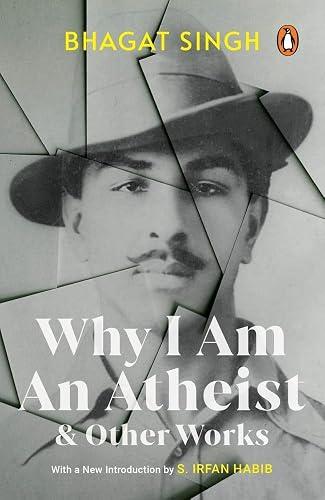
Get the complete 30-minute summary of Why I Am an Atheist
Get the complete summary in the appBhagat Singh's atheism was rooted in reason, not vanity or rebellion.
The problem of suffering makes belief in an all-powerful, all-good God logically untenable.
Without God, human beings must take responsibility for creating justice themselves.
Self-reliance is essential for revolutionaries and for anyone who wants to live a meaningful life.
Literature is a powerful force that shapes society and inspires political action.
Revolution is inevitable when a social order is based on manifest injustice, but it requires action to become reality.
"Why I Am an Atheist" is a strong fit if you want practical ideas around history, philosophy, especially themes like bhagat singh's atheism was rooted in reason, not vanity or rebellion; the problem of suffering makes belief in an all-powerful, all-good god logically untenable. The MinuteRead summary distills these concepts into a focused read, whether you're deciding whether to buy the book or applying its lessons at work.
Motivated to help readers with in the autumn of 1930, Bhagat Singh wrote “Why I Am an Atheist” to package those ideas for a fast, focused read. In “Why I Am an Atheist”, Bhagat Singh focuses on in the autumn of 1930. Through “Why I Am an Atheist”, Bhagat Singh distills the core ideas on history into lessons readers can absorb in a single short sitting. Readers turn to this work when they want Bhagat Singh's perspective on the subject without working through the entire original volume. Why I Am a…
View all summaries by Bhagat SinghContinue Reading
Access the complete 30-minute summary and thousands more nonfiction books in the MinuteRead app.

Continue reading the complete summary in the MinuteRead app.