MinuteRead
30 min
Book summary
by Gary Belsky
Premium summary · Opens in the app · 30 min read
You are smart. You solve complex problems at work. You can analyze data, weigh options, and make sound decisions in your professional life. Yet when it comes to money, you make mistakes. Not occasional, minor slip-ups. You make the same mistakes repeatedly, even when you know better.
**Author:** Gary Belsky
**Estimated Reading Time:** 45 minutes
**What You'll Learn:**
- Why intelligent people repeatedly make irrational financial decisions - How your brain's mental shortcuts sabotage your wealth - The hidden psychological forces driving your spending, saving, and investing - Practical strategies to recognize and correct your money mistakes - How to build financial habits that work with your psychology, not against it
**Who This Book Is For:**
This book is for anyone who has ever made a money decision they knew was irrational and did it anyway. It is for investors who hold losing stocks too long and sell winners too early. It is for savers who cannot explain why they treat a tax refund differently from a paycheck. It is for smart people who suspect their financial problems are not about intelligence but about something deeper and more universal.
You are smart. You solve complex problems at work. You can analyze data, weigh options, and make sound decisions in your professional life. Yet when it comes to money, you make mistakes. Not occasional, minor slip-ups. You make the same mistakes repeatedly, even when you know better. You hold onto investments that have lost value because selling would mean admitting defeat. You spend a bonus on luxuries while carrying credit card debt. You keep a gym membership you never use because canceling feels like wasting the money you already spent. You follow the crowd into a hot stock and then wonder why you bought at the peak. If this sounds familiar, you are not alone. And you are not foolish. You are human. Gary Belsky wrote this book to explain a simple but profound truth: the biggest obstacle to your financial success is not a lack of knowledge. It is the way your brain is wired. The mental processes that help you navigate daily life often work against you when money is involved. These processes are automatic, invisible, and powerful. They affect everyone, regardless of education, income, or intelligence. The field of behavioral economics has spent decades documenting these patterns. Researchers like Daniel Kahneman, Amos Tversky, and Richard Thaler have shown that people are not the rational actors that traditional economics assumes. We are predictably irrational. We make systematic errors in judgment that can be identified, studied, and corrected. Belsky's contribution is to translate this academic research into practical guidance. He shows how psychological principles like loss aversion, mental accounting, and status quo bias play out in everyday financial decisions. More importantly, he offers concrete strategies for recognizing these tendencies and counteracting them. The problem is urgent. Small financial mistakes compound over time. A decision to hold a losing stock too long might cost thousands. A tendency to…
Continue reading in the MinuteRead app
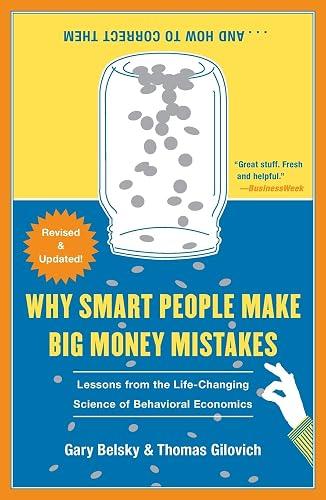
Get the complete 30-minute summary of Why Smart People Make Big Money Mistakes And How To Correct Them
Get the complete summary in the appEvery dollar is interchangeable. Treat all money equally, regardless of its source or purpose.
Losses hurt more than gains please. Set clear criteria for when to sell before you invest.
The price you paid is irrelevant. Focus on future prospects, not past investments.
You overvalue what you own. Regularly review your finances as if starting from scratch.
Change feels risky, but staying the same can be riskier. Do not let the status quo bias keep you stuck.
Compound interest is powerful. Start saving early and let time work for you.
"Why Smart People Make Big Money Mistakes And How To Correct Them" is a strong fit if you want practical ideas around finance, psychology, business, especially themes like every dollar is interchangeable. treat all money equally, regardless of its source or purpose; losses hurt more than gains please. set clear criteria for when to sell before you invest. The MinuteRead summary distills these concepts into a focused read, whether you're deciding whether to buy the book or applying its lessons at work.
Motivated to help readers with 1) Mental accounting can help or hinder financial decisions 2) Loss aversion and sunk cost fallacy lead to, Gary Belsky wrote “Why Smart People Make Big Money Mistakes And How To Correct Them” to package those ideas for a fast, focused read. In “Why Smart People Make Big Money Mistakes And How To Correct Them”, Gary Belsky focuses on 1) Mental accounting can help or hinder financial decisions 2) Loss aversion and sunk cost fallacy lead to. Through “Why Smart People…
Continue Reading
Access the complete 30-minute summary and thousands more nonfiction books in the MinuteRead app.

Continue reading the complete summary in the MinuteRead app.