MinuteRead
30 min
Book summary
Premium summary · Opens in the app · 30 min read
We spend a great deal of our lives worrying about memory. We worry about forgetting names at parties, blanking during presentations, losing our keys, and watching our parents age into the fog of dementia. We buy brain-training apps, take supplements, and develop elaborate systems to capture every detail of our lives. We treat memory as a kind of mental filing cabinet, and we judge ourselves harshly when the files go missing.
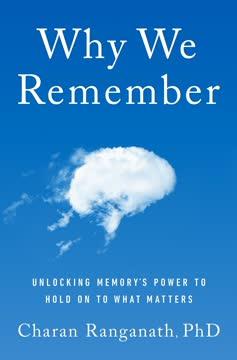
**Author:** Charan Ranganath **Estimated Reading Time:** 45 minutes
**What You'll Learn:**
* Why forgetting is not a flaw but a feature of your brain's design * How memory actually works, and why it is nothing like a video recording * The surprising ways emotion, curiosity, and sleep shape what you remember * Practical strategies to learn faster, retain more, and use memory to your advantage * Why your memories are constantly being rewritten, and what that means for who you are
**Who This Book Is For:**
Anyone who has ever walked into a room and forgotten why they were there. Anyone who has struggled to learn a new skill, remember names, or study for an exam. Anyone curious about the hidden forces that shape their sense of self, their decisions, and their relationships. This book is for people who want to understand the most fundamental human ability: the power to remember.
We spend a great deal of our lives worrying about memory. We worry about forgetting names at parties, blanking during presentations, losing our keys, and watching our parents age into the fog of dementia. We buy brain-training apps, take supplements, and develop elaborate systems to capture every detail of our lives. We treat memory as a kind of mental filing cabinet, and we judge ourselves harshly when the files go missing. But what if almost everything we believe about memory is wrong? Charan Ranganath, a neuroscientist who has spent decades studying how the brain remembers, argues that our struggles with memory stem from a fundamental misunderstanding of what memory is for. We think of memory as a recording device, designed to capture and preserve the past. We imagine that a good memory means being able to recall everything, perfectly, forever. The truth is far more interesting. Memory is not a record of the past. It is a tool for navigating the present and anticipating the future. Your brain did not evolve to store every detail of your life. It evolved to extract meaning, identify patterns, and use past experience to make better decisions in the moment. Forgetting is not a bug in the system. It is a feature, a crucial part of what makes memory work. Consider what would happen if you actually remembered everything. Every face you ever passed on the street. Every word of every conversation. Every meal you ever ate. Every advertisement you ever saw. Your mind would be drowning in irrelevant detail, unable to distinguish what matters from what does not. You would be paralyzed by the sheer volume of information, unable to focus, unable to think, unable to act. The brain's solution is elegant. It filters. It prioritizes. It keeps what is useful and…
Continue reading in the MinuteRead app
Get the complete 30-minute summary of Why We Remember
Get the complete summary in the appMemory is for the future, not the past. It helps you navigate the present and anticipate what comes next.
Forgetting is a feature, not a bug. Your brain is designed to be selective.
Memory is reconstructive, not reproductive. You rebuild the past, you do not replay it.
Emotion enhances memory for what matters, but it does not guarantee accuracy.
Vividness and confidence are not reliable indicators of accuracy.
Familiarity is not the same as truth. Repetition increases believability.
"Why We Remember" is a strong fit if you want practical ideas around health & fitness, science, psychology, especially themes like memory is for the future, not the past. it helps you navigate the present and anticipate what comes next; forgetting is a feature, not a bug. your brain is designed to be selective. The MinuteRead summary distills these concepts into a focused read, whether you're deciding whether to buy the book or applying its lessons at work.
Charan Ranganath is a Professor of Psychology and Neuroscience at the University of California Davis, where he directs the Dynamic Memory Lab. His research focuses on understanding how the brain acquires, retains, and retrieves information. Ranganath's work combines neuroimaging techniques with behavioral studies to investigate memory processes. He is known for his contributions to the field of cognitive neuroscience, particularly in studying the roles of the hippocampus and prefrontal cortex in…
View all summaries by Charan RanganathContinue Reading
Access the complete 30-minute summary and thousands more nonfiction books in the MinuteRead app.

Continue reading the complete summary in the MinuteRead app.