MinuteRead
30 min
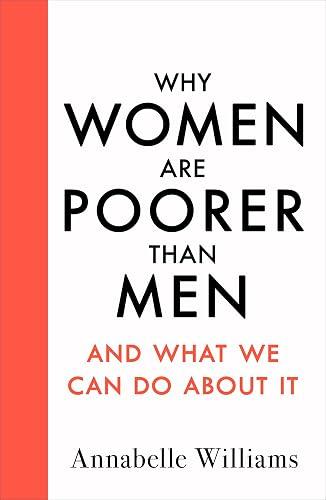
Book summary
by Annabelle Williams
Premium summary · Opens in the app · 30 min read
In 1950, the legal definition of a person too incapacitated to deal with income tax in England included "any infant, married woman, lunatic, idiot or insane person." A married woman, in the eyes of the law, was considered as incapable of managing money as someone suffering from severe mental illness. This was not ancient history. This was within the lifetime of many people still alive today.
**Author:** Annabelle Williams **Estimated Reading Time:** 45 minutes
**What You'll Learn:**
- Why women earn less, save less, and retire with dramatically less wealth than men - How historical oppression continues to shape modern financial disparities - The hidden costs women pay in everyday life, from healthcare to personal care - Why the pension gap creates old-age poverty for millions of women - Practical strategies for financial empowerment and systemic change
**Who This Book Is For:**
This book is for anyone who has ever wondered why financial equality remains elusive despite decades of progress. It is for women who want to understand the forces shaping their economic lives and for men who want to become better allies. It is for policymakers, employers, educators, and citizens who believe that understanding a problem is the first step toward solving it.
In 1950, the legal definition of a person too incapacitated to deal with income tax in England included "any infant, married woman, lunatic, idiot or insane person." A married woman, in the eyes of the law, was considered as incapable of managing money as someone suffering from severe mental illness. This was not ancient history. This was within the lifetime of many people still alive today. Annabelle Williams opens her investigation into gender and money with this stark reminder that the financial inequality women experience is not accidental. It was designed. It was legislated. It was enforced through centuries of laws, customs, and institutional practices that treated women as financial dependents rather than economic actors in their own right. The consequences of this history are everywhere, yet they remain strangely invisible to many people. When we see that women earn less than men, we attribute it to individual choices. When we notice that women retire with smaller pensions, we assume it reflects different priorities. When we observe that female entrepreneurs receive less than one percent of venture capital funding, we wonder if women simply are not ambitious enough. Williams argues that these explanations are not just incomplete. They are actively misleading. The reality is that women face systemic economic disadvantage in every area of life that touches money. From the moment a girl receives her first pocket money to the day a woman draws her final pension payment, she navigates a financial landscape that was not built for her. The pay gap, the wealth gap, the pension gap, the investment gap, the entrepreneurship gap: these are not separate problems. They are symptoms of a single underlying condition. Consider the numbers. Women earn between 18 and 19 percent less than men on average across Europe and Australia. By age 30 to 44, women have accumulated wealth of approximately £293,700 compared to £376,500 for…
Continue reading in the MinuteRead app
Get the complete 30-minute summary of Why Women Are Poorer Than Men and What We Can Do About It
Get the complete summary in the appWomen are poorer than men because of systemic barriers, not individual failings.
The pay gap starts early and compounds over time, creating a lifetime of disadvantage.
The pension gap means women retire with less than half the savings of men, despite living longer.
Hidden costs, including the "pink tax" and healthcare bias, add up to significant sums over a lifetime.
Myths about women and money, such as the risk-averse woman, become self-fulfilling prophecies.
Gender-blind policies default to a male norm and disadvantage women.
"Why Women Are Poorer Than Men and What We Can Do About It" is a strong fit if you want practical ideas around feminism, gender, economics, especially themes like women are poorer than men because of systemic barriers, not individual failings; the pay gap starts early and compounds over time, creating a lifetime of disadvantage. The MinuteRead summary distills these concepts into a focused read, whether you're deciding whether to buy the book or applying its lessons at work.
Motivated to help readers with in every part of our lives that touches on money women are financially disadvantaged, Annabelle Williams wrote “Why Women Are Poorer Than Men and What We Can Do About It” to package those ideas for a fast, focused read. In “Why Women Are Poorer Than Men and What We Can Do About It”, Annabelle Williams focuses on in every part of our lives that touches on money women are financially disadvantaged. Through “Why Women Are Poorer Than Men and What We Can Do About It”, …
Continue Reading
Access the complete 30-minute summary and thousands more nonfiction books in the MinuteRead app.

Continue reading the complete summary in the MinuteRead app.