MinuteRead
30 min
Book summary
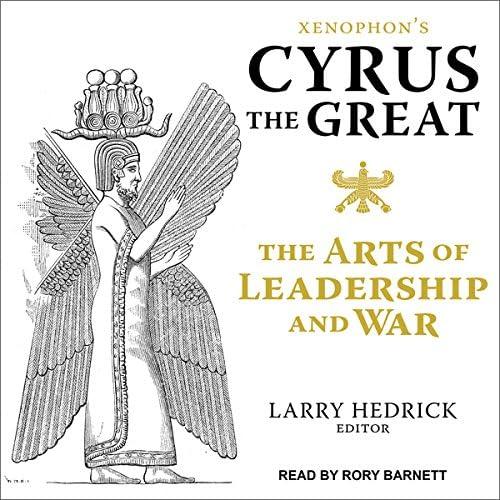
by Larry Hedrick
Premium summary · Opens in the app · 30 min read
The ancient world produced many conquerors. Alexander the Great swept across Asia in a blaze of glory that burned out before he turned thirty-three. Julius Caesar built an empire and was assassinated by his own senators. Genghis Khan created the largest contiguous land empire in history, yet it fragmented within a generation of his death.
**Author:** Larry Hedrick **Based on the teachings of Xenophon**
**Estimated Reading Time:** 45 minutes
**What You'll Learn:** The leadership principles that transformed a minor prince into the ruler of the ancient world's greatest empire. You will discover how Cyrus the Great mastered the arts of motivation, strategy, loyalty, and governance, and how these timeless lessons apply directly to modern leadership challenges.
**Who This Book Is For:** Leaders who want to inspire rather than command. Entrepreneurs building organizations from the ground up. Managers navigating complex political landscapes. Anyone who recognizes that the fundamentals of human nature and leadership have not changed in two thousand years.
The ancient world produced many conquerors. Alexander the Great swept across Asia in a blaze of glory that burned out before he turned thirty-three. Julius Caesar built an empire and was assassinated by his own senators. Genghis Khan created the largest contiguous land empire in history, yet it fragmented within a generation of his death. Cyrus the Great was different. He rose from obscurity as the son of a minor Persian king to become the ruler of the largest empire the world had ever seen. He conquered the mighty Median Empire, the wealthy Lydian kingdom, and the seemingly impregnable city of Babylon. His empire stretched from the Mediterranean Sea to the Indus River, encompassing dozens of nations, languages, and religions. Yet his greatest achievement was not the size of his empire. It was that his empire lasted. The Persian Empire Cyrus founded endured for more than two hundred years after his death. The administrative systems he created influenced governance for millennia. The religious tolerance he practiced became a model for enlightened rule. The loyalty he inspired was so profound that his subjects mourned him as a father rather than feared him as a tyrant. How did he do it? The answer lies in a remarkable book written nearly two thousand years ago. Xenophon of Athens, a Greek soldier and philosopher, wrote the Cyropaedia, a work that is part biography, part leadership manual, and part political philosophy. Xenophon was not merely recording history. He was attempting to answer a question that puzzled the Greeks: Why was Persia so successful when Greek city-states constantly fought among themselves? Xenophon's answer was simple and profound. Persia succeeded because Cyrus understood something that most rulers never grasp. Power does not come from force. It comes from willing obedience. People follow leaders they trust, respect, and admire. They resist leaders they fear and despise. Cyrus built his empire not primarily through military might, though he was a brilliant commander. He built it through the art of leadership. He understood human nature. He knew what motivated people. He recognized that loyalty must be…
Continue reading in the MinuteRead app
Get the complete 30-minute summary of Cyrus the Great
Get the complete summary in the appSeize opportunities when they appear. Boldness creates possibilities that caution can never access.
Cultivate loyalty through generosity. Create debts of gratitude that bind people to you.
Plan strategically but remain flexible. Prepare thoroughly, then adapt as circumstances change.
Communicate clearly and concisely. Say what needs to be said, then stop.
Build alliances based on mutual interest. Find ways to serve others' interests while advancing your own.
Balance ambition with wisdom. Pursue ambitious goals with self-discipline and good judgment.
"Cyrus the Great" is a strong fit if you want practical ideas around history, leadership, business, especially themes like seize opportunities when they appear. boldness creates possibilities that caution can never access; cultivate loyalty through generosity. create debts of gratitude that bind people to you. The MinuteRead summary distills these concepts into a focused read, whether you're deciding whether to buy the book or applying its lessons at work.
Motivated to help readers with "Seizing the unexpected opportunity" Cyrus's rise to power was marked by his ability to recognize and act, Larry Hedrick wrote “Cyrus the Great” to package those ideas for a fast, focused read. In “Cyrus the Great”, Larry Hedrick focuses on "Seizing the unexpected opportunity" Cyrus's rise to power was marked by his ability to recognize and act. Through “Cyrus the Great”, Larry Hedrick distills the core ideas on history into lessons readers can absorb in a single s…
Continue Reading
Access the complete 30-minute summary and thousands more nonfiction books in the MinuteRead app.

Continue reading the complete summary in the MinuteRead app.