MinuteRead
30 min
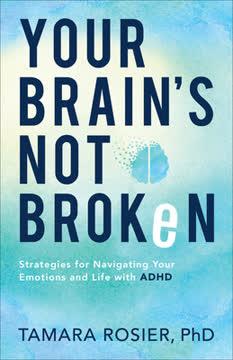
Book summary
Premium summary · Opens in the app · 30 min read
For decades, the conversation around ADHD has been dominated by a single question: what is wrong with you? Parents hear it from teachers. Adults hear it from bosses. Children hear it from everyone. The message lands early and settles deep. You are too much. You are not enough. You are broken.
**Author:** Tamara Rosier, PhD
**Estimated Reading Time:** 45 minutes
**What You'll Learn:** - Why ADHD is a neurological difference, not a personal failure - How emotional regulation shapes the ADHD experience - Practical frameworks for managing energy, tasks, and relationships - Strategies for parents raising children with ADHD - How to transform ADHD challenges into sustainable strengths
**Who This Book Is For:** This book is for adults who live with ADHD, for parents raising children with ADHD, and for anyone who loves or works alongside someone whose brain operates differently. It is for people who have spent years feeling broken, lazy, or inadequate, and who are ready to understand what is actually happening in their minds.
For decades, the conversation around ADHD has been dominated by a single question: what is wrong with you? Parents hear it from teachers. Adults hear it from bosses. Children hear it from everyone. The message lands early and settles deep. You are too much. You are not enough. You are broken. Tamara Rosier knows this experience intimately. She has ADHD. Her children have ADHD. She has spent her career as a psychologist and ADHD coach helping people untangle the shame that comes from living in a world not built for their brains. In *Your Brain's Not Broken*, she offers a different starting point. What if the problem is not your brain, but the assumption that everyone's brain should work the same way? The book opens with a simple but radical claim: your brain is not broken. It does not work the same way as a neurotypical brain because it is wired differently. That difference creates real challenges. Attention drifts. Emotions surge. Time bends. Motivation disappears. But those challenges are not evidence of personal failure. They are the predictable consequences of a brain that processes information, emotion, and reward in a distinct way. Understanding this distinction changes everything. When you believe your brain is broken, every struggle becomes proof of your inadequacy. You try harder. You fail again. You conclude that you are the problem. This cycle of effort and shame is exhausting and self-reinforcing. When you understand that your brain simply works differently, you can stop trying to fix yourself and start learning how to work with what you actually have. Rosier's approach is both scientific and deeply personal. She explains the neurological differences that characterize ADHD, particularly in the prefrontal cortex and striatum, areas responsible for executive function, attention, and reward processing. But she never hides behind jargon. Every concept is grounded in lived experience, illustrated with stories from her own life and her coaching practice, and connected to practical strategies that readers can use immediately. The book addresses a gap that many…
Continue reading in the MinuteRead app
Get the complete 30-minute summary of Your Brain's Not Broken
Get the complete summary in the appYour brain is not broken. It is wired differently.
ADHD is a neurological difference, not a character flaw.
Emotional regulation is a key challenge for people with ADHD.
Divergent thinking is both a strength and a challenge.
Use the Solve-It Grid to match strategies to task types.
Replace malicious motivation with healthier alternatives.
"Your Brain's Not Broken" is a strong fit if you want practical ideas around health & fitness, adhd, self help, especially themes like your brain is not broken. it is wired differently; adhd is a neurological difference, not a character flaw. The MinuteRead summary distills these concepts into a focused read, whether you're deciding whether to buy the book or applying its lessons at work.
Tamara PhD Rosier is an expert on ADHD who brings both professional and personal experience to her work. As someone who has ADHD herself and has family members with the condition, she offers a unique perspective on living with and managing ADHD. Rosier's approach combines scientific understanding with practical strategies, focusing on emotional regulation and cognitive patterns specific to ADHD. Her work emphasizes validating the ADHD experience while providing tools for improvement. Rosier's ba…
View all summaries by Tamara RosierContinue Reading
Access the complete 30-minute summary and thousands more nonfiction books in the MinuteRead app.

Continue reading the complete summary in the MinuteRead app.