MinuteRead
30 min
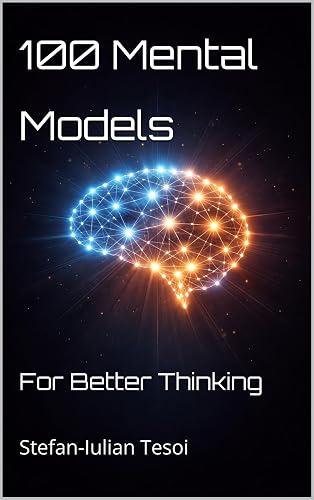
Book summary
by Wisdom Theory
Premium summary · Opens in the app · 30 min read
Most people go through life with a single hammer. When they encounter a problem, they swing that hammer. If the problem is a nail, things work out fine. But most problems are not nails.
### Wisdom Theory
**Estimated Reading Time:** 45 minutes
**What You'll Learn:** How to build a latticework of powerful thinking tools drawn from psychology, physics, mathematics, biology, and economics. You will discover how incentives shape behavior, why probabilistic thinking beats prediction, how inversion clarifies problems, and why compounding applies to every area of life.
**Who This Book Is For:** Anyone who wants to make better decisions, think more clearly, and understand the hidden forces that drive human behavior and complex systems.
Most people go through life with a single hammer. When they encounter a problem, they swing that hammer. If the problem is a nail, things work out fine. But most problems are not nails. A lawyer sees every issue as a legal dispute. An engineer sees every challenge as a technical problem. A psychologist sees every conflict as a matter of mental health. Each perspective captures something real, but each also misses something important. The world does not organize itself into academic departments. It presents itself as a tangled, interconnected mess of incentives, probabilities, physical constraints, biological drives, and social pressures. This is why smart people make terrible decisions. Not because they lack intelligence, but because they lack a broad enough set of tools. They have depth without breadth. They have expertise without wisdom. The solution is not to know everything. That is impossible. The solution is to master a carefully selected set of mental models: the big ideas from the major disciplines that explain how the world actually works. These models come from physics, biology, psychology, mathematics, economics, and history. Each one is a lens. Each one reveals something that other lenses miss. Together, they form what Charlie Munger calls a mental latticework. Munger, the longtime business partner of Warren Buffett, is one of the most successful investors in history. He attributes his success not to superior intelligence, but to superior thinking tools. He spent decades collecting the great ideas from multiple fields and learning to apply them automatically. When he looks at a business, he sees it through the lens of psychology, economics, physics, and biology simultaneously. This is not a party trick. It is a competitive advantage. The problem with most education is that it teaches facts without teaching thinking. Students memorize formulas, dates, and definitions, but they never learn how to connect ideas across disciplines. They leave school with a toolbox full of specialized instruments and no idea how to use them on unfamiliar problems. This book is an attempt to fix that. It presents one hundred mental models drawn from the most important fields of human knowledge. But it does more than list them. It explains how they work, why they matter, and how to…
Continue reading in the MinuteRead app
Get the complete 30-minute summary of 100 mental models
Get the complete summary in the appBuild a latticework of mental models from multiple disciplines to see the world clearly.
Incentives drive behavior. Design systems that align self-interest with desired outcomes.
Think probabilistically. Estimate likelihoods and prepare for a range of outcomes.
Invert problems. Identify what would cause failure and avoid it.
Compounding turns small, consistent actions into remarkable long-term results.
Cognitive biases are universal. Build systems to counteract them.
"100 mental models" is a strong fit if you want practical ideas around psychology, self help, business, especially themes like build a latticework of mental models from multiple disciplines to see the world clearly; incentives drive behavior. design systems that align self-interest with desired outcomes. The MinuteRead summary distills these concepts into a focused read, whether you're deciding whether to buy the book or applying its lessons at work.
Motivated to help readers with you have to learn all the big ideas in the key disciplines in a way that they’re in a mental latticework in, Wisdom Theory wrote “100 mental models” to package those ideas for a fast, focused read. In “100 mental models”, Wisdom Theory focuses on you have to learn all the big ideas in the key disciplines in a way that they’re in a mental latticework in. Through “100 mental models”, Wisdom Theory distills the core ideas on psychology into lessons readers can absorb …
Continue Reading
Access the complete 30-minute summary and thousands more nonfiction books in the MinuteRead app.

Continue reading the complete summary in the MinuteRead app.