MinuteRead
30 min
Book summary
by David A. Moss
Premium summary · Opens in the app · 30 min read
Most people believe that money is the foundation of economic prosperity. This belief seems reasonable. After all, wealthy nations have lots of money circulating through their economies. Poor nations seem perpetually short of it. Politicians talk about creating jobs and raising incomes as though the right policy could simply inject more cash into the system and solve everything. The logic feels intuitive: more money means more wealth.
**Author:** David A. Moss
**Estimated Reading Time:** 2 hours 15 minutes
**What You'll Learn:**
- How national output determines prosperity more than money ever will - How to read GDP, trade balances, and inflation without confusion - What central banks actually do and why their credibility matters - How expectations shape economic reality before policy does - How to distinguish real growth from inflation-driven illusion - How fiscal policy works, when it helps, and when it backfires - How to apply macroeconomic thinking to your own decisions
**Who This Book Is For:**
This book is for anyone who wants to understand how economies actually function without wading through dense academic textbooks. It is for the business professional who needs to interpret economic news with confidence. It is for the investor who wants to understand why interest rates move and what that means for asset prices. It is for the student encountering macroeconomics for the first time and feeling overwhelmed by jargon. It is for the curious reader who senses that economic forces shape daily life but has never found a clear explanation of how. If you have ever wondered what a trade deficit really means, why central banks seem so powerful, or whether printing money can make a nation rich, this book will give you the mental tools to answer those questions for yourself.
Most people believe that money is the foundation of economic prosperity. This belief seems reasonable. After all, wealthy nations have lots of money circulating through their economies. Poor nations seem perpetually short of it. Politicians talk about creating jobs and raising incomes as though the right policy could simply inject more cash into the system and solve everything. The logic feels intuitive: more money means more wealth. But this intuition is wrong, and it leads to disastrous policy mistakes. Consider what actually happens when a government prints large quantities of money and distributes it to its citizens. At first, people feel richer. They spend more. Stores see increased demand and raise prices. Wages may even rise for a time. But soon the illusion collapses. The goods and services available to buy have not increased. The same houses, the same food, the same cars, the same medical care exist as before. More money is chasing the same quantity of real things. Prices rise. The purchasing power of each unit of money falls. Citizens discover that their larger paychecks buy no more than their old ones did. In extreme cases, the entire monetary system breaks down, and people resort to barter or foreign currencies. The fundamental truth is that a nation's prosperity depends on its output: the actual goods and services it produces. Money is merely a tool…
Continue reading in the MinuteRead app
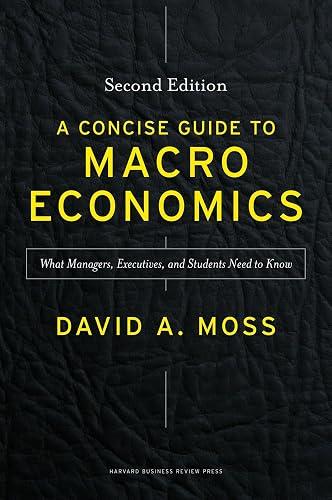
Get the complete 30-minute summary of A Concise Guide to Macroeconomics
Get the complete summary in the appOutput is what matters. A nation's prosperity depends on what it produces, not how much money it prints.
GDP measures national output. It equals consumption plus investment plus government spending plus net exports.
Trade deficits mean borrowing from abroad. Whether this is good or bad depends on how the borrowed funds are used.
Money is a tool, not wealth. Printing money without increasing output causes inflation.
Central banks control the money supply and influence interest rates, exchange rates, and the price level.
Real variables are adjusted for inflation. Only real variables tell us whether people are truly better off.
"A Concise Guide to Macroeconomics" is a strong fit if you want practical ideas around economics, business, finance, especially themes like output is what matters. a nation's prosperity depends on what it produces, not how much money it prints; gdp measures national output. it equals consumption plus investment plus government spending plus net exports. The MinuteRead summary distills these concepts into a focused read, whether you're deciding whether to buy the book or applying its lessons at work.
Motivated to help readers with large volumes of output—not large quantities of money—are what make nations prosperous, David A. Moss wrote “A Concise Guide to Macroeconomics” to package those ideas for a fast, focused read. In “A Concise Guide to Macroeconomics”, David A. Moss focuses on large volumes of output—not large quantities of money—are what make nations prosperous. Through “A Concise Guide to Macroeconomics”, David A. Moss distills the core ideas on economics into lessons readers can ab…
Continue Reading
Access the complete 30-minute summary and thousands more nonfiction books in the MinuteRead app.

Continue reading the complete summary in the MinuteRead app.