MinuteRead
30 min
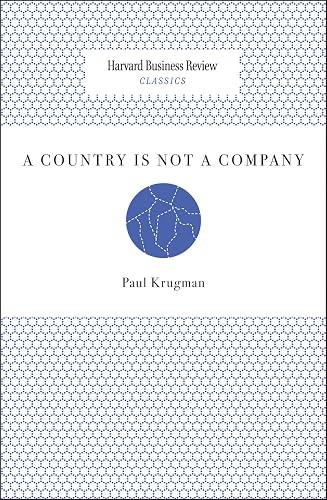
Book summary
by Paul Krugman
Premium summary · Opens in the app · 30 min read
In the early 1990s, a remarkable experiment unfolded in American economic policy. The Clinton administration, eager to bring fresh thinking to Washington, appointed some of the nation's most successful business leaders to key economic positions. The assumption was simple and appealing: people who had proven they could manage billion-dollar enterprises must surely understand how to manage a multi-trillion-dollar economy.
**Author:** Paul Krugman **Estimated Reading Time:** 45 minutes
**What You'll Learn:**
* Why the skills that build great companies often fail when applied to national economies * How the balance of payments creates outcomes that surprise even experienced executives * Why exports do not automatically create jobs and foreign investment can cause trade deficits * The fundamental principles that should guide economic policy instead of business-style strategy * How to think clearly about economic issues without falling for seductive but wrong analogies
**Who This Book Is For:**
This book is for anyone who has ever wondered why brilliant business leaders sometimes make poor economic advisors. It is for readers who want to understand why policies that sound sensible in a boardroom can produce disastrous results in a nation. It is for executives, students, policymakers, and curious citizens who want to move beyond slogans and develop a genuine understanding of how economies actually work.
In the early 1990s, a remarkable experiment unfolded in American economic policy. The Clinton administration, eager to bring fresh thinking to Washington, appointed some of the nation's most successful business leaders to key economic positions. The assumption was simple and appealing: people who had proven they could manage billion-dollar enterprises must surely understand how to manage a multi-trillion-dollar economy. The experiment did not go well. The business leaders brought with them a set of instincts and mental models honed in the competitive world of commerce. They spoke of national strategy the way they spoke of corporate strategy. They talked about making America more competitive, as if the United States were simply a very large version of General Motors or IBM. They assumed that what worked in the marketplace would work in the macroeconomy. Paul Krugman watched this experiment unfold with growing concern. As a professor at MIT and later Princeton, he had spent his career studying international trade and economic geography. He understood something that the business leaders did not: a country is not a company. The analogy is not just imperfect. It is actively misleading. The problem is not that business leaders are unintelligent. On the contrary, many of them are extraordinarily bright and capable. The problem is that the mental habits that produce success in business are precisely the wrong habits for understanding economics. A great CEO learns to focus on specific products, specific markets, specific competitors. A great economist must think about general equilibrium, about how everything connects to everything else, about the unintended consequences that ripple through a closed system. This book is an attempt to explain why the business analogy fails and what should replace it. Krugman wrote it during a period when the idea of running government like a business had…
Continue reading in the MinuteRead app
Get the complete 30-minute summary of A Country Is Not a Company
Get the complete summary in the appA country is not a company. The analogy is not just imperfect. It is actively misleading.
Businesses are open systems. Economies are largely closed systems. The difference is fundamental.
Business feedback is often positive. Economic feedback is often negative. This explains why economic outcomes are often
Exports do not automatically create jobs. The relationship between trade and employment is mediated by exchange rates, m
Foreign investment often leads to trade deficits. A country that attracts capital inflows must run a trade deficit. The
The balance of payments must always balance. A trade surplus is matched by capital outflows. A trade deficit is matched
"A Country Is Not a Company" is a strong fit if you want practical ideas around economics, politics, business, especially themes like a country is not a company. the analogy is not just imperfect. it is actively misleading; businesses are open systems. economies are largely closed systems. the difference is fundamental. The MinuteRead summary distills these concepts into a focused read, whether you're deciding whether to buy the book or applying its lessons at work.
Motivated to turn hard-won expertise into something readers can use every day, Paul Krugman wrote “A Country Is Not a Company” to distill the ideas behind the work into clear, actionable lessons. Through “A Country Is Not a Company”, Paul Krugman distills the core ideas on economics into lessons readers can absorb in a single short sitting. Readers turn to this work when they want Paul Krugman's perspective on the subject without working through the entire original volume. The book is structured…
Continue Reading
Access the complete 30-minute summary and thousands more nonfiction books in the MinuteRead app.

Continue reading the complete summary in the MinuteRead app.